Prabowo’s BRICS Summit Visit Signals Indonesia’s Multilateral Ambition
President Prabowo Subianto attends the 18th BRICS Summit as Indonesia seeks a stronger role in inclusive multilateral cooperation.
Prabowo’s BRICS Summit Visit Signals Indonesia’s Multilateral Ambition
President Prabowo Subianto’s attendance at the 18th BRICS Summit in New Delhi places Indonesia’s multilateral ambitions firmly on the diplomatic agenda. The State Secretariat Ministry says the visit reflects an effort to strengthen Indonesia’s active role in cooperation among nations and support a more balanced, inclusive global economic order.
A full member at the table
Prabowo is attending the summit as a full member, according to the State Secretariat Ministry. The meeting is being held in New Delhi, India, on September 12–13, and Indonesia has framed its participation as an expression of commitment to elevating the voice of developing countries in global economic discussions.
That framing matters. Rather than presenting the summit simply as a bilateral diplomatic engagement, the ministry has connected Indonesia’s presence to a wider argument about how international economic cooperation should work. Its stated objective is a global order that is both balanced and inclusive, with developing countries playing a fuller role in the conversation.
Indonesia says Prabowo’s participation demonstrates its commitment to an inclusive global economic order that raises the voice of developing countries.
For investors following Indonesia, such occasions are worth watching not because a summit automatically changes commercial conditions, but because they show where the government is placing diplomatic attention. The official emphasis is on multilateral engagement, developing-nation cooperation and practical areas of economic collaboration.
Food, energy, finance and trade on the agenda
The summit leaders are expected to discuss strategic agendas intended to bolster cooperation among developing nations. According to the State Secretariat Ministry, the gathering is also expected to advance concrete measures across food, energy, development financing and trade.
These are broad fields, but they sit close to the concerns that shape investment confidence and economic resilience. Food and energy are central policy priorities in many emerging economies; development financing concerns the availability and structure of capital; and trade determines how readily businesses can connect to markets beyond their domestic base.
The source does not specify the measures that may emerge from the summit, nor does it set out any investment commitments, agreements or numerical targets. Investors should therefore treat the meeting as a policy and diplomatic signal rather than as evidence of a completed economic outcome.
Still, Indonesia’s decision to participate at the highest level illustrates the importance it assigns to these discussions. The country is seeking to strengthen its position within multilateral cooperation while contributing to an agenda designed around collaboration among developing nations.
A high-level Indonesian delegation
Prabowo departed from Halim Perdanakusuma Air Force Base in Jakarta at 5:00 p.m. local time with a limited delegation. He was accompanied by Foreign Minister Sugiono; Investment and Downstreaming Minister Rosan Roeslani; Higher Education, Science, and Technology Minister Brian Yuliarto; and Cabinet Secretary Teddy Indra Wijaya.
The composition of the delegation gives the visit an economic and institutional dimension alongside its diplomatic purpose. Foreign affairs, investment and downstreaming, higher education, science and technology, and cabinet coordination were all represented in the travelling party.
Prabowo arrived in New Delhi at 10:00 p.m. local time on Friday. He was welcomed at Air Force Station Palam by Indian Minister of State for Coal and Mines Shri Satish Chandra Dubey, Indonesian Embassy Charge d’Affaires ad interim Yudho Sasongko, and local host officials.
The arrival included a ceremonial reception with an honour guard and traditional Indian cultural performances. Such protocol is not an economic indicator in itself, but it underscored the official character of Indonesia’s engagement as the summit began.
Indonesia’s case for active multilateralism
The State Secretariat Ministry’s language places Indonesia’s role within a larger diplomatic proposition: cooperation should be active, global economic governance should be more inclusive, and developing countries should be heard more clearly.
This distinction is important for an international audience. Indonesia is not presented in the official statement as a passive participant in a meeting of large economies. Instead, it is positioning its attendance as part of an effort to strengthen a continuing role in multilateral cooperation.
The summit’s agenda gives that position a practical focus. Cooperation in food, energy, development financing and trade moves the discussion beyond institutional representation alone. Yet the source provides no detail on which proposals Indonesia will champion, what commitments other participants may make, or whether particular arrangements will be adopted.
For now, the clearest conclusion is also the most disciplined one: Indonesia is using the BRICS Summit to articulate a stronger role in multilateral economic dialogue and to associate itself with an agenda focused on developing-nation collaboration.
What this means for investors
For European, Australian and American investors assessing Indonesia, the immediate implication is one of policy orientation rather than a direct transaction opportunity. The State Secretariat Ministry has tied Indonesia’s summit participation to four areas that investors routinely monitor:
- Food: a stated area for cooperation among developing nations.
- Energy: another strategic field expected to feature in summit discussions.
- Development financing: an area relevant to the structure and availability of capital.
- Trade: a central channel for cross-border economic cooperation.
There is no basis in the source for assuming a particular policy change, new financing programme, trade arrangement or investment return. Nor does the official statement provide a timetable for any measures discussed at the summit. Investors should remain attentive to subsequent official announcements while distinguishing diplomatic intent from implemented policy.
The broader signal is constructive: Indonesia is seeking a more active multilateral role and backing an inclusive global economic order in which developing countries have greater voice. For those with exposure to Indonesia or an interest in its long-term investment environment, that stance is relevant context for understanding the government’s international economic priorities.
As summit discussions continue in New Delhi, the next material question will be whether broad commitments on cooperation are translated into specific, verifiable outcomes.
Stay informed, subscribe to the free Lombok Briefing for analysis like this, published twice a month.
Why is President Prabowo attending the BRICS Summit?
The State Secretariat Ministry says President Prabowo Subianto is attending the 18th BRICS Summit as a full member to strengthen Indonesia’s active role in multilateral cooperation and support a balanced, inclusive global economic order that elevates developing countries’ voices.
Which economic topics will the BRICS Summit discuss?
According to the State Secretariat Ministry, summit leaders will discuss strategic agendas to strengthen cooperation among developing nations. The gathering is expected to advance concrete measures concerning food, energy, development financing and trade.
Does the summit announce a specific investment opportunity in Indonesia?
No specific investment opportunity, policy measure, financing programme or trade arrangement is stated in the source. The reported significance is Indonesia’s diplomatic commitment to multilateral cooperation and discussion of food, energy, development financing and trade.
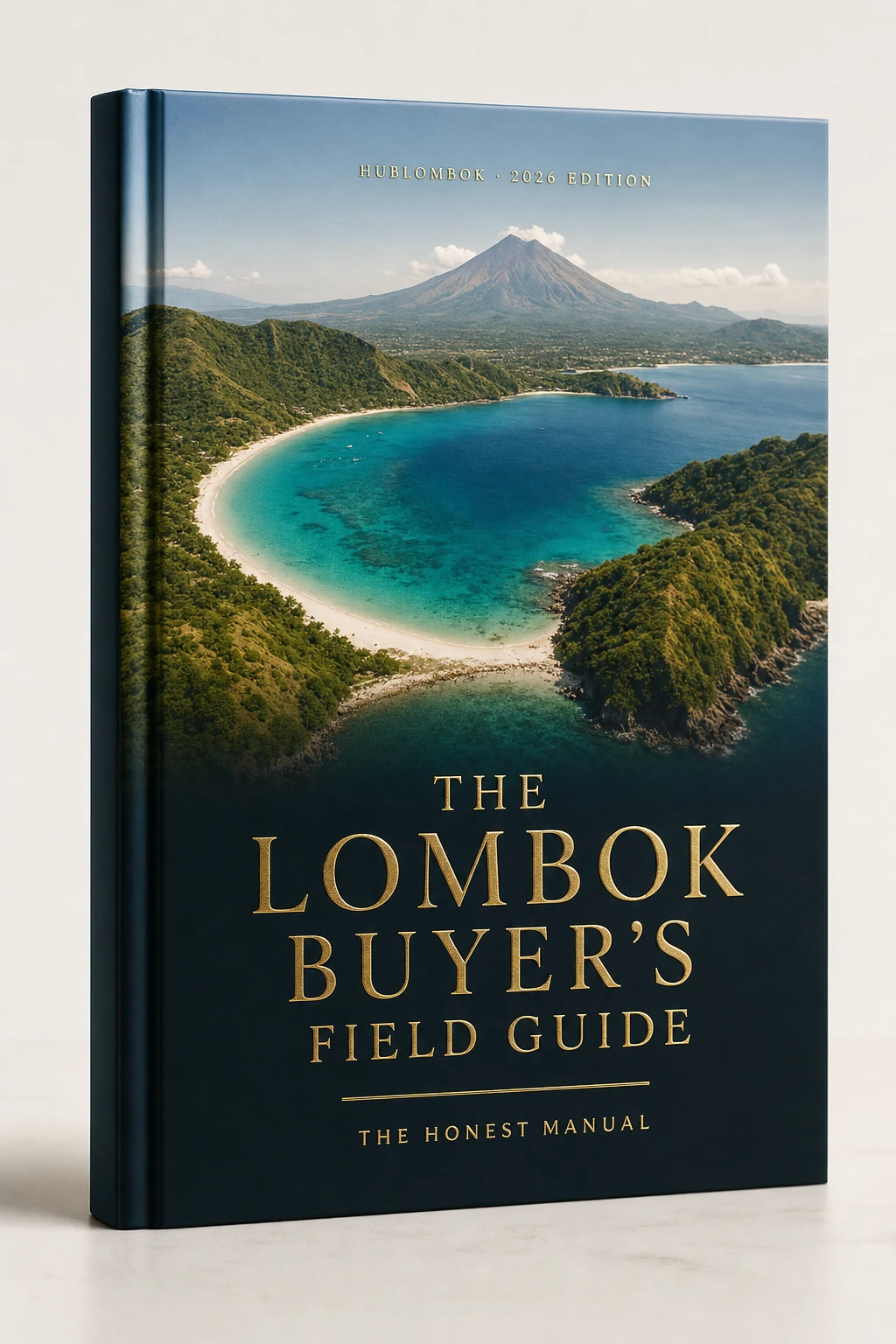
The Lombok Buyer's Field Guide
Legal structures ranked by risk, the honest ROI math line by line, all six zones ranked, and the 24-point due-diligence checklist. The whole book, free in your inbox.
See what's inside