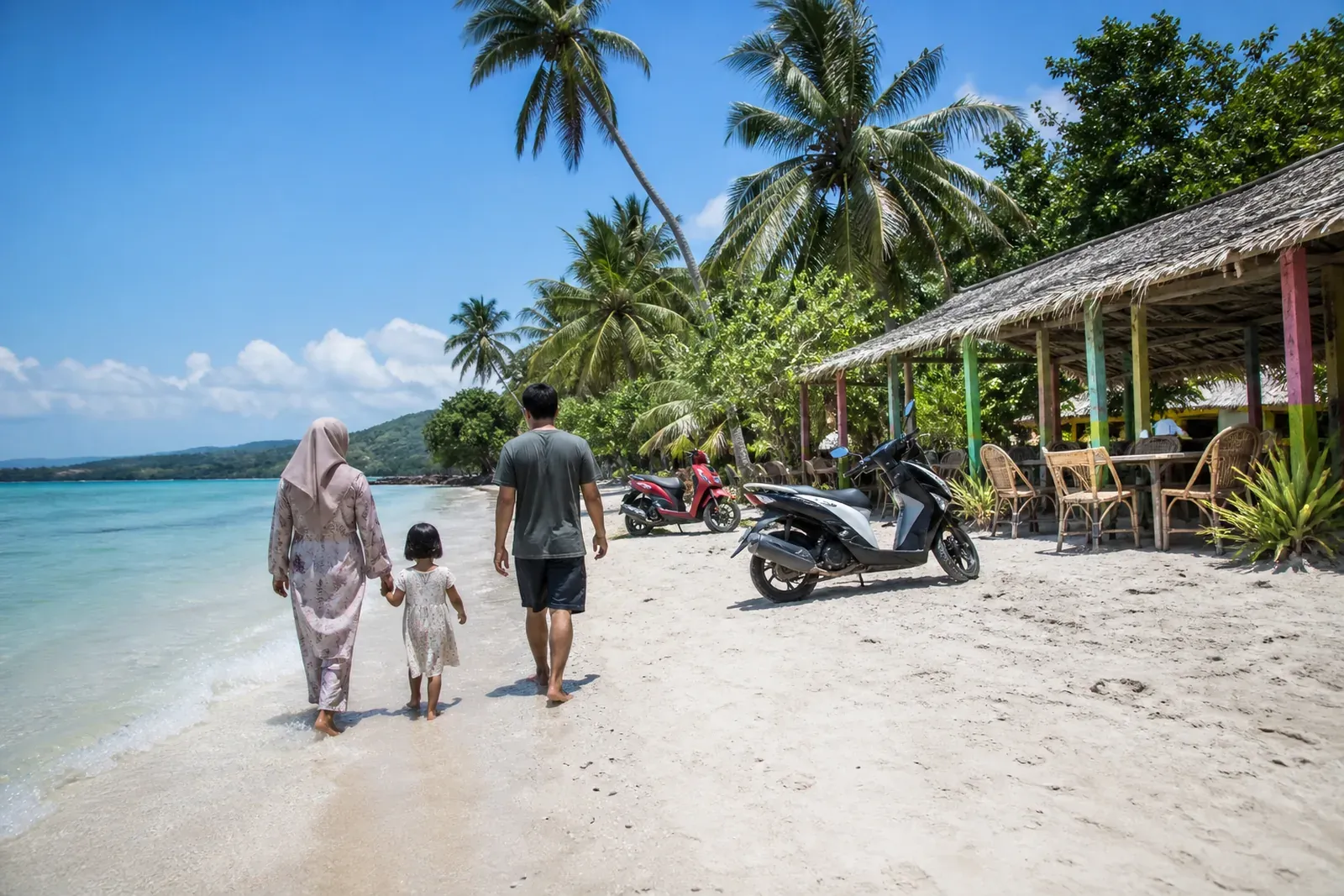
Daily Dispatch: Mandalika MotoGP Packages Put Lombok Travel in One Basket
Indonesia’s Mandalika MotoGP travel bundles sharpen Lombok’s visitor proposition ahead of the October race weekend.
Quick answer: Indonesia’s tourism-area developer has introduced bundled travel packages for the 2026 Mandalika MotoGP, combining tickets, accommodation and transport. For Lombok investors, the move matters because it turns a major sporting weekend into a more accessible, coordinated visitor product, supporting the island’s case for longer stays and broader tourism spending.
Indonesia is packaging the journey as well as the race. InJourney Tourism Development Corporation (ITDC), the state-owned developer behind the Mandalika tourism area, has launched integrated travel packages for the 2026 Pertamina Grand Prix of Indonesia, scheduled for October 9–11 at the Pertamina Mandalika International Circuit.
The practical aim is disarmingly simple: remove the friction that can deter a visitor from booking an international sporting trip. Tickets, hotels, flights, airport hospitality and logistics are being drawn together in a single purchase. For investors watching Lombok’s tourism economy, that is a more consequential development than another race-weekend headline. It is an attempt to convert global attention into a smoother, more spendable visitor itinerary.
The Context
Mandalika’s MotoGP fixture has long been presented as more than a race. ITDC’s Operations Director, Troy Warokka, described it as an economic driver capable of increasing tourist arrivals, extending stays and lifting tourism spending across Mandalika and Lombok.
That proposition is now being operationalised through the travel bundle. Rather than leaving fans to assemble a circuit ticket, flights, accommodation and transfers across multiple providers, ITDC is offering a coordinated route into the event. The programme addresses domestic and international visitors, although the packages currently on sale since August 5 were introduced for domestic tourists.
For an island destination, this matters because event demand can otherwise be highly concentrated: visitors arrive for the headline attraction, face logistical uncertainty, and leave swiftly. A package that includes accommodation, airport transfers and circuit transfers gives the organiser a direct mechanism to make the stay itself part of the product.
“MotoGP is not just a motorsport event, but an economic driver,” Warokka said, citing its potential to raise arrivals, lengthen stays and boost tourism spending.
The backdrop is encouraging, though investors should retain the distinction between a tourism narrative and an investable outcome. South Lombok’s verified market data records foreign arrivals rising by 40–50% year on year, linked to tourism recovery and the MotoGP effect. In Kuta and Mandalika, villa rates are about 38% year on year higher. Those are market indicators, not guarantees of property income, but they show why a more seamless event-travel offer is worth watching.
What ITDC Has Put on Sale
The package architecture is broad. ITDC says the bundles combine race tickets, hotel accommodation, flights, airport hospitality and logistics, with several options also prepared for international travellers.
Four domestic packages have been marketed from around Rp5 million per person, approximately US$282. One international-oriented option covers four days and three nights and starts at US$460. It includes hotel accommodation, daily breakfast, a Regular Grandstand ticket, airport transfers, circuit transfers and dedicated host assistance.
| Offer | Starting price | Included elements stated by ITDC | |---|---:|---| | Domestic package options | Rp5 million per person | Bundled travel arrangements for the race | | Four-day, three-night package | US$460 | Hotel, breakfast, Regular Grandstand ticket, airport and circuit transfers, host assistance | | Individual race tickets | Rp320,000–Rp13.5 million | Regular Grandstand through VIP Hospitality Deluxe Class |
The comparison is useful precisely because it reveals ITDC’s strategy. Individual tickets remain available, from Rp320,000 for a regular grandstand seat to Rp13.5 million for VIP Hospitality Deluxe Class. But the bundled offer shifts attention from admission alone towards an end-to-end visitor experience.
For investors, that is the relevant distinction. A ticket sale is an event transaction. A package that incorporates lodging, transport and hospitality is a tourism-economy transaction, touching a wider set of local providers and giving visitors fewer reasons to treat Lombok as a day-trip destination.
Presale tickets are available through themandalikagp.com and the GOERS application until September 16. The immediacy of that sales window makes this a live test: the industry will be able to observe whether a simplified booking proposition helps translate motorsport interest into confirmed travel demand.
 Daily Dispatch · Illustration: HubLombok (AI-generated)
The Economic Signal Beyond the Circuit
ITDC says the previous year’s race generated Rp4.9 trillion, approximately US$276.6 million, for the local economy. The figure is substantial, but it should be read carefully. It is an economic-impact claim reported by the event’s organiser, rather than a direct measure of rental revenue, property value appreciation or investor returns.
Still, the strategic logic is credible. Motorsport broadcasts give Mandalika and Lombok a profile that conventional destination advertising struggles to replicate. ITDC also pointed to the event’s international broadcast as a contributor to Indonesia’s global branding and regional development.
The package launch adds a commercial layer to that promotional effect. It seeks to ensure that visitors drawn by the broadcast and the calendar have a ready-made route into flights, beds, transfers and hospitality. In other words, it attempts to capture more of the value chain locally and make the event easier to consume for people unfamiliar with the island.
This sits neatly alongside Lombok’s wider “Bali-overflow” thesis: as travellers look beyond Bali’s higher prices and congestion, Lombok offers a less mature but increasingly visible alternative. That thesis is not a substitute for due diligence, nor does a race weekend solve seasonal demand. Yet major events can increase a destination’s recognition, support rate-setting power during peak periods and encourage investors to examine areas connected to the tourism circuit.
The key is to avoid extrapolation. One race does not establish year-round occupancy. Verified South Lombok market figures place realistic stabilised occupancy in the first three years at 55–70%, while honest net rental yields are 7–12% after management fees and realistic occupancy. Developer-quoted gross yields of 12–22% are not comparable with net returns because they exclude costs. Investors should keep those distinctions intact, especially when event-led optimism is most persuasive.
What This Means for Investors
The immediate investment implication is not that every Lombok property has suddenly become a MotoGP trade. It is that the tourism infrastructure around Mandalika is becoming more deliberate: the organiser is bundling transport, accommodation and hospitality rather than relying solely on the circuit’s pull.
For owners and prospective buyers, the sensible questions are operational:
- Does a property have a realistic route to the visitor flows created by Mandalika?
- Can its manager price and market around major events without assuming event-weekend demand persists all year?
- Are projected returns presented as gross or net, and do they account for management fees of 18–22% of gross rental revenue and OTA commissions of 15–20%?
- Is the asset’s legal structure appropriate for a foreign buyer?
Foreign investors cannot hold Indonesian freehold, or Hak Milik. Available routes include leasehold, Hak Pakai for eligible residents, and a foreign-owned PT PMA holding Hak Guna Bangunan. Nominee arrangements, in which an Indonesian holds freehold on a foreigner’s behalf, are illegal and void in court. Buyers considering a transaction should ensure deeds are executed by a licensed PPAT notary and that title, zoning and encumbrances are properly checked.
TerraNusa Advisory, HubLombok’s independent licensed-notary and legal advisory partner, supports foreign buyers with due diligence, PT PMA setup, tax matters and title transfer at BPN. This is relevant because the commercial appeal of an event-driven market does not reduce the need for legal precision; it makes it more important.
ITDC’s package launch will not answer every question about Lombok’s investment cycle. It does, however, offer a tangible sign of a maturing tourism proposition: a globally watched event is being sold as a complete stay, not merely a seat at a circuit. For investors, that is a development to monitor through bookings, accommodation performance and the quality of local visitor spend, not through headline enthusiasm alone.
Stay informed, subscribe to the free Lombok Briefing for market intelligence like this, published twice a month.
What do the new Mandalika MotoGP travel packages include?
ITDC says the integrated packages combine race tickets, hotel accommodation, flights, airport hospitality and logistics. One four-day, three-night package starts at US$460 and includes accommodation, daily breakfast, a Regular Grandstand ticket, airport and circuit transfers, plus dedicated host assistance.
When is the 2026 Mandalika MotoGP race?
The 2026 Pertamina Grand Prix of Indonesia is scheduled for October 9–11 at the Pertamina Mandalika International Circuit in Central Lombok. Presale tickets are available online through themandalikagp.com and the GOERS application until September 16.
Does Mandalika MotoGP guarantee higher Lombok villa returns?
No. The event may support visitor demand and tourism spending, but it does not guarantee property income. In South Lombok, realistic stabilised occupancy is 55–70% in the first three years, while honest net rental yields are generally 7–12% after management fees and realistic occupancy.
The Lombok Buyer's Field Guide
Legal structures ranked by risk, the honest ROI math line by line, all six zones ranked, and the 24-point due-diligence checklist. The whole book, free in your inbox.
See what's inside