Indonesia’s Energy Self-Reliance Plan: What Investors Should Watch
Indonesia has set out six routes towards energy self-reliance. For Lombok investors, the roadmap and execution matter more than the ambition.
Quick answer: Indonesia has outlined six measures aimed at reducing reliance on overseas energy supplies, spanning domestic resources, fuel blends, solar, oil production, nuclear planning and a national roadmap. For Lombok investors, the immediate implication is contextual: monitor delivery, investment requirements and implementation schedules before drawing conclusions about local economic effects.
Energy policy is rarely a remote concern for property and tourism investors. It shapes the operating environment beneath more visible decisions: the cost and reliability of supply, the direction of public investment, and the country’s capacity to absorb external shocks. Yet an announced strategy is not the same as an investable outcome. Indonesia’s latest outline is therefore best read as a policy framework whose practical consequences will depend on the roadmap still to be prepared.
The Context
Indonesia’s government has presented energy self-reliance as an economic-resilience objective rather than a narrow technical programme. Cabinet Secretary Teddy Indra Wijaya said President Prabowo Subianto had stressed the importance of meeting domestic energy needs through Indonesia’s own strengths and resources, while reducing dependence on energy supplies from abroad.
The announcement followed a National Energy Council session led by the President at the State Palace, attended by ministers from the Red and White Cabinet and council members. The language matters. It places energy within a wider view of national development and geopolitical flexibility, rather than treating it solely as an industrial-policy issue.
For an investor assessing Indonesia, that framing offers both relevance and restraint. Relevance, because energy availability and the terms on which it is supplied influence the wider economy. Restraint, because the source describes objectives and steps, not completed projects, local allocations or measured effects for individual islands, sectors or assets.
“Energy self-reliance is not only about meeting domestic energy needs,” Wijaya said, but also about strengthening economic resilience and widening Indonesia’s room to determine its development direction amid dynamic global geopolitics.
That is a broad national proposition. It should not be converted into a shortcut for forecasting tourism demand, villa income, land values or local utility conditions in Lombok. Those conclusions require evidence that is not contained in the government’s outline.
Six Steps, One Delivery Question
Citing Energy and Mineral Resources Minister and National Energy Council Daily Chairman Bahlil Lahadalia, Wijaya described a programme built around six steps.
The first is the accelerated development of domestic energy sources. The list is deliberately expansive: palm oil, corn, cassava, sugarcane, coal, geothermal energy and solar energy. It signals an approach that combines agricultural feedstocks, conventional resources and renewable generation rather than relying on a single technology or fuel.
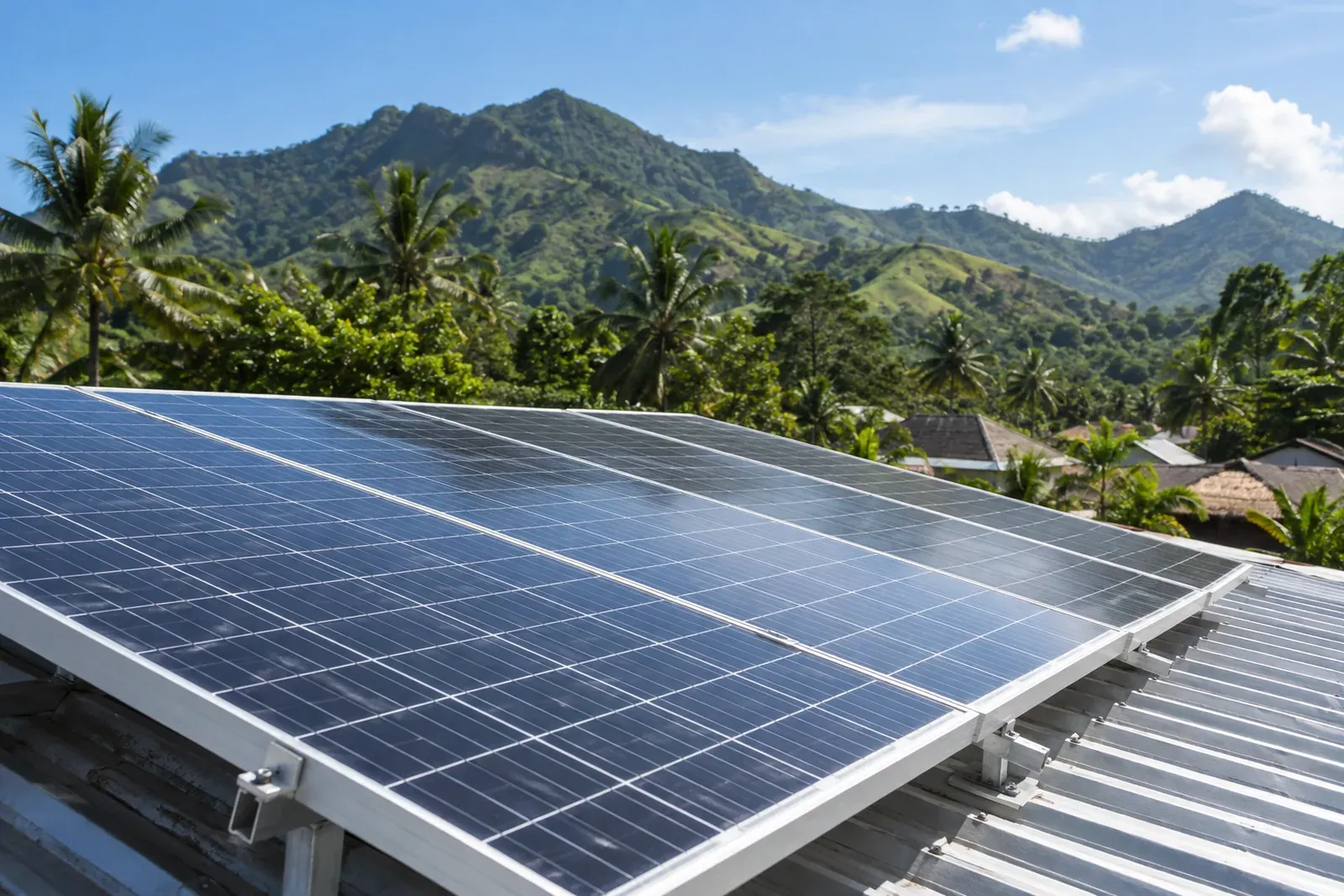
The second step is the development of B50 and E50 fuel blends, intended to reduce dependence on imported fuel oil. The third is an acceleration of solar power plants, or PLTS, with the government aiming for 100 gigawatts peak within three years.
The remaining elements concern domestic oil production, nuclear planning and execution discipline:
- Optimising existing oil fields and wells, while accelerating exploration, to increase domestic oil production.
- Following up plans for a nuclear power plant, in line with studies and stages already prepared as part of strengthening the national energy mix.
- Drawing up a comprehensive, measurable energy roadmap covering annual targets, investment needs, implementation schedules and the division of responsibilities.
The final item is the most consequential for investors attempting to distinguish policy intent from implementation. A roadmap can establish the practical sequence: what is expected to happen, what capital is required, who is responsible, and when progress can be evaluated. Until it is available, the six-step framework is a clear statement of direction but not a detailed guide to project-level opportunity.
The programme also contains a tension that investors should acknowledge without trying to resolve prematurely. It brings together a range of energy resources and technologies, including coal, renewable generation, biofuel blends, oil exploration and nuclear planning. The government’s stated aim is self-reliance; the balance between those components, and their eventual geographic distribution, will be determined through subsequent decisions and implementation.
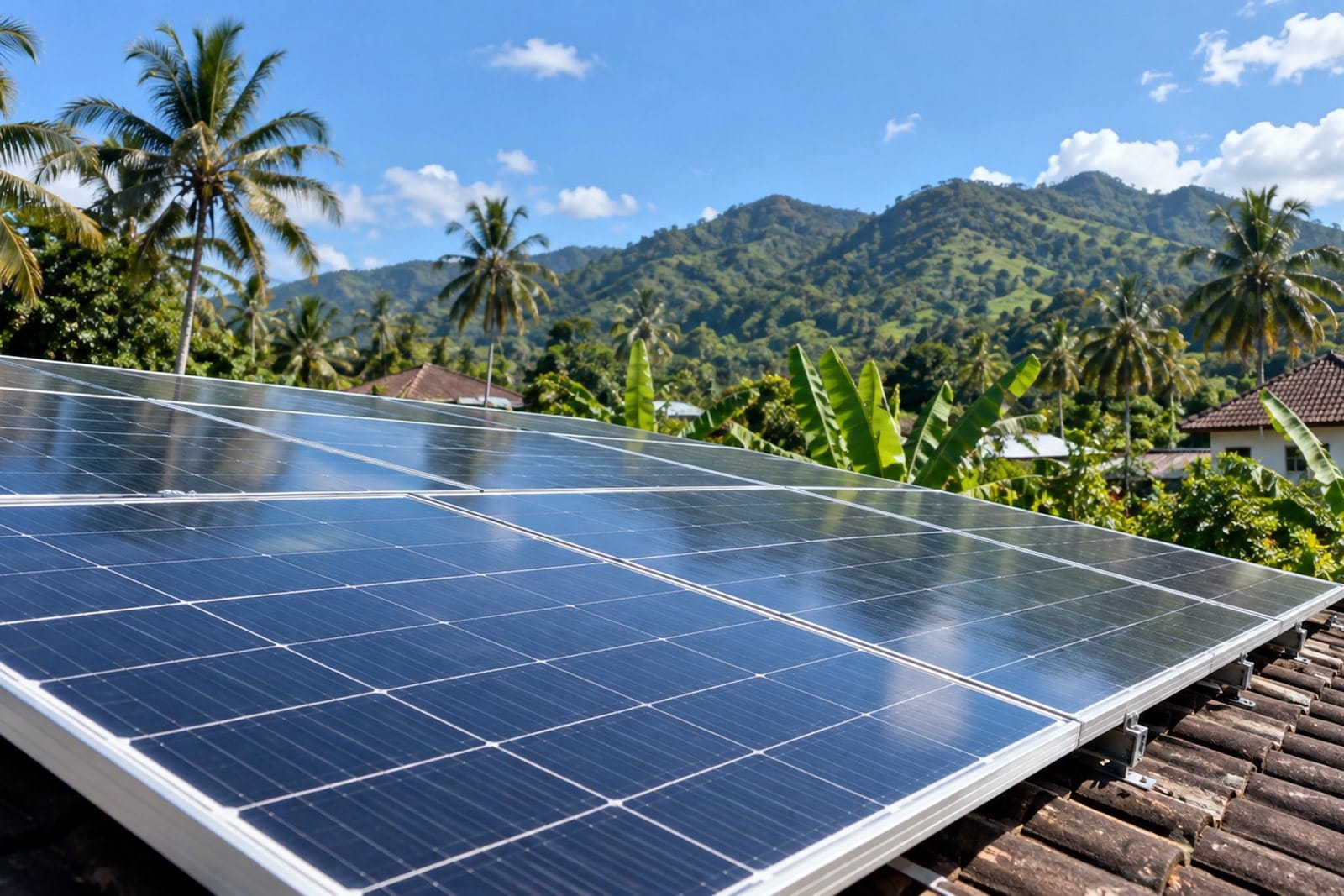 Indonesia’s Energy Self-Reliance Plan · Illustration: HubLombok (AI-generated)
A National Strategy, Not Yet a Lombok Forecast
Lombok’s relevance to the discussion lies in its place within Indonesia’s broader investment environment. International investors considering Indonesian assets are exposed not only to an individual location’s attractions and risks, but also to national policy choices that may affect the conditions in which businesses and households operate.
That does not make every national announcement immediately local. The source does not specify energy projects for Lombok, changes to local power supply, investment commitments for the island, or any projected impact on tourism and real estate. It would be misleading to infer such outcomes from a national statement alone.
Still, the policy provides a useful analytical lens. Investors can separate three questions that are often bundled together:
| Question | What the announcement establishes | What remains to be seen | |---|---|---| | Strategic direction | A stated goal of greater energy self-reliance | How priorities are translated into projects | | Energy mix | Interest in domestic resources, solar, fuel blends, oil and nuclear planning | The eventual balance and execution of those elements | | Investment framework | A commitment to a measurable roadmap | Annual targets, investment needs, schedules and responsibilities |
The distinction is especially important in a market where narrative can travel faster than infrastructure. A national ambition may be commercially significant over time, but it is not evidence of a completed improvement to a particular asset’s economics. The disciplined investor asks which part of the policy is already in force, which part is at the planning stage, and which evidence would demonstrate progress.
In this case, the solar objective is specific in scale and timing: 100 GWp of PLTS within three years. The announcement also specifies an intention to increase oil production through existing fields, wells and exploration, and to consider follow-up plans for a nuclear power plant. But it does not provide a local project list, a financing breakdown, an island-by-island delivery schedule or operational milestones for Lombok.
That absence is not a criticism of the policy. It is simply the boundary of the available information. Investors should preserve that boundary, particularly when considering long-lived assets whose attractiveness can be affected by many variables beyond national energy policy.
What This Means for Investors
The practical response is to treat Indonesia’s energy self-reliance agenda as a development worth following, not as a basis for immediate assumptions about returns. The announcement indicates that the government sees domestic energy production and a more diversified energy mix as part of economic resilience. Its proposed roadmap may become the document that enables investors to assess delivery more closely.
A sensible monitoring list is short:
- Watch for the comprehensive energy roadmap and its annual targets, investment needs, implementation schedules and assigned responsibilities.
- Distinguish between stated ambitions, planned studies and operational projects.
- Avoid translating national objectives into projected occupancy, rental income, capital appreciation or utility outcomes for a Lombok asset without separate evidence.
- Consider energy policy alongside the legal, commercial and location-specific due diligence appropriate to any Indonesian investment.
For European, Australian and American investors, this is the value of a notebook approach. It resists both cynicism and enthusiasm untethered from evidence. The government has articulated a coherent objective: reduce reliance on foreign energy supplies by mobilising domestic resources and setting a measurable plan. Whether that objective changes the economics of a particular investment will depend on the details that follow.
Indonesia’s energy agenda may ultimately matter to Lombok through the broader national environment in which the island operates. For now, the investable conclusion is modest but useful: the policy direction is clear, while its local implications remain to be demonstrated through the roadmap and implementation.
Stay informed: subscribe to the free Lombok Briefing, published twice a month (the 1st and 15th), for market intelligence like this.
What are Indonesia’s six energy self-reliance steps?
The government outlined domestic energy development, B50 and E50 fuel blends, accelerated solar power plants, higher domestic oil production, nuclear-power follow-up planning and a measurable national energy roadmap. The roadmap is intended to cover annual targets, investment needs, implementation schedules and responsibilities.
Does the announcement identify energy projects for Lombok?
No. The source sets out a national policy direction and does not identify Lombok-specific energy projects, local supply changes, investment commitments or projected effects on tourism or property. Investors should wait for more detailed implementation evidence before making local assumptions.
What solar target has Indonesia announced?
Indonesia’s government said it would accelerate solar power plants, known as PLTS, towards **100 gigawatts peak** within **three years**. The announcement does not provide a Lombok-specific allocation, project list or financing breakdown for that target.

The Lombok Buyer's Field Guide
Legal structures ranked by risk, the honest ROI math line by line, all six zones ranked, and the 24-point due-diligence checklist. The whole book, free in your inbox.
See what's inside