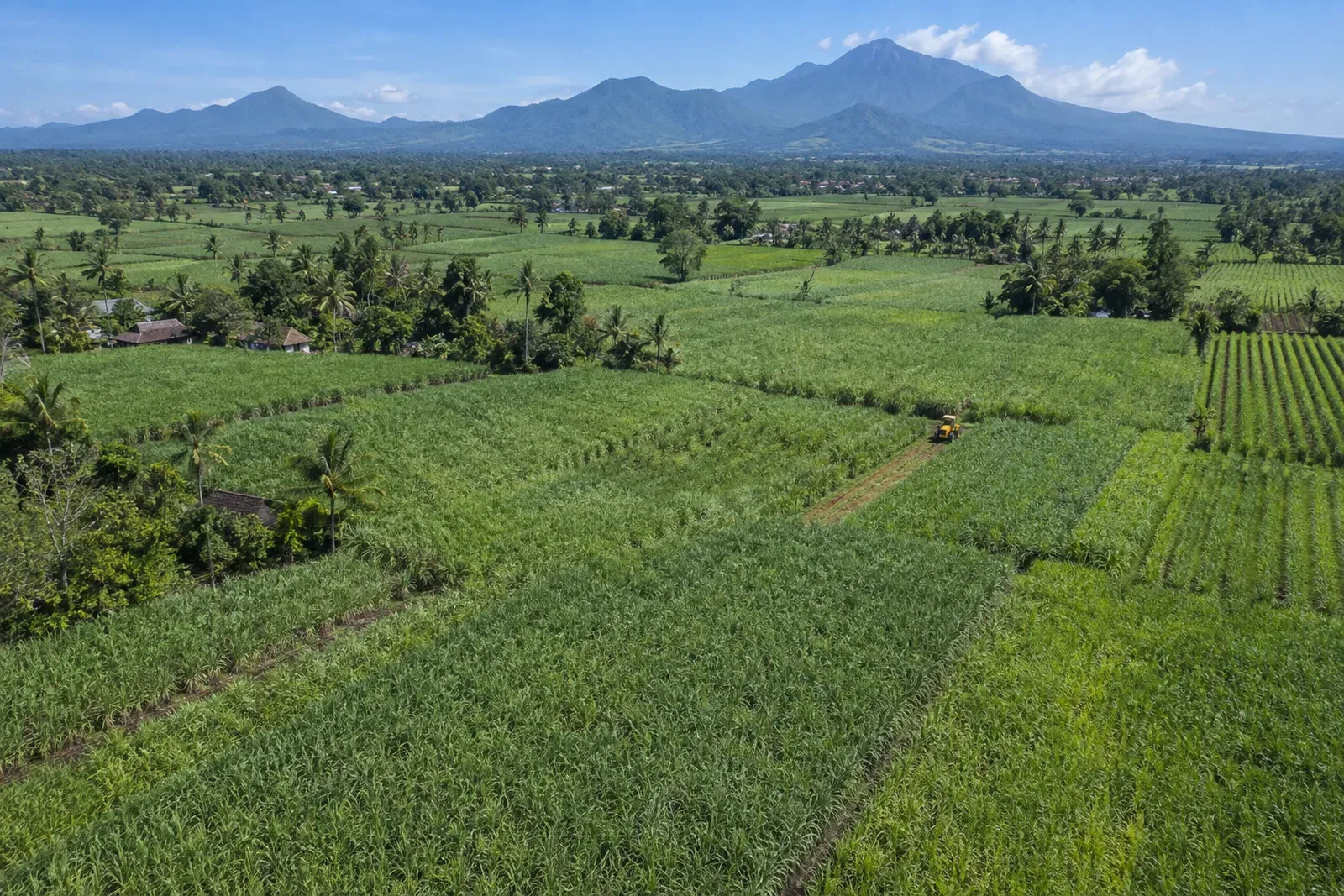
Indonesia Sets a 2 Million Hectare Sugarcane Target to Power Its E20 Fuel Plan
President Prabowo has ordered two million hectares of sugarcane readied for ethanol to reach E20 fuel within two years. Land, not technology, is the stated bottleneck.
Indonesia's plan to move to an E20 fuel blend now has a land target attached. President Prabowo Subianto has told Agriculture Minister Andi Amran Sulaiman to prepare two million hectares of sugarcane plantations for ethanol production, with the goal of delivering the national E20 programme within two years.
What the government decided
The instruction was issued at a limited cabinet meeting at the Presidential Palace in Jakarta, according to Antara. Amran has been tasked with securing the land. The Investment Management Agency Danantara has been asked to develop the industrial infrastructure the programme needs.
Coordinating Minister for Food Zulkifli Hasan explained the division of labour at a press conference after the meeting on Wednesday, 16 September. “Within the next two years, we can produce at least E20 fuel,” he said. “Therefore, the Agriculture Minister was asked to prepare a plan, including land allocation, while Danantara will handle the industrial side, specifically ethanol conversion.”
The announcement at a glance
- 2 million hectares of sugarcane plantations to be prepared for ethanol production
- E20 fuel targeted within two years
- Land to come from existing plantation areas in Kalimantan, Sumatra, Java and Papua
- All sugarcane for the blend to be 100 percent domestically sourced
- E20 framed as a first step toward a long-term E50 blend
Why sugarcane, and why land is the story
Zulkifli said sugarcane was chosen over corn and cassava as the primary feedstock because the available sugarcane acreage was considered the most viable option for immediate use. The argument, in other words, rests on what land can be brought into service quickly rather than on a comparison of the crops themselves.
The minister was candid that land had been the sticking point. “Land availability was indeed the bottleneck,” he said. “However, after today's discussion, considering areas in Kalimantan, Sumatra, Java and Papua, we can secure the 2 million hectares.” He then attached a condition to the timetable: “If we secure that 2 million, God willing, we can meet the E20 requirements within two years.”
That conditional phrasing is worth noting. The two-year goal is presented as following from the land being secured, not as an independent commitment. It is also a statement of intent from the government, not a report of plantations that have already been assigned.
A stepping stone, and a timetable to reconcile
Zulkifli described E20 as an initial stepping stone toward the government's long-term objective of an E50 fuel blend. He also confirmed that all sugarcane used for the 20 percent ethanol-blended fuel will be domestically sourced.
Antara's related coverage adds two threads. One headline reports that Indonesia targets an E20 ethanol blend by 2029. Another says Indonesia invites private firms to build ethanol plants for the E20 push. We have only the headlines, not the reporting behind them, so we draw no conclusions about their detail. What can be said is that the two-year window described this week and the 2029 date in the related headline are not obviously the same timetable. Anyone tracking the programme should watch which one officials use going forward.
What has not been specified
The announcement, as reported, leaves several questions open. It does not put a price on the programme or say how it will be financed. It does not say how much ethanol two million hectares of sugarcane would yield, or which existing plantations would be allocated. It does not set out a schedule for the land allocation plan that Amran has been asked to prepare, or for the industrial build-out that Danantara will handle. Those are precisely the details that will determine whether the two-year goal is credible.
What this means for investors
For readers of HubLombok, the first point is scope. None of the four regions named in the announcement is Lombok, and nothing in the source ties the programme to the island. We therefore draw no link between the E20 plan and South Lombok property or land values, and we would treat any such claim with caution until officials publish details.
The second point is policy direction. The government is directing land and a major investment agency toward a single energy objective, and the stated E50 ambition indicates that the goal extends beyond E20. That is useful context for anyone assessing Indonesia's policy environment, though on its own it says little about returns.
The third point is execution risk. The timetable is conditional on securing land, the minister himself called land the bottleneck, and the related headlines point to a different target year. A headline target and an implemented programme are different things. The concrete signals to watch are:
- The land allocation plan from the Agriculture Minister, including which plantations are named
- Danantara's plans for ethanol conversion capacity
- The role of private firms in building ethanol plants
- Which target date officials adopt: two years or 2029
The next real signal will be the land allocation plan itself. Once Amran names plantations and Danantara names sites, the two-year goal will move from ambition to something investors can measure.
Stay informed, subscribe to the free Lombok Briefing for analysis like this, published twice a month.
What is Indonesia's E20 fuel programme?
E20 is a fuel blend containing 20 percent ethanol. According to Antara, President Prabowo has asked for two million hectares of sugarcane to be prepared so Indonesia can produce at least E20 within two years, with a longer-term E50 blend as the wider objective.
Where will the sugarcane for the E20 programme come from?
Coordinating Minister for Food Zulkifli Hasan said the government plans to use existing plantation land across Kalimantan, Sumatra, Java and Papua. He confirmed all sugarcane for the blend will be 100 percent domestically sourced. The Agriculture Minister has been asked to prepare the land allocation plan.
Does the E20 plan affect Lombok property investors?
The announcement as reported does not mention Lombok or any effect on property. The named plantation regions are Kalimantan, Sumatra, Java and Papua, so investors should treat any link as unproven and wait for the land allocation details before drawing conclusions.

The Lombok Buyer's Field Guide
Legal structures ranked by risk, the honest ROI math line by line, all six zones ranked, and the 24-point due-diligence checklist. The whole book, free in your inbox.
See what's inside