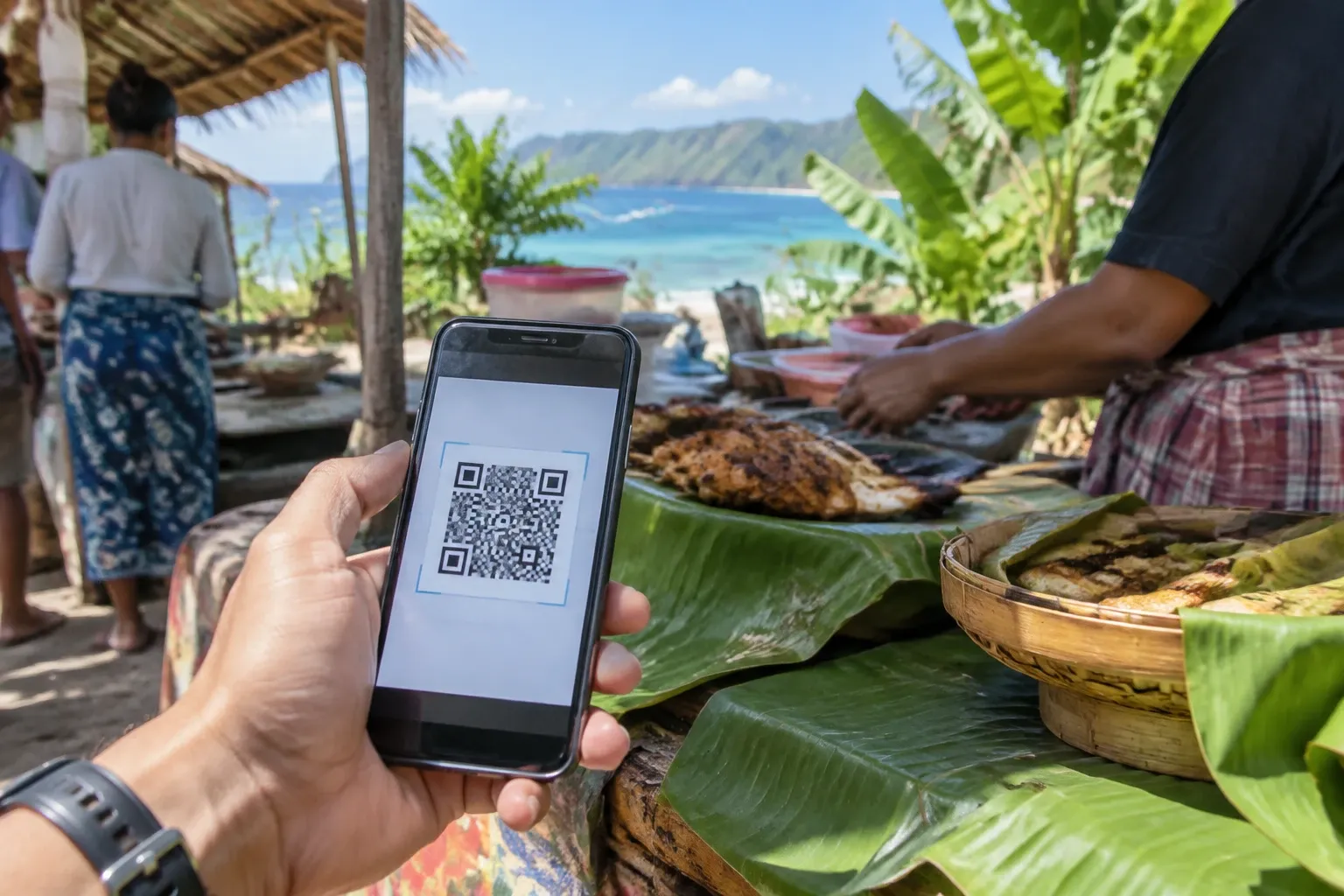
Bank Indonesia Eyes QRIS Expansion to Saudi Arabia, India, Vietnam and Australia
Bank Indonesia is in talks to extend QRIS cross-border payments to four new markets, a quiet but consequential move for tourism-driven regions like Lombok.
Indonesia's central bank is quietly rewiring how foreign visitors will pay for their morning coffee, their villa deposit, and everything in between. Bank Indonesia (BI) has confirmed it is in discussions to extend its Quick Response Code Indonesian Standard (QRIS) payment network to Saudi Arabia, India, Vietnam and Australia, a move that could reshape the plumbing of tourist spending across the archipelago.
What Bank Indonesia Actually Said
Speaking on Wednesday, Fitria Irmi Triswati, Executive Director of BI's Payment System Policy Department, said the central bank is engaged in "high-level discussions with international counterparts to broaden regional payment connectivity." Her exact words: "We are exploring possibilities with counterparts in India, Saudi Arabia, Vietnam and Australia, as regional payment connectivity is expanding. Eventually, this will involve not only QRIS but also Indonesia's BI-FAST system."
This is exploratory, not contracted. BI has not announced timelines, technical milestones, or signed agreements with any of the four countries named. What it has announced is intent, and in payments infrastructure, intent from a central bank is usually the first visible signal of a multi-year build-out.
The Numbers Behind the Ambition
QRIS has grown from a domestic experiment launched in 2019 into one of the country's most widely used payment rails. According to BI, the system has now recorded 15 billion transactions, closing in on its target of 17 billion. The merchant base has expanded to 45 million business entities, against a target of 47 million, while the user base has reached 78 million, already surpassing its original goal of 70 million.
Much of that growth, Fitria noted, was accelerated by the pandemic-era shift to contactless payments, a habit that has stuck long after the public health rationale faded.
Where Cross-Border QRIS Already Works
Cross-border QRIS connectivity is currently live across six partner nations: Thailand, Malaysia, Singapore, Japan, South Korea and China, against an overall target of eight countries. Adding Saudi Arabia, India, Vietnam and Australia would more than double that footprint, though BI has been careful to frame the four new markets as under discussion, not confirmed additions to the eight-country target.
"So, we are looking at expanding to more countries, improving merchant quality and broadening the available features. It goes beyond simple scanning to include CPM and QRIS-Tap.", Fitria Irmi Triswati, Bank Indonesia
A System Built to Bend to Local Habits
One of the more interesting details in Fitria's remarks is how deliberately BI is tailoring the rollout to regional payment culture rather than exporting a single standard wholesale. Consumers in Japan and South Korea, she said, generally prefer Customer Presented Mode (CPM), where the merchant scans the customer's QR code rather than the reverse. In European markets, by contrast, consumer preference leans toward contactless tapping, which is why BI is developing QRIS-Tap alongside the existing scan-based flow.
That flexibility matters because it suggests BI is designing for adoption rather than for uniformity, a pragmatic approach for a payment system trying to compete with entrenched card networks and mobile wallets in markets like Australia and Saudi Arabia.
What This Means for Investors
For readers tracking Indonesia's tourism and property markets rather than its payments sector, the relevance is indirect but real. Foreign arrivals to Indonesia are already running 40-50% higher year-on-year, a trend BI itself links to tourism recovery and the country's growing international profile. Frictionless, familiar payment rails for visitors from India, Australia, Saudi Arabia and Vietnam, four of Indonesia's more significant inbound tourism and investment source markets, would remove a small but persistent piece of visitor friction: the awkwardness of paying with a foreign card or scrambling for cash in a destination that has otherwise gone largely cashless.
This is not a property story and should not be read as one. Nothing here changes land prices, rental yields, or the legal structures available to foreign buyers in Lombok or anywhere else. But payment infrastructure is one of the quiet enablers of tourism-driven regions, and a smoother path for Australian and Indian visitors in particular, both meaningful source markets for Indonesian travel, is a modest tailwind for any market that depends on repeat foreign visitation and, eventually, foreign capital.
The Road Ahead
BI has not put a date on when any of the four prospective markets might go live, and central bank negotiations of this kind routinely take years to move from discussion to interoperable infrastructure. The more immediate signal is BI's own framing: this is about improving merchant quality and broadening features, not just adding flags to a map. Investors and travellers alike should treat this as a development to watch rather than a change to act on today.
Stay informed, subscribe to the free Lombok Briefing for analysis like this, published twice a month.
Has Bank Indonesia confirmed QRIS will work in Australia and India?
No. BI has only confirmed it is in exploratory, high-level discussions with counterparts in Saudi Arabia, India, Vietnam and Australia. No agreements, timelines or technical milestones have been announced for any of the four markets.
How big is QRIS today?
According to Bank Indonesia, QRIS has recorded 15 billion transactions (nearing a 17 billion target), reaches 45 million merchants (target 47 million), and has 78 million users, already above its original 70 million target.
Does this QRIS news affect Lombok property or tourism investment?
Only indirectly. It does not change land prices, yields or legal buying structures. Smoother payments for visitors from source markets like Australia and India could modestly support tourism, which underpins Lombok's rental economy, but this is an infrastructure story, not a property one.

The Lombok Buyer's Field Guide
Legal structures ranked by risk, the honest ROI math line by line, all six zones ranked, and the 24-point due-diligence checklist. The whole book, free in your inbox.
See what's inside