Prabowo Sets Out Self-Reliance Claims as Government Nears Two Years
President Prabowo Subianto has highlighted food reserves, diesel self-sufficiency and maritime plans as achievements of his administration.
President Prabowo Subianto has used a public address in East Java to present food, energy and maritime policy as evidence of his government’s progress since taking office. For investors watching Indonesia, the speech offers a clear statement of political priorities, while leaving important questions about implementation, costs and measurable outcomes unanswered.
A case for government delivery
Speaking at an event marking the 100th anniversary of the Darussalam Gontor Islamic Boarding School in Ponorogo, East Java, Prabowo said his administration had delivered achievements beneficial to Indonesia and its people.
He described himself as increasingly optimistic as the government approached two years in office, and credited the coalition supporting the administration, alongside ministers and governors, with helping deliver its agenda. The President framed the government’s record as proof that it had focused on execution rather than rhetoric.
That emphasis matters. Political messaging centred on delivery can shape the context in which investors assess policy continuity, state capacity and the direction of national priorities. Yet the address was a statement of government achievement, not a detailed policy report. It did not provide supporting figures, implementation milestones or independent assessments for the claims cited.
Key message: Prabowo presented national self-reliance in food and energy as a central achievement and continuing policy objective.
Food security at the centre of the argument
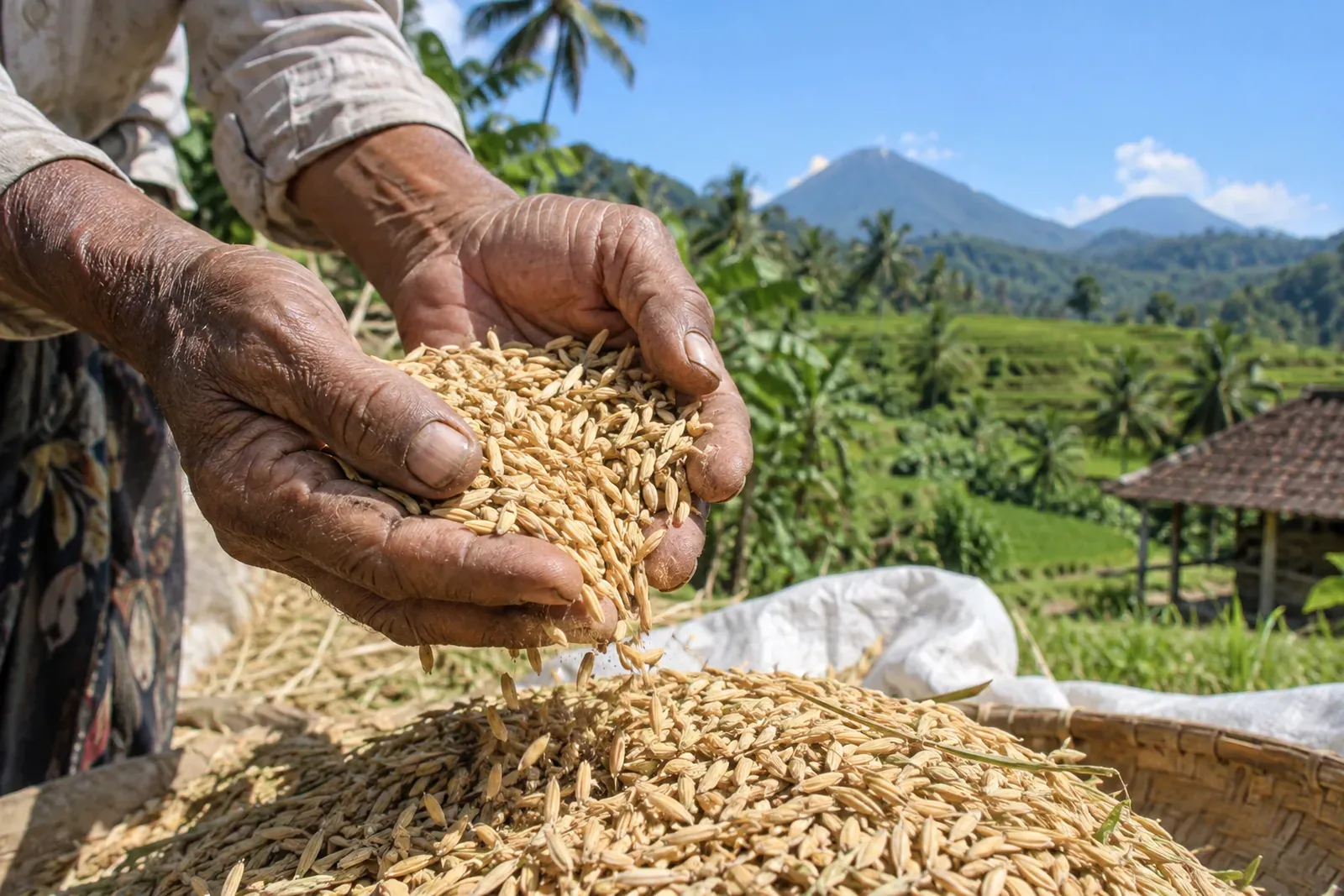
Prabowo said Indonesia had achieved food self-sufficiency and that food reserves were sufficient. He also said the government had prepared for adverse weather conditions, including El Nino and drought.
Food resilience is not simply an agricultural matter. It intersects with household purchasing power, supply chains, public expenditure and the broader confidence of businesses operating in Indonesia. In his remarks, however, the President did not specify which food products were covered by his self-sufficiency claim, the scale of reserves, or how the government measures resilience against climatic disruption.
For investors, that distinction is important. A political commitment to food security can be material, but the investment implications depend on the policies used to pursue it, their financing and their practical effect over time. The speech establishes the government’s stated direction. It does not, by itself, establish the commercial impact of that direction.
Diesel claim highlights an energy ambition
The President also said Indonesia had stopped importing diesel fuel from July 1 and was now self-sufficient in diesel. He said the fuel was produced from palm oil and described palm oil as having multiple uses.
This is one of the speech’s most concrete claims, because it refers to a stated change in imports from a specific date. But the address did not set out volumes, production capacity, the blend or process involved, pricing implications, or the duration over which self-sufficiency would be assessed.
The wider message was nonetheless unambiguous. Prabowo linked domestic energy supply with national independence, arguing that Indonesia should reduce reliance on other countries. For international investors, the relevant issue is not whether self-reliance is politically attractive. It is how policy is translated into regulation, infrastructure, procurement and investment conditions.
A speech can signal intent. It cannot substitute for the operational detail that investors typically need before drawing conclusions about a sector, company or project.
Maritime plans point to the next phase
Prabowo said the government planned to begin building thousands of fishing vessels next year as part of efforts to manage Indonesia’s maritime resources. He presented the initiative alongside food and energy measures as part of a broader push for national self-reliance.
The announcement places maritime development within the same strategic frame as food reserves and diesel supply. It also suggests that the administration sees domestic resources as a foundation for economic independence.
However, the source material does not identify where vessels would be built, who would operate them, how the programme would be funded, or what timeline would govern delivery. Those unanswered questions are not a criticism of the ambition. They are the practical matters that will determine how any plan is experienced by investors, local businesses and coastal communities.
What this means for investors
For investors with exposure to Indonesia, the address is best read as a policy signal rather than a complete investment case.
- Food policy: The government is publicly prioritising food self-sufficiency, reserves and preparedness for weather disruption.
- Energy policy: Prabowo has made diesel self-sufficiency, including production from palm oil, a prominent achievement claim.
- Maritime policy: The planned construction of thousands of fishing vessels signals further attention to resource management and domestic capacity.
- Evidence remains essential: The speech did not provide the detailed data needed to evaluate outcomes, costs, commercial beneficiaries or execution risk.
Indonesia’s investment story is shaped by more than one speech, but senior political statements can provide useful context. The core theme here is strategic autonomy: a government seeking to show that domestic resources can support food, fuel and maritime objectives.
Investors should therefore watch for the policies and disclosures that follow. The strongest indicator will be whether official ambitions are accompanied by transparent implementation plans and evidence that allows markets to assess progress on their merits.
The coming period will show whether the administration’s self-reliance narrative develops into a more detailed framework for investors and businesses operating across Indonesia.
Stay informed: subscribe to our free Lombok Briefing, published twice a month (the 1st and 15th), for analysis like this.
What did Prabowo claim were his government’s main achievements?
President Prabowo said his government had achieved food self-sufficiency, maintained sufficient food reserves, anticipated adverse weather conditions and ended diesel fuel imports from July 1. He also outlined plans to build thousands of fishing vessels starting next year.
Did the address provide data supporting the food and diesel claims?
No. The source reports the President’s statements but does not provide figures on food reserves, diesel production, import volumes, production capacity, costs or independent assessments. Investors should treat the remarks as government claims and seek subsequent policy detail.
Why is this speech relevant to international investors in Indonesia?
The speech signals that the government places food security, domestic energy supply and maritime resource management within a broader self-reliance agenda. Its investment relevance will depend on the regulations, funding, implementation plans and measurable outcomes that follow.

The Lombok Buyer's Field Guide
Legal structures ranked by risk, the honest ROI math line by line, all six zones ranked, and the 24-point due-diligence checklist. The whole book, free in your inbox.
See what's inside