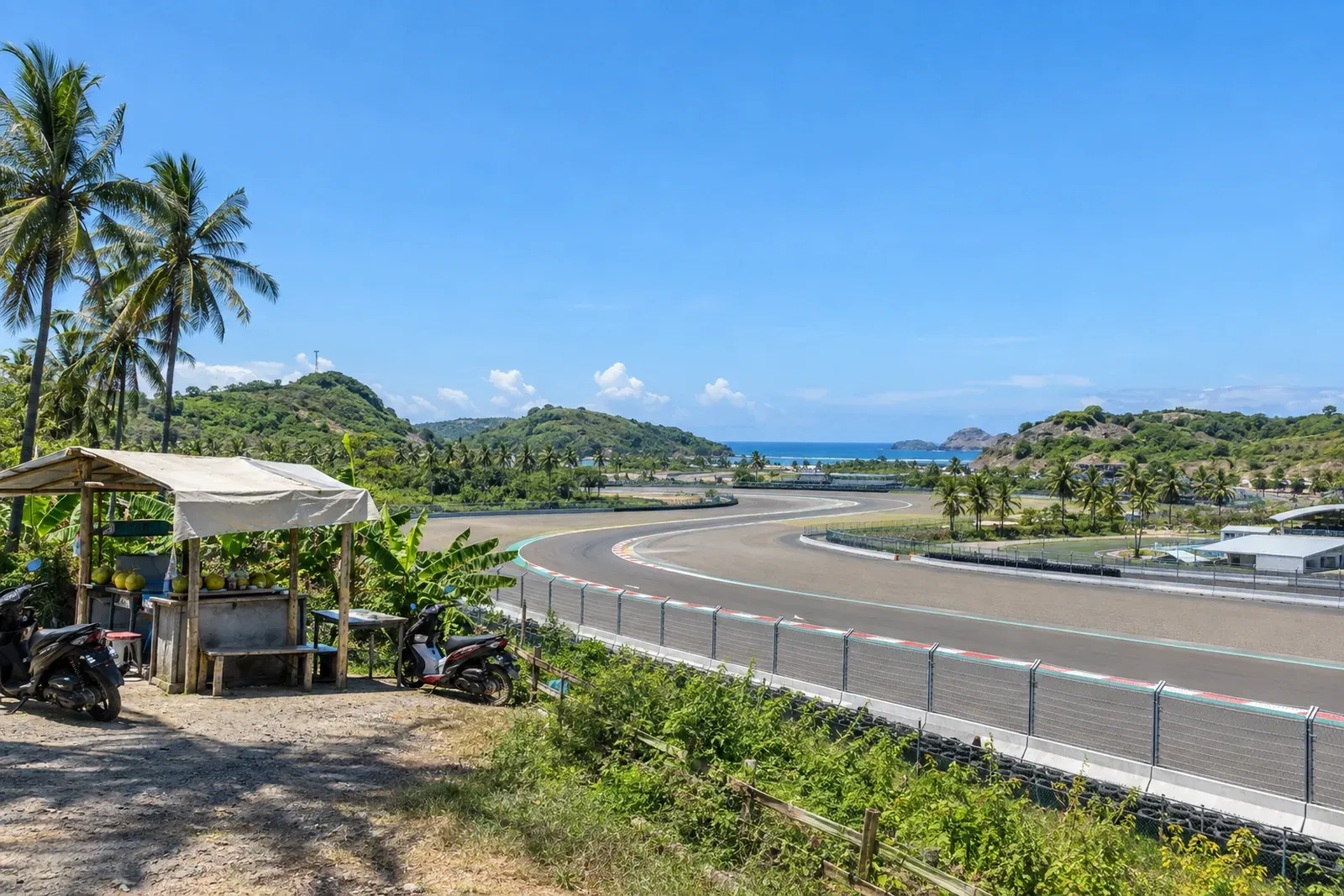
Mandalika International Festival 2026 Moves to December Under Safety Plan B
Mandalika International Festival 2026 has been rescheduled from October to December, with organisers citing participant and visitor safety.
Mandalika International Festival 2026 has been moved from 22–25 October 2026 to 10–13 December 2026, according to Radar Lombok. Organisers have activated a contingency arrangement described as Plan B, placing safety for participants and visitors ahead of the original timetable.
For investors watching South Lombok, the announcement is a reminder that destination growth is not a straight line: event calendars can change, while the longer-term investment case depends on location, operating discipline and legal structure.
A revised timetable for the fifth edition
Radar Lombok reports that the fifth edition of the Mandalika International Festival had been planned for 22–25 October 2026 in West Nusa Tenggara (NTB). It is now officially scheduled for 10–13 December 2026.
Key update: Mandalika International Festival 2026 is scheduled for 10–13 December 2026, following a safety-led decision to activate Plan B.
The source describes changing the schedule of an international event as far from straightforward. Yet it presents the decision as a deliberate measure intended to prioritise the safety of those attending and participating.
The report refers to a cancellation, but the supplied source extract does not provide further details. Investors should therefore avoid drawing conclusions about the precise operational cause, wider visitor implications or the final event programme until organisers provide additional first-party information.
Why calendar resilience matters in a developing destination
Event-led tourism can be valuable for a destination, but it also introduces an important practical consideration for accommodation owners and prospective buyers: bookings tied to a particular weekend may be exposed to schedule changes. A responsible investment assessment should distinguish between a short-term event surge and the recurring demand required to support a property across a full operating cycle.
Mandalika is the special economic zone around the MotoGP circuit, adjacent to Kuta rather than synonymous with it. Under HubLombok’s verified market data, Mandalika land is quoted at Rp 100–150 million per are, or approximately $6,100–9,100 per are. Kuta, the town and South Lombok’s demand and liquidity leader, is priced separately at Rp 300–400 million per are, approximately $18,200–24,200 per are.
These are market ranges, not valuations for a particular plot. Site-specific factors, title, access, zoning and development readiness still require due diligence before any purchase decision.
The broader South Lombok backdrop remains relevant, but should not be confused with a guarantee about this festival. Verified market figures show foreign arrivals trending 40–50% year on year, reflecting tourism recovery and the MotoGP effect. Kuta/Mandalika villa rates are reported at about +38% year on year. Those indicators describe a market context; they do not establish that the festival rescheduling will raise, reduce or otherwise determine rental performance.
The discipline behind an event-driven investment thesis
For investors, the sensible response to a revised event date is not to treat it as either a reason to rush or a reason to retreat. It is to test the assumptions behind projected income.
Developer-quoted gross yields in South Lombok range from 12–22%, but those figures exclude costs. HubLombok’s verified range for honest net rental yield is 7–12% after management fees and realistic occupancy, although top-performing assets can reach around 15% net. Realistic stabilised occupancy in the first three years is 55–70%.
Operating costs matter as much as headline demand:
- Management fees are typically 18–22% of gross rental revenue.
- OTA and booking commissions are typically 15–20%.
- A single event weekend should be assessed within a wider occupancy and rate strategy, rather than used as the basis for an annual return forecast.
The same caution applies to promotional projections. Any stated yield should clarify whether it is gross or net, what occupancy assumption is being used, and whether management and booking costs have been deducted. That distinction is especially important in an earlier-cycle market where future supply, operator quality and timing can vary meaningfully between projects.
What this means for investors
The immediate takeaway is straightforward: investors, owners and visitors planning around Mandalika International Festival should update their calendars to 10–13 December 2026 and seek confirmation directly from the organisers before making non-refundable arrangements.
For property investors, the news reinforces several durable principles:
- Treat major events as demand catalysts, not as a substitute for a robust year-round rental model.
- Keep Kuta and Mandalika distinct when comparing land, liquidity and visitor appeal.
- Underwrite returns using net, rather than promotional gross, assumptions.
- Verify title, zoning, ownership history and encumbrances before committing capital.
Foreigners cannot hold Indonesian freehold, known as Hak Milik or SHM; it is reserved for citizens. The available routes include leasehold, Hak Pakai for qualifying residents, and a foreign-owned PT PMA holding Hak Guna Bangunan (HGB). Nominee arrangements in which an Indonesian holds freehold on a foreign buyer’s behalf are illegal and void in court.
A licensed PPAT notary executes property deeds, while the BPN is the land agency. TerraNusa Advisory, HubLombok’s independent legal and notary advisory partner, supports foreign buyers with due diligence, PT PMA setup, taxes, deeds and title transfer at the BPN. Its role is particularly relevant where investors need the full transaction chain reviewed rather than only the deed process.
Developments like Samudra Villas in Are Guling, South Lombok, illustrate the wider Bali-overflow thesis: rising Bali prices and congestion can push demand towards Lombok’s earlier-cycle market. But proximity to an event destination is only one consideration; asset quality, legal certainty and realistic operating assumptions remain decisive.
The festival’s December timetable now gives the market a revised marker in the 2026 calendar, while prudent investors will continue to focus on the fundamentals that endure beyond any single event.
Stay informed, subscribe to the free Lombok Briefing for analysis like this, published twice a month.
When will Mandalika International Festival 2026 take place?
According to Radar Lombok, Mandalika International Festival 2026 has been rescheduled for 10–13 December 2026. The fifth edition had previously been planned for 22–25 October 2026 in West Nusa Tenggara, with organisers activating a safety-led Plan B.
Does the festival rescheduling change the South Lombok property case?
The rescheduling alone does not determine property returns. Investors should regard events as potential demand catalysts and assess year-round fundamentals instead, including realistic occupancy of 55–70%, management fees of 18–22% of gross rental revenue and booking commissions of 15–20%.
Can a foreign investor buy freehold land near Mandalika?
No. Foreigners cannot hold Hak Milik or SHM freehold, which is reserved for Indonesian citizens. Foreign buyers may use leasehold, qualifying Hak Pakai, or a PT PMA holding HGB. Nominee freehold arrangements are illegal and void in court.
The Lombok Buyer's Field Guide
Legal structures ranked by risk, the honest ROI math line by line, all six zones ranked, and the 24-point due-diligence checklist. The whole book, free in your inbox.
See what's inside