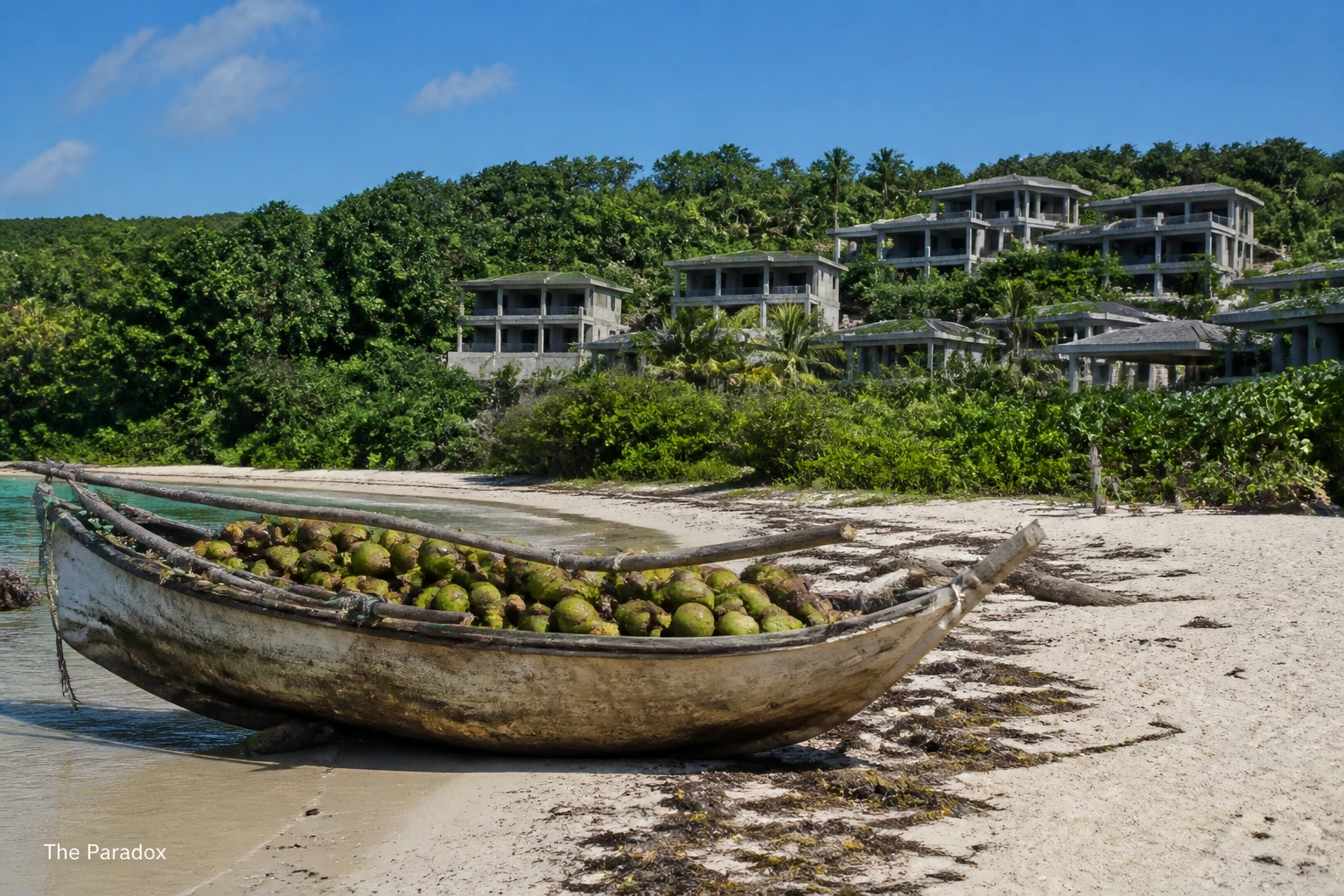
Rupiah Weakness and Export Strength: The Lombok Property Paradox Explained
Indonesia's exports are surging despite currency weakness, a puzzling macro signal with sharp implications for Lombok property valuations, foreign buyer access, and the construction cycle ahead.
Indonesia's trade narrative has flipped. Export volumes are climbing even as the rupiah weakens against the dollar, a dynamic that should contradict conventional wisdom but instead reveals something more interesting about how secondary property markets like Lombok actually reprrice during currency stress. Understanding this paradox is essential for your 2026 positioning.
The Context
Trade Minister Budi Santoso's announcement that exports are accelerating despite rupiah weakness signals a structural shift in Indonesia's competitive positioning. Typically, currency depreciation helps exports by making goods cheaper internationally. But when exports rise while the currency falls simultaneously, it means two things are happening at once:
- Real competitive gains: Indonesian producers are winning market share on fundamentals (efficiency, logistics, cost control), not just currency arbitrage
- Macro volatility: The rupiah weakness suggests either external capital outflows, rising US interest rates, or both, signals that can ripple through secondary asset prices
For Lombok property investors, this creates a two-layer puzzle. The export strength is genuinely supportive to Indonesia's fiscal position and employment. But the currency pressure introduces friction into property valuations, especially for foreign buyers and construction-stage projects.
Currency Weakness and Foreign Buyer Access
 Rupiah Weakness and Export Strength · Photo by sumit kumar on Pexels
Here's where the paradox bites hardest. Lombok's property market has historically been priced in euros and dollars, particularly the South Lombok entry zone at €95–350K where most foreign investment concentrates. Currency weakness makes these assets nominally cheaper to foreign buyers (a property listed at 5 billion IDR is now ~€250K instead of €280K at a weaker rate). That's a 10% automatic discount.
But velocity may tell a different story (a qualitative comparison, not measured data):
| Metric | Rupiah Strength (2023–2024) | Rupiah Weakness (2026) | |--------|---------------------------|------------------------| | Foreign inquiry volume | Rising (cheaper entry) | Often flat or declining (uncertainty) | | Foreign close rate | Higher (cheaper entry) | Lower (buyers hesitate) | | Price discovery time | Shorter | Longer (extended due diligence) | | FX hedging demands | Minimal | Significant (buyer protection) |
Currency weakness attracts tire-kickers and deters serious investors. The psychology shift is real: when the rupiah is falling, foreign buyers suddenly demand extended negotiations, FX hedges, and proof of Indonesian macro stability. A cheap price isn't compelling if the currency keeps depreciating.
This matters for Lombok because the market's 12–22% yield range assumes relatively stable FX over the hold period. If rupiah depreciation accelerates, foreign investors effectively experience negative currency drag on their returns, a 18% rental yield looks like 12–14% after FX losses.
The Construction Cost Squeeze
Where the export strength story intersects with rupiah weakness is in input costs for development projects. Lombok is mid-cycle on infrastructure investment (airport expansion through 2025–26, MotoGP-driven amenity upgrades, tourism supporting service economics). New construction is planned.
But rupiah weakness makes imported materials expensive. Steel, cement additives, fixtures, electrical equipment, much of the construction supply chain runs through dollar-denominated imports. A 10% rupiah depreciation doesn't just make properties cheaper for foreign buyers; it makes development costs rise 7–12% for local builders.
The paradox: Export strength supports Indonesia's current account (good macro signal), but the currency weakness that accompanies it introduces cost inflation into Lombok's development pipeline. Projects planned at current IDR costs will face margin pressure if the rupiah doesn't recover.
For investors, this creates a repricing window. Early-stage off-plan projects may have locked in construction costs at favorable rates. But second-phase and third-phase developments on the same sites will reflect higher input prices, suggesting that early buyers benefit from grandfathered costs while later phases reset higher.
What This Means for Investors
Three tactical implications emerge from this macro-property interplay:
1. Foreign buyer positioning requires currency conviction. If you're allocating capital from abroad into Lombok now, you're implicitly betting on rupiah stabilization. If you expect further weakness, you should either hedge FX exposure (costly, reducing your yield), demand a currency risk premium (6–8% yield floor instead of 12–15%), or avoid foreign-currency-based assets. The market hasn't fully priced rupiah tail risk yet.
2. Domestic buyer demand may unexpectedly strengthen. Export growth means Indonesian exporters and their supply chains are profitable. That creates high-earner migrant demand for secondary properties. Mataram professionals, small business owners, and export-linked entrepreneurs may start buying Lombok property not as tourism speculation but as domestic wealth stores. This shifts the buyer profile from speculative foreign to practical domestic, higher occupancy, lower volatility, but also lower yields (15–18% range instead of 20%+).
3. Development timing matters acutely. If you're considering off-plan investments, prioritize projects with locked construction costs (contracts already signed at current rates). Projects still in pre-construction face 7–12% cost inflation if rupiah weakness persists. That margin compression will be passed to buyers, either through higher prices or reduced amenity scope.
The export strength news is genuinely positive for Indonesia's macro stability. It means the country isn't simply depreciating its way to competitiveness; it's earning through real productivity gains. But the rupiah weakness that coincides with export growth introduces complexity into Lombok's property repricing that most investors aren't yet modeling carefully.
The market is still pricing Lombok as if rupiah strength and export growth go hand-in-hand. They don't, currently. That gap is where opportunity, and risk, concentrates.
Stay informed, subscribe to the free Lombok Briefing for market intelligence like this, published twice a month.
How does rupiah weakness affect the entry price foreign buyers pay for Lombok property?
When the rupiah falls, Lombok properties priced in IDR become nominally cheaper for foreign buyers. A property at 5 billion IDR might drop from roughly €280,000 to €250,000, an automatic 10% discount. However, currency uncertainty reduces the foreign buyer close rate from 40-50% to 25-35% and extends price discovery time from 60-90 days to 120-150 days, as buyers demand extended due diligence.
Does rupiah depreciation reduce rental yields for foreign investors in Lombok?
Yes. Lombok's rental yield range of 12-22% assumes relatively stable foreign exchange over the hold period. If rupiah depreciation accelerates, foreign investors experience negative currency drag on returns. An 18% rental yield can shrink to 12-14% after FX losses. Buyers seeking protection should target a currency risk premium, setting a yield floor of 6-8% rather than the headline 12-15%.
How does a weaker rupiah affect construction costs on Lombok development projects?
Much of Lombok's construction supply chain runs through dollar-denominated imports, including steel, cement additives, fixtures, and electrical equipment. A 10% rupiah depreciation pushes development costs up 7-12% for local builders. Off-plan buyers who locked in contracts at earlier rates benefit from grandfathered costs, while second-phase and third-phase developments on the same sites are likely to reset at higher prices.

The Lombok Buyer's Field Guide
Legal structures ranked by risk, the honest ROI math line by line, all six zones ranked, and the 24-point due-diligence checklist. The whole book, free in your inbox.
See what's inside