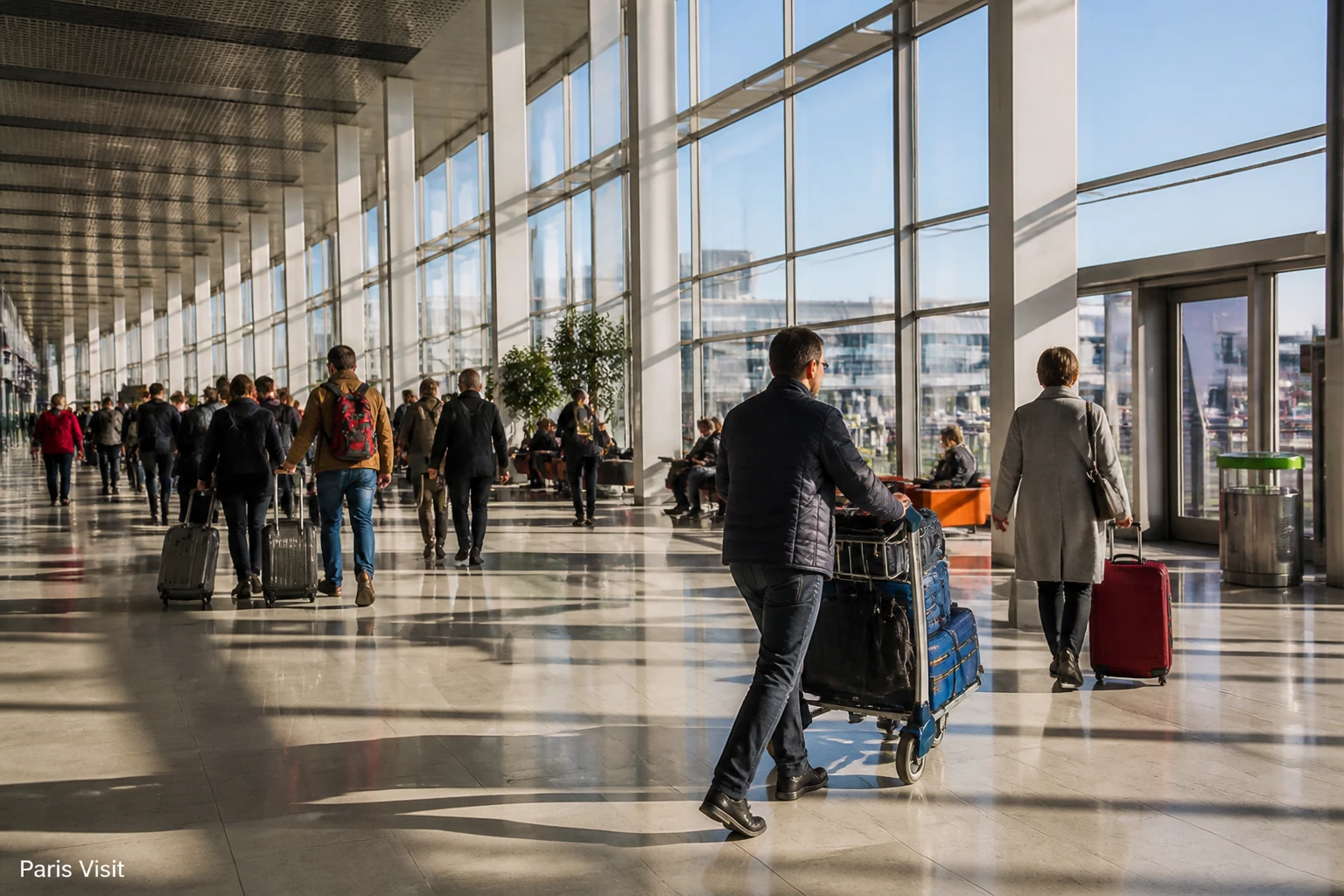
Prabowo’s Paris Visit Signals Fresh Momentum for Indonesia’s Investment Story
Indonesia’s state visit to France may look diplomatic, but for property and tourism investors it points to deeper capital, connectivity and confidence.
Indonesia’s President Prabowo Subianto has arrived in Paris for a state visit that is already being read beyond protocol and ceremony. For investors watching Lombok and the wider Indonesian opportunity set, the timing matters: high-level diplomacy with France can sharpen attention on infrastructure, tourism, investment flows and the country’s broader appeal to European capital.
This is not a property headline in the narrow sense. Yet in markets such as Lombok, where tourism demand, connectivity and foreign investor confidence move together, diplomatic visibility can translate into practical opportunity. The key question is whether this visit becomes a symbolic moment, or the start of a more bankable phase in Indonesia’s international positioning.
The Context
Prabowo’s arrival in Paris for a state visit comes at a moment when Indonesia is trying to project continuity, seriousness and openness to strategic partners. France is not merely a ceremonial stop in that context. It is one of Europe’s major economic powers, a source of travel demand, consumer spending and institutional capital, and a country whose business community watches political signals carefully.
For Lombok-focused investors, the significance lies in how such visits reinforce the broader Indonesia thesis: the country is increasingly presented not just as a large domestic market, but as a destination for tourism, infrastructure and second-home capital. That matters because Lombok’s investment case depends on several linked assumptions:
- stronger air connectivity and visitor flows
- improved international confidence in Indonesia’s policy direction
- the conversion of tourism momentum into real estate demand
- rising appetite from European and Australian buyers for lifestyle assets in emerging resort markets
The market has been leaning on exactly these drivers. South Lombok entry points remain relatively accessible by regional resort standards, often cited in the €95,000 to €350,000 band for serious villa and land opportunities, while the market narrative still rests on yields in the 12-22% range for well-positioned assets. That is why diplomatic headlines matter more here than they might in mature urban markets: the sector is still pricing in future confidence.
Indonesia’s international signalling is increasingly part of the investment case. In emerging resort markets, perception can move capital almost as effectively as concrete.
It is also important to read the visit in the context of Indonesia’s tourism and infrastructure storyline. Lombok has long benefited from the Bali-overflow thesis: when Bali becomes crowded, expensive or operationally strained, adjacent destinations with better value and less saturation attract the next wave of demand. That thesis has not disappeared. If anything, it has become more relevant as investors search for places where tourism growth can still outrun supply.
The political backdrop also matters for France specifically. European investors tend to respond to two things in Asia-Pacific property markets: legal clarity and visible state support for development. A state visit does not create either on its own, but it can reinforce the sense that Indonesia wants deeper economic ties rather than episodic tourist traffic.
Why This Matters Now
This dispatch lands with added urgency because Lombok’s value proposition has been gaining traction alongside the broader Indonesia tourism rebound. The island is no longer a speculative footnote. It sits within a live investment narrative built on airport access, premium leisure demand and the possibility of continued tourism outperformance.
Recent market conversations have repeatedly centred on three practical catalysts:
- Tourism volumes and spending: Lombok has been associated with 40-50% year-on-year tourism growth in some recent market narratives, a level that, if sustained, can materially change occupancy and service-economy demand.
- Connectivity upgrades: airport expansion expectations for 2025-26 remain one of the most watched catalysts for the island’s premium segment.
- Event-led visibility: large-scale international sporting and cultural arrivals have helped shift Lombok from “emerging” to “discoverable”, supporting the long-term case for branded villas, serviced residences and hospitality-linked plots.
That is why a French state visit should not be dismissed as distant from property markets. In practice, capital responds to confidence chains. A government that projects stability abroad is often better positioned to attract airlines, hotel operators, developers and buyers who are comparing Indonesia not with itself, but with alternatives across the Indian Ocean and Southeast Asia.
The same logic applies to Europe-facing demand. French buyers and Francophile travellers may not dominate the Lombok market, but they are part of a broader continental pool that includes German, Dutch, British and Scandinavian investors seeking diversified leisure exposure. For these buyers, state visits, trade diplomacy and bilateral warmth all help reduce perceived friction.
There is a second layer too: infrastructure credibility.
If the visit contributes, even indirectly, to a stronger narrative around investment cooperation, then it supports the argument that Indonesia’s growth is not confined to Java or Bali. Lombok stands to benefit when national policy is seen as coordinated: airports, roads, hospitality standards, land-use planning and foreign-capital openness all need to move in roughly the same direction for resort markets to mature.
| Market Signal | Potential Investor Impact | |---|---| | State visit to France | Stronger international confidence and visibility | | Tourism growth momentum | Better occupancy and seasonal resilience | | Airport expansion expectations | Higher accessibility and route potential | | South Lombok price band | Lower entry cost than mature resort markets | | Yield narrative | Attractive cash-on-cash potential if execution is strong |
The practical question is whether this translates into near-term purchasing behaviour. The answer is likely “not immediately”, but that is not the right test for an emerging market dispatch. The relevant test is whether the visit strengthens the medium-term story that underpins current buying decisions.
For Lombok, the story is clear: investors are not buying only on current yield. They are buying on the prospect of yield plus appreciation, as the island moves from discovery to institutionalisation.
 Prabowo’s Paris Visit Signals Fresh Momentum for Indonesia’s Investment Story · Photo by Tom Fisk on Pexels
The Investment Lens
From an investor’s perspective, the key issue is not whether Prabowo’s Paris visit changes property prices tomorrow. It is whether it helps validate Indonesia as a market worth deeper attention from European capital allocators.
That matters because capital entering resort markets usually arrives in stages:
- first, with high-net-worth lifestyle buyers
- then with small developers and boutique operators
- then with larger hospitality, advisory and financing interest
- finally, with greater price discipline and broader liquidity
Lombok is somewhere between the first and second stage in several submarkets. South Lombok in particular has been drawing attention because it offers a rare combination of coastline, narrative and comparatively accessible pricing. For buyers evaluating whether to enter now or wait, diplomatic visibility is not a standalone reason to buy, but it is a useful signal that the macro story remains alive.
The strongest resort markets are rarely built on scenery alone. They need policy credibility, transport access and a believable path to demand depth.
For European investors, another point is worth stressing. The French relationship is not just geopolitical theatre; it can affect sentiment among travel-related businesses, advisors and potential partners who track Indonesia’s openness to long-term engagement. Even a modest improvement in bilateral perception can help with market discovery, especially among buyers who require a stronger narrative before committing to an offshore purchase.
For Australian investors, the relevance is more direct. Lombok already sits within a familiar regional investment map, and the island’s relative proximity makes it a natural alternative for buyers looking beyond crowded Bali assets. If Indonesia continues to enhance international visibility, the competitive advantage of nearby resort markets becomes easier to market to those who already understand the region.
For American investors, the lens is often slightly different: they are more likely to seek diversification, dollar-based wealth preservation through hard assets, and exposure to high-growth tourism corridors. A diplomatically confident Indonesia supports that story, particularly if it is paired with clear legal structuring and professional property management.
The investor takeaway from today’s visit is therefore measured but positive. No one should overstate the immediate market impact of a state arrival in Paris. Yet in a market like Lombok, where the investment thesis depends on the steady accumulation of trust, access and demand, such moments matter.
They matter because they help convert an attractive island into a credible destination.
They matter because they remind global buyers that Indonesia is still actively courting high-value international engagement.
And they matter because the most valuable resort assets are usually bought before the consensus fully arrives.
Prabowo’s Paris visit does not change Lombok’s fundamentals on its own. But it does reinforce a broader conclusion that serious investors should not ignore: Indonesia is continuing to position itself as a destination where tourism, infrastructure and capital formation can still compound. For those watching the island closely, that keeps the window open.
Stay informed, subscribe to the free Lombok Briefing for market intelligence like this, published twice a month.
What is the typical price range for villa and land investment in South Lombok?
South Lombok villa and land opportunities typically range from €95,000 to €350,000. This price band remains relatively accessible compared to mature resort markets, making it attractive to European and Australian buyers seeking lifestyle assets with favorable yield potential.
What returns can investors expect from South Lombok property?
Well-positioned South Lombok properties target yields in the 12-22% range. These returns depend on successfully converting tourism momentum into real estate demand, supported by improved air connectivity, visitor flows and sustained investor confidence in Indonesia's policy direction.
When is the Lombok airport expansion expected?
Airport expansion expectations for Lombok are centered on 2025-26, representing one of the most watched catalysts for the island's premium segment. Improved connectivity is essential to sustaining tourism volumes and supporting long-term property demand in the region.
The Lombok Buyer's Field Guide
Legal structures ranked by risk, the honest ROI math line by line, all six zones ranked, and the 24-point due-diligence checklist. The whole book, free in your inbox.
See what's inside