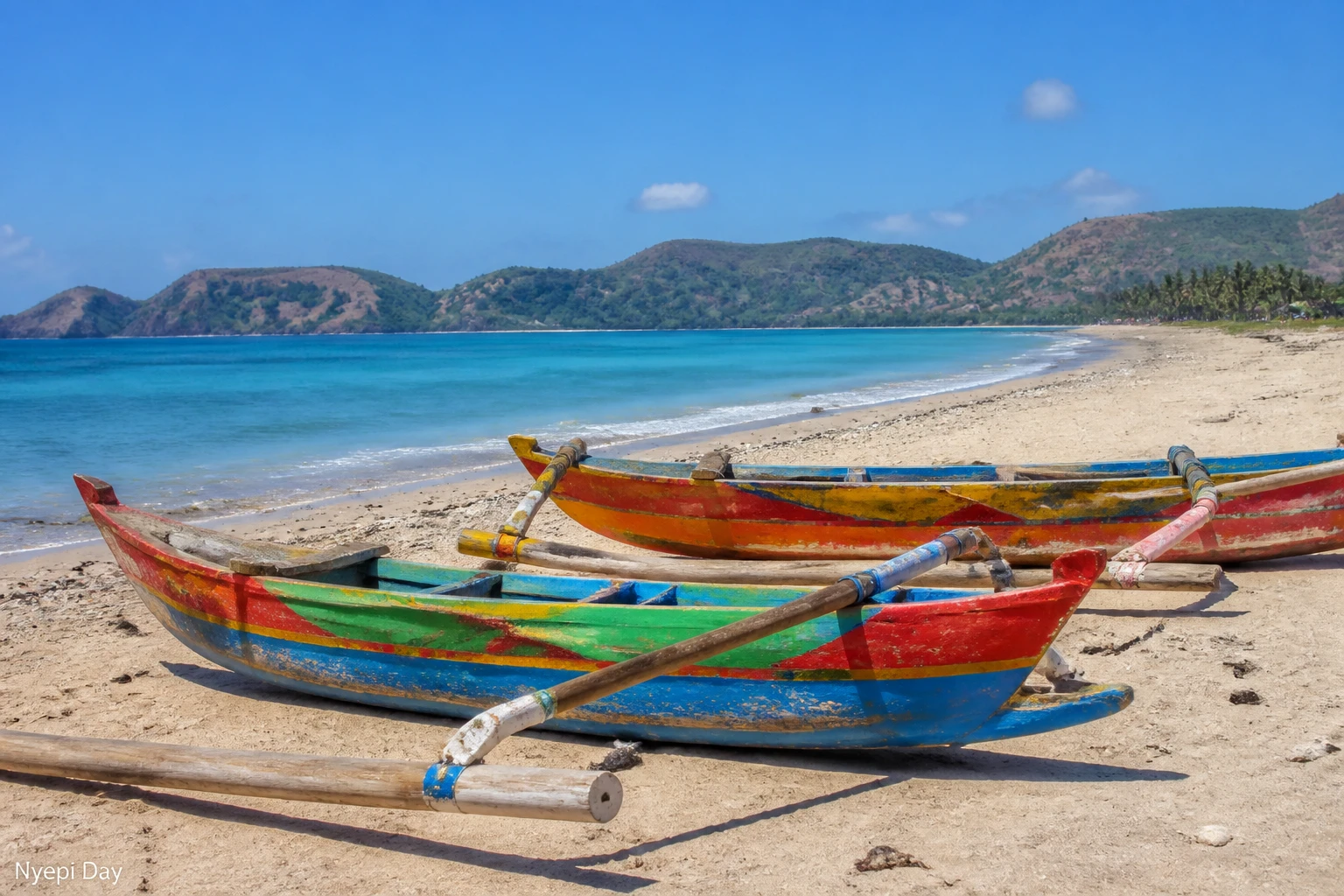
Nyepi Day and Lombok Property Bookings: Planning Around Bali's Sacred Shutdown
Nyepi's 24-hour island shutdown affects ferry schedules and tourist movement between Bali and Lombok. Property investors must strategically plan bookings around this sacred annual event.
Bali's most sacred day of the year, Nyepi, creates a complete island shutdown that property investors and managers need to understand. Scheduled for 19 March 2026, Nyepi imposes a 24-hour silence across Bali, with zero movement permitted between 6 am and 6 am the following day. For property owners and managers in Lombok, this translates into a critical planning window: all fast boat crossings between Bali and Lombok will be suspended, and booking calendars must accommodate this disruption strategically.
Understanding Nyepi's impact on Lombok's tourism infrastructure is essential for maximising occupancy rates and protecting the 12-22% yield range that makes the island attractive to international investors. This annual event, while culturally significant and worth respecting, creates a predictable pattern of demand fluctuations that savvy property managers can navigate strategically to maintain consistent returns.
Understanding Nyepi: Why It Matters to Property Investors
Nyepi is not a minor public holiday or optional cultural observance. It is Bali's most sacred day, a day of silence, stillness, and spiritual reflection observed by all inhabitants without exception. From 6 am on 19 March until 6 am on 20 March, nothing moves on Bali. The airport closes. Roads are barricaded. Even ambulances are restricted unless heading to hospitals in genuine emergencies. Local pecalang (village security officers) are stationed throughout the island ensuring strict compliance.
For tourists and property investors, this level of shutdown is absolute. There is no negotiation, no partial operations, and no exceptions for convenience or commercial impact. This is not a weather event or temporary disruption, it is a permanent, sacred fixture of Bali's annual calendar that has been observed for centuries.
The implications for Lombok property investors are direct: any guest currently in Bali cannot cross to Lombok on 19 March. Any guest wishing to leave Lombok to spend time in Bali must depart before the shutdown begins. This creates a hard constraint on booking patterns and requires deliberate, strategic management by property managers.
The Travel Shutdown: What It Means for Bookings
Nyepi's operational impact begins well before the official 6 am shutdown on 19 March. In reality, Bali comes to a standstill much earlier, cascading the disruption backward:
- Midday 18 March: Most businesses close so staff can prepare for Pengrupukan ceremonies (Ogoh Ogoh Parades)
- 3 pm on 18 March: Public transport, including local taxis, stops operating across the island
- 4 pm on 18 March: Roads begin closing in preparation for evening ceremonies and the next day's shutdown
- 6 am–6 am (19-20 March): Complete island lockdown with zero permitted movement
For property managers, this means the effective travel window closes entirely on 18 March afternoon. All fast boat services between Bali ports (Sanur, Padangbai) and Lombok, as well as crossings to the Gili Islands, will cease operations. Port closures are in effect at:
Affected ports:
- Gilimanuk Port
- Padangbai Port
- Sanur Port
- Regional ports handling inter-island ferry traffic
This 36-hour operational gap (18 March afternoon through 20 March morning) represents a genuine, non-negotiable constraint. Tourists cannot arrive from Bali. Existing guests cannot depart toward Bali. Property managers must either accommodate guests staying through the shutdown or ensure they depart before the window closes.
Planning Around Nyepi: Strategic Booking Management
For property investors targeting the 55-75% occupancy range that characterises Lombok's current market, Nyepi requires deliberate, disciplined booking management:
Pre-Nyepi bookings should terminate by 17 March at the latest, allowing guests one full day to depart Lombok and reach Bali before transport infrastructure shuts down. This prevents guests from becoming stranded mid-departure or missing critical flight connections.
Alternatively, properties can book guests through 19-20 March and explicitly market this as a "silent retreat" or "cultural immersion" experience. Guests staying through Nyepi tend to appreciate the cultural significance if properly informed in advance. This approach maintains occupancy rather than leaving properties vacant.
Post-Nyepi bookings should not commence until 20 March afternoon or 21 March, allowing sufficient time for ferry services to resume normal operations and tourists to transit from Bali to Lombok without rush or uncertainty.
Strategic use of the gap can actually enhance returns:
- Maintenance and cleaning: Schedule deep cleaning, maintenance, or property upgrades during the 36-hour shutdown when guest turnover would otherwise create downtime
- Staff rest and preparation: Use the period for property staff to prepare for post-Nyepi visitor influx
- Operational planning: Coordinate with management companies, housekeeping, and guest services during the quiet period
- Minor repairs: Address maintenance issues without disrupting guests or booking schedules
Properties with strong operational systems can use Nyepi strategically rather than viewing it as lost revenue. A property generating €15,000-20,000 annually through rentals loses minimal income from a 36-hour gap if that time is used productively for maintenance that would otherwise require separate downtime.
The Seasonal Calendar and Long-term Investment Returns
Nyepi is one event in a broader seasonal calendar that affects Lombok's tourism patterns and therefore property yields. Understanding the full annual calendar, including Nyepi, MotoGP events, airport upgrade timelines, school holidays, and local festivals, is essential for maximising long-term investment returns.
Lombok's tourism grows 40-50% year-on-year, driven by the Bali-overflow thesis and infrastructure improvements (airport upgrades, new boat routes, MotoGP circuit). Within that overall growth trajectory, however, exist predictable seasonal variations. Nyepi is one of the most rigid and predictable, a guaranteed 36-hour disruption in cross-island tourism flow occurring at the same calendar date every year.
Property investors managing the occupancy-yield relationship must account for these factors systematically:
- Nyepi impact: 36-hour hard stop on inter-island traffic
- Booking windows: Pre/post Nyepi gaps requiring strategic management
- Occupancy forecasting: Annual returns must account for predictable disruptions
- Yield calculations: Properties achieving 12-15% yields often ignore seasonal constraints; those achieving 18-22% optimise around them
For entry-level investors buying at €95-350K, understanding and managing these seasonal factors is the difference between achieving baseline yields and premium returns. Disciplined booking management around predictable events is a direct driver of performance.
What This Means for Property Investors
If you're evaluating Lombok property opportunities or managing existing rental assets, here are critical takeaways for Nyepi planning:
- Book strategically around the dates: End pre-Nyepi bookings by 17 March; resume post-Nyepi bookings on 20 March or later.
- Communicate clearly with guests: Tourists must understand Nyepi's implications and transport restrictions before confirming bookings during the 18-20 March window.
- Use the shutdown productively: Schedule maintenance, deep cleaning, and property upgrades during the 36-hour closure period rather than losing the time completely.
- Plan annually: Nyepi occurs on the same calendar date each year (though the Balinese calendar creates variation). Build it into annual occupancy and revenue forecasts.
- Factor it into yield calculations: Properties generating €15,000-20,000 annually must account for Nyepi's impact on overall occupancy percentages and plan accordingly.
- Consider cultural positioning: Market Nyepi-period stays as cultural immersion experiences rather than viewing the period as lost bookings.
Properties with strong operational management around Nyepi tend to maintain higher occupancy rates and yields than those treating the shutdown as a passive constraint. Understanding Bali-Lombok seasonality and planning proactively is a competitive advantage in Lombok's increasingly sophisticated property market.
Stay informed, subscribe to the free Lombok Briefing for analysis like this, published twice a month.
What are the exact travel restrictions affecting Lombok property guests during Nyepi 2026?
Nyepi 2026 falls on 19 March. All fast boat services between Bali ports (Sanur, Padangbai) and Lombok cease from the afternoon of 18 March, when public transport stops at 3 pm and roads begin closing at 4 pm. The full lockdown runs from 6 am on 19 March to 6 am on 20 March, creating a 36-hour window in which no Bali-Lombok crossings are possible.
How should Lombok property managers adjust booking calendars around Nyepi?
Pre-Nyepi bookings should end by 17 March, giving guests a full day to depart before Bali transport shuts down on 18 March afternoon. Post-Nyepi bookings should not start until 20 March afternoon or 21 March, allowing ferry services to resume. Alternatively, managers can market 19 to 20 March stays as a cultural immersion experience to maintain occupancy rather than leaving the property vacant.
Does the Nyepi shutdown cause significant revenue loss for Lombok rental properties?
For a property generating 15,000 to 20,000 euros annually through rentals, the 36-hour gap from 18 March afternoon to 20 March morning represents minimal lost income if used productively. Property managers can schedule deep cleaning, maintenance, or minor repairs during this period, converting unavoidable downtime into upkeep that would otherwise require a separate booking gap later.

The Lombok Buyer's Field Guide
Legal structures ranked by risk, the honest ROI math line by line, all six zones ranked, and the 24-point due-diligence checklist. The whole book, free in your inbox.
See what's inside