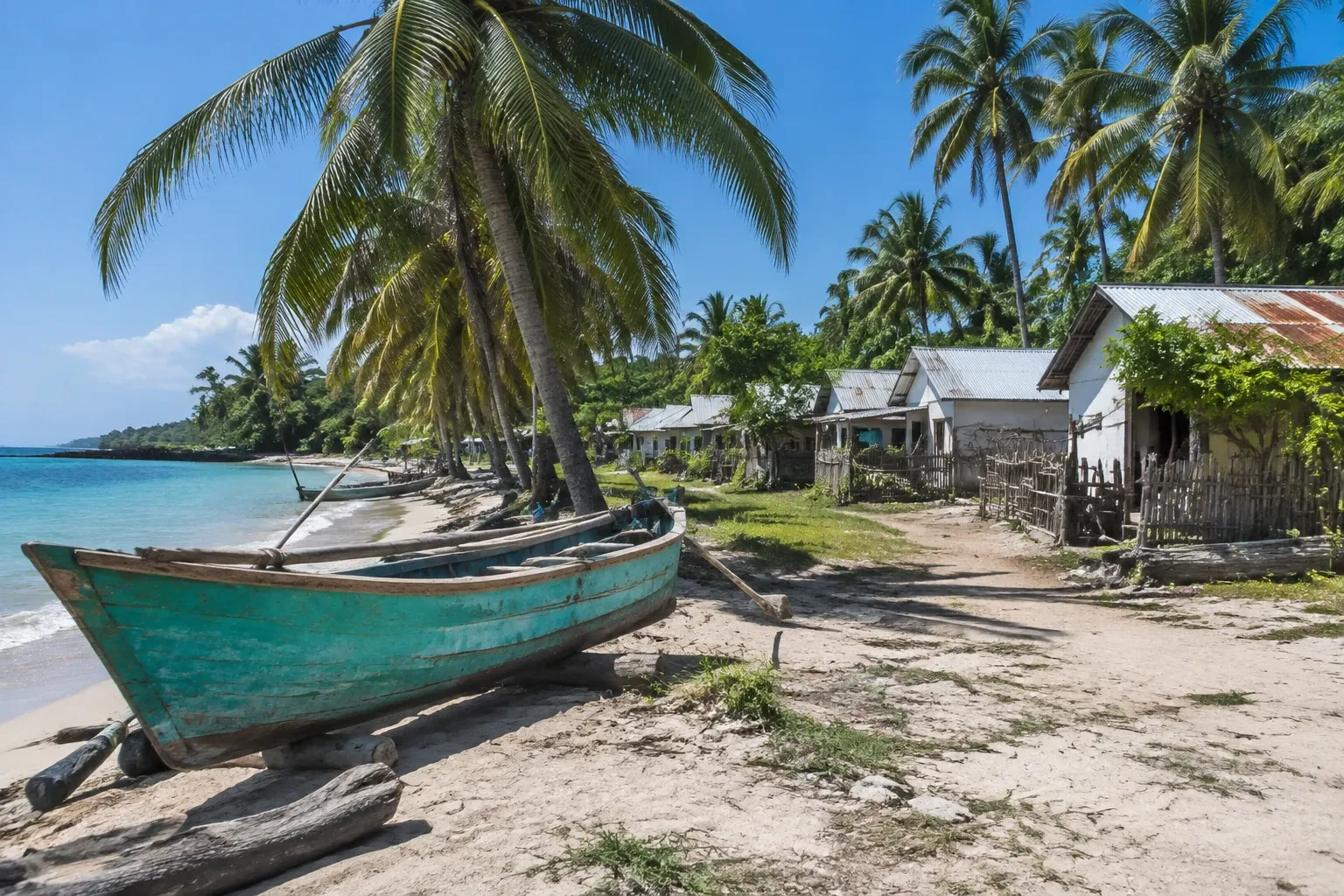
Basic Services Still Lag on NTB's Small Islands, Provincial Agency Warns
NTB's Marine and Fisheries Agency says basic services on several of the province's small islands remain very limited, and is pushing for the pending Archipelago Islands Bill to do more for them.
West Nusa Tenggara's provincial government has flagged a gap that matters to anyone tracking the region's tourism infrastructure: basic public services on a number of the province's gili, or small islands, remain very limited, and local officials say the central government needs to pay closer attention.
What the agency said
According to Suara NTB, the West Nusa Tenggara Marine and Fisheries Agency (Dislutkan NTB) says that service delivery on several small islands across the province is still far from adequate. The agency's head, Muslim, argues that because NTB is a province made up of many islands, it deserves serious attention from Jakarta when it comes to closing these gaps.
"NTB, as a province with many islands, must receive serious attention from the central government," the agency's position holds, per Dislutkan NTB.
The Archipelago Islands Bill (RUU Kepulauan)
The agency's specific ask is legislative: it wants the RUU Kepulauan, Indonesia's pending Archipelago Islands Bill, to be drafted in a way that more explicitly favours small islands. The source report does not detail the bill's current provisions, its timeline, or which agencies are leading the drafting process, so those specifics cannot be stated here. What is clear from the agency's own framing is that it sees the current regulatory approach as insufficiently tailored to the realities of governing dozens of small, dispersed islands rather than a single contiguous landmass.
Why this matters beyond NTB's small islands
Basic services, the report does not enumerate which specific services are lacking (water, power, healthcare, waste management, or transport links are the categories typically bundled under this term in Indonesian regional-development discourse, though the source article does not specify), are a foundational layer beneath any tourism or investment narrative for an archipelagic province. NTB's broader growth story, including the +40-50% year-on-year increase in foreign arrivals tied to the region's tourism recovery and the MotoGP effect, depends on public infrastructure keeping pace with private investment. A gap between the two does not appear in daily headlines the way a new hotel opening does, but it shapes how liveable and investable outlying areas become over time.
It is also worth being precise about geography here: the gili referenced in this report are unspecified small islands across NTB province as a whole, not necessarily the specific South Lombok zones this publication covers in depth (Kuta, Selong Belanak, Are Guling, Mandalika, Mawun and Bumbang). Readers should not assume this story describes conditions in any one of those named zones.
What this means for investors
This is a policy and public-infrastructure story, not a transaction-level signal, and it should be read that way. For investors weighing exposure to Lombok and NTB more broadly, the takeaway is less about any single island and more about the pace of institutional catch-up in a province still building out the connective tissue, utilities, healthcare access, and administrative capacity, that supports a wave of tourism growth already running well ahead of it. Where public services lag, due diligence on any given site (water access, power reliability, road and ferry connections) becomes more important, not less, regardless of how favourable the pricing or yield story looks on paper.
None of the verified market figures this publication tracks (land prices, rental yields, occupancy) are addressed in this report, so none are restated here. This is a governance and services story, and it should inform investors' broader risk picture rather than any specific pricing assumption.
The RUU Kepulauan, if it advances with the provisions Dislutkan NTB is advocating for, could eventually translate into more predictable service delivery for the province's smaller islands. Until there is a concrete legislative timeline or funding commitment to report, that remains a policy direction rather than a fact on the ground.
Stay informed, subscribe to the free Lombok Briefing for analysis like this, published twice a month.
What did NTB's Marine and Fisheries Agency say about small islands?
Dislutkan NTB said basic public services on several of the province's small islands (gili) remain very limited, and argued that NTB, as a province made up of many islands, needs serious attention from the central government to close these gaps.
What is the RUU Kepulauan and why does it matter here?
RUU Kepulauan is Indonesia's pending Archipelago Islands Bill. Dislutkan NTB's head, Muslim, wants the bill drafted to more explicitly favour small islands, arguing current policy is not sufficiently tailored to governing dispersed island provinces like NTB.
Does this report refer to the South Lombok zones covered on this site?
No. The source report discusses small islands (gili) across NTB province generally and does not specify which islands or name South Lombok zones such as Kuta, Selong Belanak or Are Guling, so no connection to those specific areas should be assumed.

The Lombok Buyer's Field Guide
Legal structures ranked by risk, the honest ROI math line by line, all six zones ranked, and the 24-point due-diligence checklist. The whole book, free in your inbox.
See what's inside