Mount Rinjani Safety Regulations: How Destination Management Protects Property Investment Value
New mandatory trekking regulations on Mount Rinjani enhance destination safety and reputation. How improved standards protect property valuations and attract premium tourism demographics.
Safety regulations are often overlooked by property investors, yet they are critical determinants of destination reputation and property valuations. This month, Lombok's authorities implemented mandatory trekking regulations on Mount Rinjani requiring all hikers to stay overnight in Sembalun village and complete safety briefings before ascending the active volcano. For property investors evaluating Lombok's market, these regulations represent something important: a destination committed to managing risk, protecting visitors, and enhancing its competitive positioning against rivals like Bali.
Lombok's tourism sector is growing 40-50% year-on-year, capitalising on the Bali-overflow thesis as visitors seek alternative destinations with superior safety and authenticity. With entry property prices from €95,000 to €350,000 and yields between 12-22%, the island has attracted significant international investment. Destinations managing tourism risk effectively, through rigorous safety standards, professional guide training, and systematic incident prevention, maintain higher property valuations and occupancy rates. Lombok's new Mount Rinjani regulations signal exactly this commitment.
Mount Rinjani's Safety Crisis: Recent Tragedies and Government Response
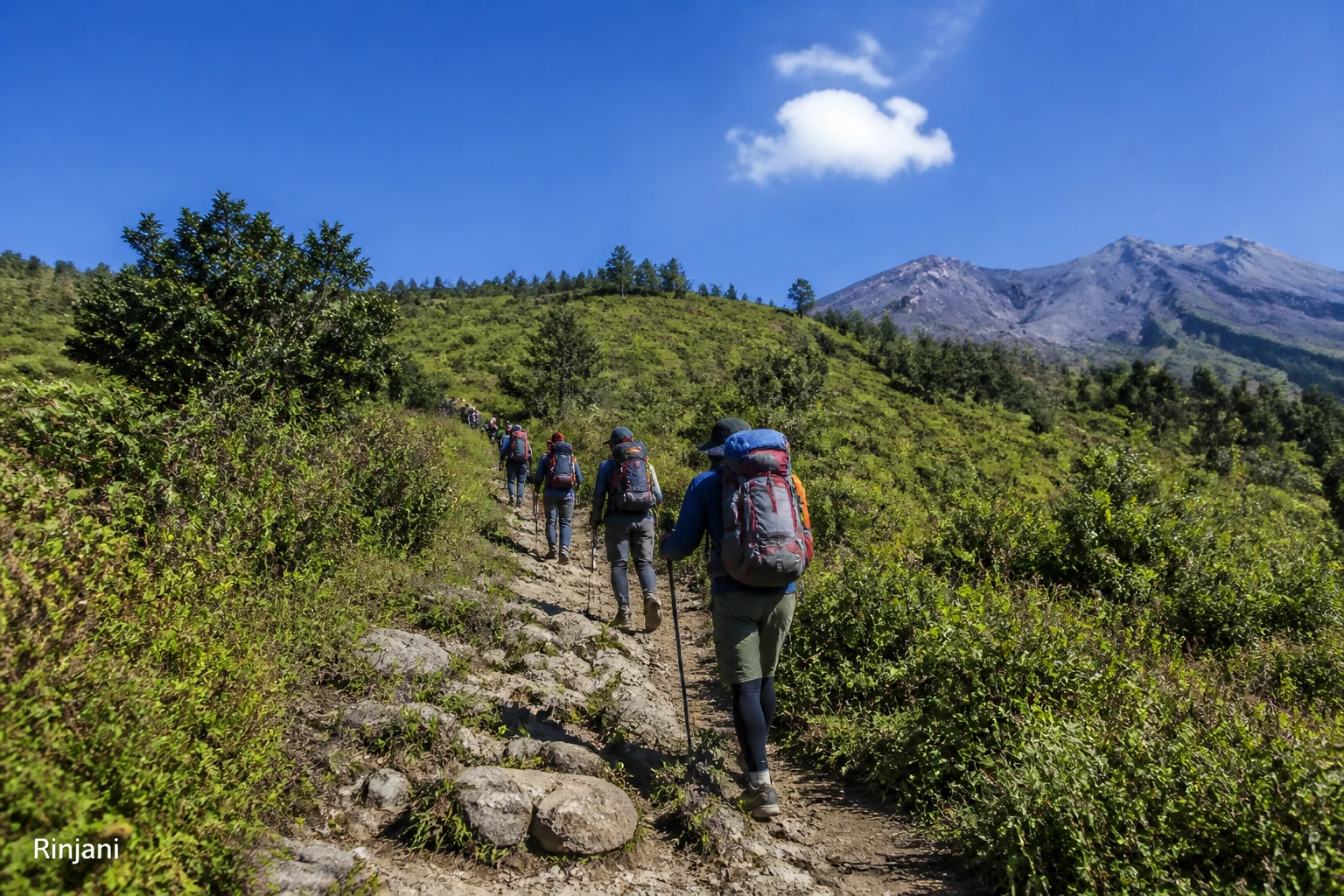
Mount Rinjani is one of Lombok's premier tourist attractions and a major draw for adventure trekkers worldwide. The 3,726-metre active volcano attracts thousands of international visitors annually, generating substantial tourism revenue for guides, porters, accommodation providers, and surrounding communities. However, recent tragedies have exposed critical gaps in safety management, guide accountability, and trekking protocols.
In recent weeks, Lombok experienced two significant incidents that alarmed authorities and tourism stakeholders:
- Death of a Brazilian tourist on Mount Rinjani's slopes, highlighting dangerous gaps in safety protocols, guide supervision, and emergency response capabilities
- Rescue of a Swiss national requiring helicopter airlift after deteriorating medical condition, demonstrating the risks of inadequate preparation, altitude acclimatisation, and medical oversight
These incidents prompted urgent action from Lombok authorities. The Regent of East Lombok, Haerul Warisin, recognised that reactive crisis management and investigation of individual incidents was insufficient. Instead, the government moved decisively to implement systemic safety improvements designed to prevent future tragedies before they occur.
Warisin articulated the philosophical shift: "We are talking about safety measures, preventive, not leading to arrogance or personal interests. But this is solely for us to find safety and comfort for tourists who climb Rinjani." This language signals a fundamental transition from passive incident response to active, systematic risk prevention, the hallmark of professional destination management and critical for maintaining property investment stability.
The Sembalun Requirement: Mandatory Safety Briefings and Preparation
The centrepiece of the new regulatory framework requires all Mount Rinjani trekkers to overnight in Sembalun village, the established gateway to the mountain's trekking routes, before ascending. This requirement, while seemingly modest, serves multiple critical purposes:
Comprehensive safety orientation and equipment verification:
- Tourists receive detailed briefings on route conditions, altitude hazards, weather patterns, and emergency procedures
- Professional guides assess each trekker's physical fitness, medical history, and altitude experience
- Equipment is systematically checked for adequacy, function, and safety compliance
- Tourists unfamiliar with high-altitude trekking or Rinjani-specific conditions receive education before exposure to risk
Natural acclimatisation opportunity:
- One night in Sembalun (approximately 600 metres elevation) provides essential initial altitude exposure before ascending to 3,726 metres
- Reduces risk of acute altitude sickness, pulmonary oedema, and related life-threatening complications
- Allows guides to identify at-risk individuals before commencing the ascent
Professional standard-setting and accountability:
- Separates regulated, professional trekking from informal, unguided, or inadequately supervised attempts
- Creates documented record of each trekker's fitness level and medical clearance
- Establishes guide accountability for briefing completion and safety protocol adherence
- Prevents guides from rushing trekkers to meet schedules or process excessive volumes
Regent Warisin explained the empirical rationale: "Most tourists do not even stop off in Sembalun, which is the gateway to the trekking routes for Mount Rinjani. By mandating a stop and safety briefing, tourists will have all the information they need to approach the trek properly."
This requirement is neither excessive nor overprotective, it is precisely the standard operating procedure in professional trekking globally. Mount Everest requires Kathmandu briefings and acclimatisation schedules. Kilimanjaro mandates pre-trek safety orientation and guide certification. Rinjani's Sembalun requirement brings Lombok into alignment with international best practices rather than representing a burden on tourism.
How Safety Standards Enhance Destination Appeal and Property Value
For property investors, destination safety standards have direct and measurable economic implications. Tourists booking adventure activities at destinations with visible, enforced safety protocols demonstrate consistent behaviours:
- Premium pricing acceptance, Willingly pay higher guide fees, accommodation surcharges, and activity costs in exchange for safety assurance
- Extended itinerary planning, Confidence in safety management permits longer, more ambitious trekking schedules and multi-activity bookings
- Repeat visitation patterns, Positive safety experiences and incident-free treks drive return visitation and multi-trip commitment
- Exceptional online reviews, Safety and professionalism receive explicit, enthusiastic praise on TripAdvisor, Google Reviews, and social platforms
- Organic word-of-mouth referrals, Most powerful form of tourist acquisition comes from friends and family hearing safety-positive experiences
These behavioural patterns directly improve property occupancy and nightly rates. Destinations with excellent safety reputations attract tourists who:
- Stay 30-50% longer than baseline (10-14 days rather than 5-7)
- Book premium accommodations over budget options
- Return within 2-3 years for additional trips
- Spend more on dining, activities, and experiences
Properties in such destinations achieve 75-85% annual occupancy rather than the current Lombok average of 55-75%. Higher occupancy drives the upper end of the 12-22% yield range, the difference between 14% returns and 20%+ returns on the same capital investment.
Conversely, destinations experiencing safety incidents see reputational damage that depresses tourism and property values for years. Bali's volcano and mountain incidents, whilst less severe than Rinjani's recent tragedies, have created residual caution in adventure travel markets. Lombok has a strategic opportunity to position itself as the safety-conscious, professionally-managed alternative to Bali's reactive approach.
Professional Guide Training and Systematic Incident Reduction
The regulations also mandate intensive training for trekking guides and porters operating on Mount Rinjani. Regent Warisin described the behavioural focus: "We have to remind these porters that we are educated. If you bring the guests, don't give them a ride right away; they have to stay overnight for at least a day, and provide them with guidance first. Then, during the climbing trip, do not leave it behind; they must wait silently."
This emphasis on professional conduct and guide responsibility is crucial because trekking incidents typically result from:
- Schedule pressure: Guides rushing climbers to meet tight schedules, cutting acclimatisation time
- Inadequate training: Porters and guides lacking medical training, rescue protocols, or emergency communication
- Insufficient hazard communication: Trekkers unaware of altitude risks, weather patterns, or route difficulty
- Fee competition: Guides cutting corners to undercut competitors on price
- Negligent supervision: Guides allowing trekkers to progress unsupervised or at dangerous pace
Systemic guide training addresses these root causes by establishing professionalism as the market standard. When guides understand incident prevention as their primary responsibility, rather than volume of trekkers processed, outcomes improve dramatically. Professional guides develop:
- Medical and altitude awareness training
- Emergency response and rescue protocols
- Clear communication of hazards and expectations
- Pace management discipline
- Post-incident reporting and accountability
What This Means for Property Investors
If you're evaluating Lombok property opportunities or currently holding rental assets, the Mount Rinjani safety regulations are significant positive indicators of destination maturity:
- Destination management is professional and evidence-based: Government response to incidents is systematic, data-driven, and implemented rapidly
- Reputation protection is strategically prioritised: Authorities are willing to implement standards that may temporarily reduce trekking volume to protect long-term destination reputation
- Premium tourism demographics are increasingly targeted: Safety-conscious, higher-spending trekkers are replacing budget-focused backpackers
- Competitive positioning improves relative to Bali: Lombok is actively differentiating on safety, professionalism, and responsible tourism management
- Occupancy stability is materially enhanced: Fewer incidents and negative reviews drive stronger word-of-mouth booking patterns and repeat visitation
- Regulatory environment demonstrates stability: Professional safety standards create the policy certainty and destination confidence investors require for long-term planning
- Property value trajectory improves: Tourism destinations with improving safety reputations typically experience 3-5% annual appreciation beyond rental yields
Properties in Lombok, particularly those near adventure tourism gateways, catering to trekking tourists, or positioned in areas benefiting from Mount Rinjani visitor flows, will benefit materially from these regulations through improved tourist quality, occupancy consistency, and nightly rate sustainability.
The safety regulations on Mount Rinjani represent a turning point in Lombok's destination development trajectory. Rather than accepting tragedies as inevitable costs of adventure tourism, authorities are implementing preventive systems that established, professional international destinations employ. This commitment to responsible tourism management directly enhances Lombok's appeal to both discerning tourists and property investors seeking stable, sustainable returns in a growing market.
Stay informed, subscribe to the free Lombok Briefing for analysis like this, published twice a month.
What are the new safety rules for climbing Mount Rinjani in Lombok?
All trekkers must now overnight in Sembalun village, the gateway to the mountain's routes, before ascending the 3,726-metre active volcano. During this mandatory stop, professional guides verify equipment, assess each trekker's fitness and medical history, and deliver briefings on route conditions, altitude hazards, and emergency procedures. The overnight stay at approximately 600 metres also provides initial acclimatisation before the full ascent.
What incidents prompted Lombok's Mount Rinjani trekking regulations?
Two recent incidents triggered urgent government action: the death of a Brazilian tourist on the mountain's slopes, which exposed gaps in guide supervision and emergency response, and a helicopter airlift rescue of a Swiss national after a deteriorating medical condition. The Regent of East Lombok, Haerul Warisin, responded by mandating compulsory overnight stays in Sembalun and safety briefings before any ascent.
How do Mount Rinjani's safety regulations affect Lombok property investment?
Destinations with enforced safety protocols maintain higher property valuations and occupancy rates. Lombok's tourism sector is already growing 40 to 50 percent year-on-year, with entry property prices from 95,000 to 350,000 euros and yields between 12 and 22 percent. Systematic risk prevention signals professional destination management, which sustains investor confidence and strengthens Lombok's competitive positioning against alternatives such as Bali.
The Lombok Buyer's Field Guide
Legal structures ranked by risk, the honest ROI math line by line, all six zones ranked, and the 24-point due-diligence checklist. The whole book, free in your inbox.
See what's inside