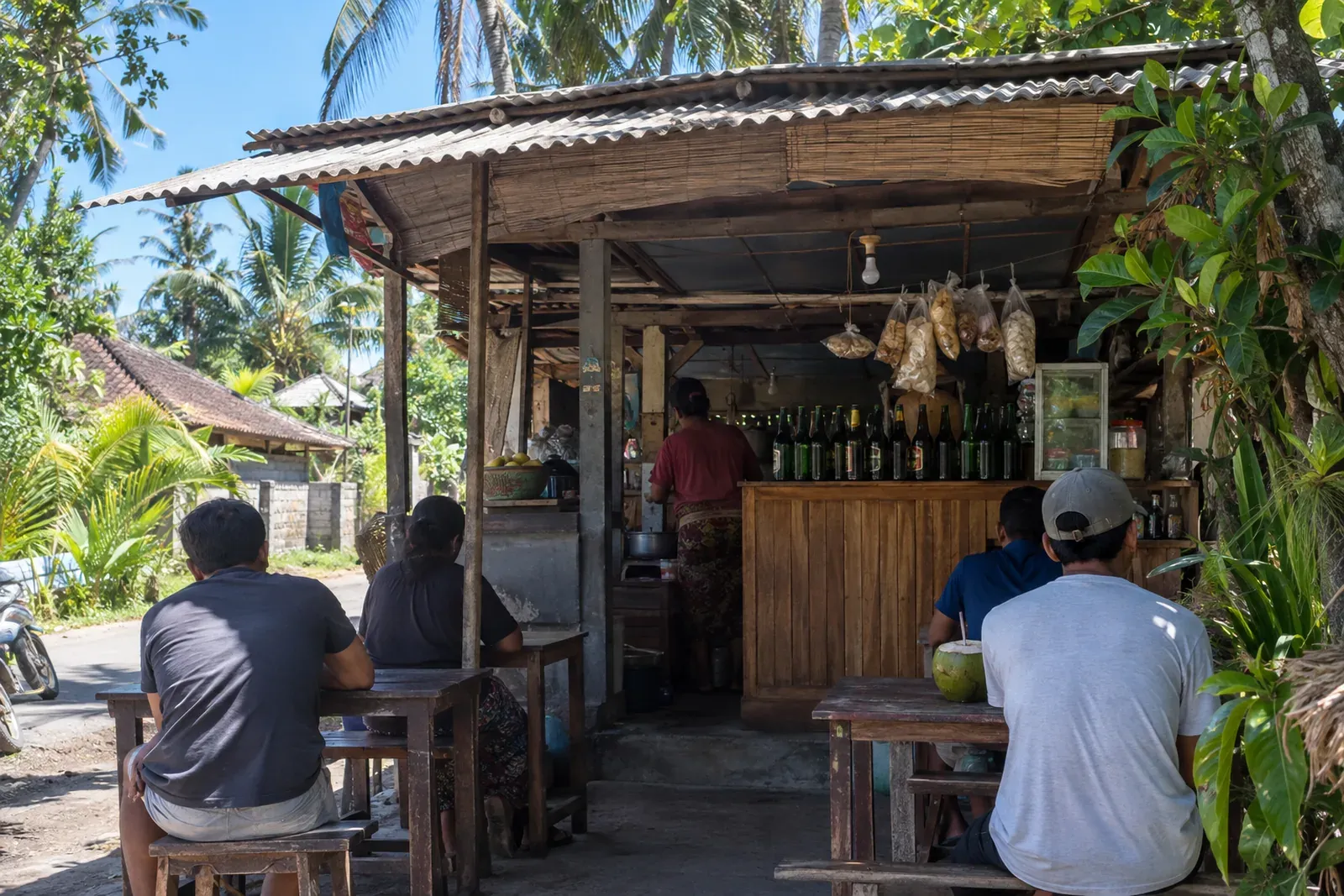
Mataram nightlife venues face lawsuit over alleged alcohol-sale violations
A Mataram resident has sued the city government and four nightlife venues over alleged alcohol-sale rule breaches.
A civil lawsuit targeting Mataram’s municipal government and four nightlife venues has brought alcohol-sales compliance into sharper focus. For investors watching Lombok’s visitor economy, the case is a reminder that hospitality demand and regulatory discipline must advance together.
A lawsuit places compliance under scrutiny
Radar Lombok reports that a Mataram resident, represented by Seniman Hukum Law Firm, filed a claim at the Mataram District Court against the Mataram city government and four nightlife establishments. The action was filed as a Perbuatan Melawan Hukum (PMH), or alleged unlawful act claim.
The claim concerns suspected breaches of rules governing alcohol sales. The supplied report does not identify the four venues, set out the alleged conduct in detail, or state the remedies sought by the claimant. It also does not record a response from the city government or the businesses concerned.
That distinction matters. A lawsuit is an allegation presented to a court; it is not, by itself, a finding that a rule has been broken. Investors, operators and visitors should therefore avoid treating the filing as a concluded legal judgment.
Key point: the reported case concerns allegations against Mataram’s city government and four nightlife venues, not an established ruling against the defendants.
Why this matters beyond the defendants
Mataram is part of the wider Lombok economy that investors assess when considering tourism, hospitality and real-estate exposure. Hospitality assets are shaped not only by guest demand and operating standards, but also by the ability of local operators to meet applicable licensing, sales and compliance obligations.
For owners of villas, hotels, restaurants and entertainment-led businesses, the practical significance is straightforward: a well-designed investment case requires regulatory assumptions to be treated as seriously as commercial assumptions. A venue’s location, design and guest proposition may be attractive, but those strengths do not remove the need for proper operational governance.
The report does not establish whether the allegations will be upheld, whether enforcement action will follow, or whether the dispute will affect other businesses. It would be premature to draw those conclusions. Yet the existence of a formal court filing makes clear why investors should seek documentary clarity before relying on an operator’s assurances.
Tourism growth raises the value of careful execution
South Lombok’s tourism recovery has strengthened attention on the island’s hospitality market. Verified HubLombok market data indicates foreign arrivals are up 40–50% year on year, while Kuta and Mandalika villa rates are about 38% year on year higher.
Those figures create opportunity, but they also raise the stakes for operators. More guests and more commercial activity can make dependable management, transparent reporting and local compliance more valuable, not less. The relevant lesson is not that every hospitality investment carries the same risk, but that regulation should be assessed property by property and operator by operator.
Investors should also distinguish between Mataram and South Lombok’s resort zones. Kuta is the town, while Mandalika is the adjacent special economic zone and circuit area. They are separate locations, with different market characteristics. A legal dispute reported in Mataram should not be presented as evidence of wrongdoing in Kuta, Mandalika, Are Guling or elsewhere on the island.
Due diligence should extend beyond the land certificate
In Lombok property transactions, legal review is often discussed in relation to land tenure. That remains essential: foreigners cannot hold freehold Hak Milik (SHM), which is reserved for Indonesian citizens. Available structures include leasehold, Hak Pakai for eligible residents, and a foreign-owned PT PMA holding Hak Guna Bangunan (HGB).
But property diligence should not stop with title. Where an investment depends on hospitality operations, prospective buyers should ask whether the operating model matches the permissions, contracts and compliance responsibilities on which projected income relies. This is particularly important where a developer, management company or tenant is responsible for day-to-day activity.
A prudent review can include:
- the land certificate, ownership history, zoning and potential encumbrances;
- the legal structure through which a foreign buyer will hold the asset;
- the division of responsibilities between owner, operator and tenant; and
- the documents supporting any regulated commercial activity connected with the investment.
TerraNusa Advisory, HubLombok’s legal and notary advisory partner, provides due diligence covering certificates, ownership history, zoning, encumbrances, PT PMA setup, relevant taxes and land-office transfer. Its role is broader than simply executing a deed, helping buyers follow the transaction chain through to the BPN land office.
What this means for investors
The immediate implication is one of discipline rather than alarm. The Radar Lombok report identifies a court claim involving allegations; it does not establish liability, quantify a financial impact or demonstrate a sector-wide problem.
For investors evaluating Lombok hospitality exposure, the sensible response is to test the operating case carefully:
- Treat promotional income projections separately from legal and operational assumptions.
- Ask who is responsible for compliance once a property is operating.
- Ensure land tenure, zoning and business arrangements are reviewed by qualified local advisers.
- Avoid nominee structures, which are illegal and void in court.
This approach is especially relevant in earlier-cycle parts of South Lombok, where investor interest is rising. Are Guling, for example, has recorded about 47% year-on-year momentum in HubLombok’s verified market data. Developments like Samudra Villas in Are Guling, South Lombok, should therefore be assessed on both their investment proposition and the practical resilience of their operating arrangements.
The Mataram case may ultimately yield further detail through the court process. Until then, its clearest message is that a convincing Lombok investment thesis needs sound governance alongside attractive tourism fundamentals.
Stay informed, subscribe to the free Lombok Briefing for analysis like this, published twice a month.
What is the Mataram nightlife lawsuit about?
Radar Lombok reports that a Mataram resident, represented by Seniman Hukum Law Firm, has sued the Mataram city government and four nightlife venues over suspected breaches of alcohol-sales rules. The case is an alleged unlawful act claim and is not a court finding of liability.
Does the lawsuit show that Lombok hospitality assets are unsafe?
No. The supplied report concerns allegations against named categories of defendants in Mataram and does not establish liability, financial losses or a wider industry problem. It does, however, underline the importance of reviewing operational compliance alongside title, zoning and commercial arrangements.
What legal checks should a foreign Lombok property buyer make?
Foreign buyers should verify the land certificate, ownership history, zoning, encumbrances and appropriate holding structure. Foreigners cannot hold freehold Hak Milik. Leasehold, Hak Pakai for eligible residents and a PT PMA holding HGB are available routes; nominee arrangements are illegal.
The Lombok Buyer's Field Guide
Legal structures ranked by risk, the honest ROI math line by line, all six zones ranked, and the 24-point due-diligence checklist. The whole book, free in your inbox.
See what's inside