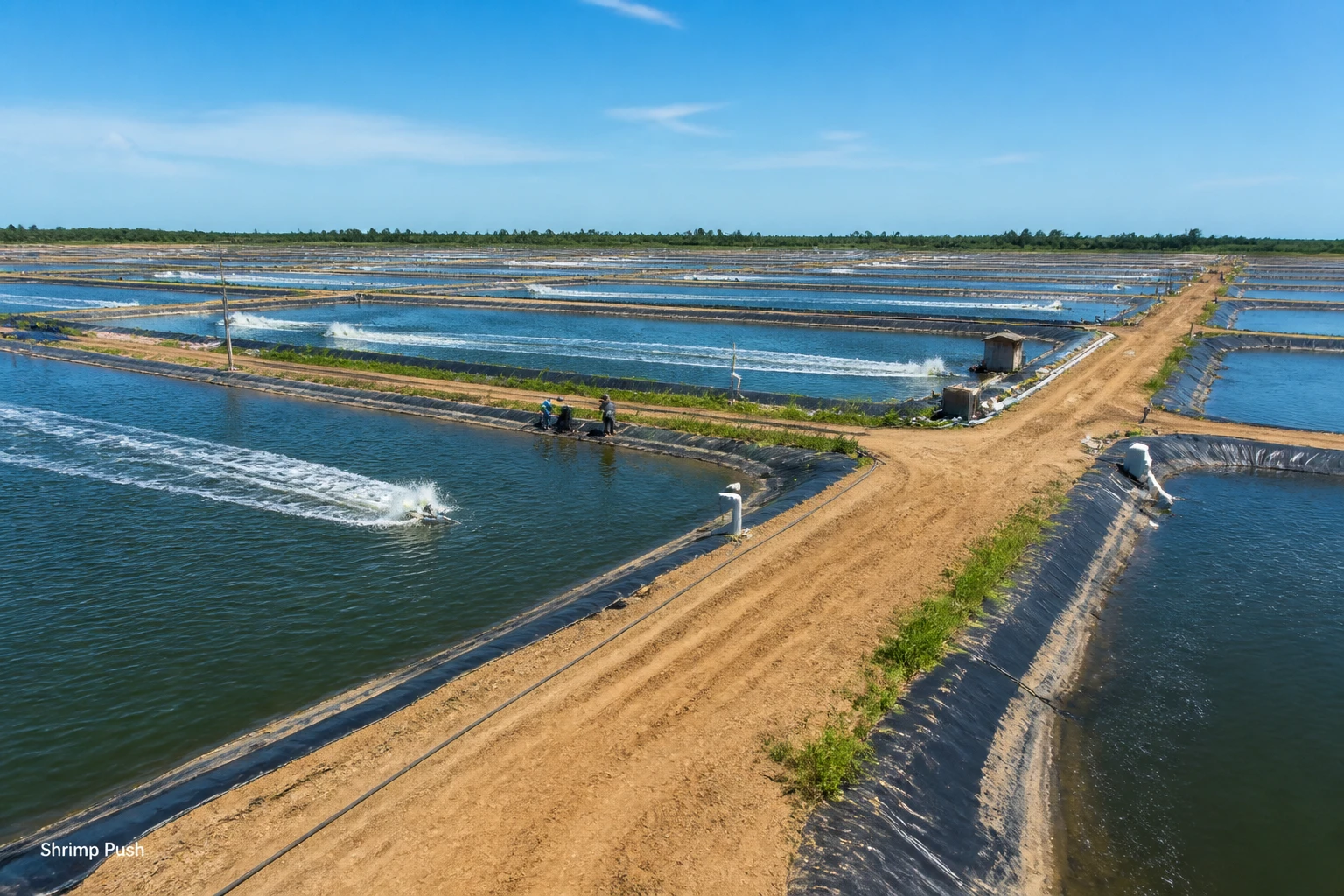
Indonesia’s shrimp push and why investors in Lombok should pay attention
Indonesia’s shrimp expansion could reshape coastal economies, logistics and land demand beyond aquaculture alone. For Lombok investors, the signals matter.
Indonesia’s latest push into large-scale shrimp farming is more than an agricultural policy announcement. It is a reminder that Indonesia is still trying to translate its vast maritime geography into export earnings, rural jobs and a more diversified coastal economy. For Lombok investors, the story matters not because shrimp ponds are a property theme in themselves, but because they can influence ports, roads, cold-chain logistics, worker housing and the longer-term utility of land near productive coastlines.
The Context
 Indonesia’s shrimp push and why investors in Lombok should pay attention · Photo by Pok Rie on Pexels
The headline from Antara Business is straightforward: President Prabowo Subianto sees a major opportunity for Indonesia to become one of the world’s leading shrimp producers. That ambition fits neatly into a broader national strategy of turning underused coastal and marine assets into hard currency. Shrimp is one of the most globally traded seafood products, with demand driven by supermarkets, restaurant chains and food processors across Asia, Europe and North America.
For Indonesia, the case is compelling on paper. The archipelago has the coastline, water access and labour base to scale production. It also has a domestic development imperative: coastal provinces often need precisely the kind of infrastructure that a serious aquaculture industry can help justify. When export sectors strengthen, they tend to pull supporting systems with them: ice plants, truck routes, storage depots, processing facilities, power connections and water management.
That is why a shrimp policy story belongs on the radar of property investors even when it does not mention real estate directly. In places like Lombok, where the market is increasingly shaped by the interplay between tourism, land banking and infrastructure upgrades, second-order effects matter.
Consider the broader investment backdrop:
- Lombok has been drawing attention as a Bali-overflow thesis destination, as investors look for spillover demand from a more crowded and expensive neighbour.
- South Lombok entry prices are still relatively accessible, often in the €95,000 to €350,000 bracket for relevant coastal property opportunities.
- The island’s tourism momentum has been strong, with activity cited in market discussions at 40-50% year-on-year growth in certain periods and channels.
- Airport expansion plans for 2025-26 remain a key variable for future connectivity and visitor throughput.
- MotoGP-linked arrivals have also been a recurring signal of Lombok’s ability to attract international attention, with one commonly cited spike reaching 47% in associated periods.
None of that means shrimp farms will automatically reprice land. It does mean that Indonesia’s coastal development agenda is becoming more integrated, and investors should understand how industrial policy can support the broader story of an island economy.
Why Coastal Industry Matters Beyond Food Exports
Aquaculture is rarely just about fish or crustaceans. When it scales properly, it creates an ecosystem.
That ecosystem can be summarised as follows:
| Layer | Direct effect | Property implication | |---|---|---| | Production | More farms, hatcheries and feed supply | Demand for industrial land and service plots | | Processing | Packing, freezing and quality control | Need for warehouses, utilities and staff accommodation | | Logistics | Trucking, ports, reefer storage | Value uplift for land near transport corridors | | Labour | New jobs and seasonal migration | Higher rental demand in nearby towns | | Services | Finance, maintenance, compliance | Growth in commercial frontage and supporting infrastructure |
The property angle is not necessarily glamorous, but it is durable. Where an export industry deepens, the land that serves it often becomes more valuable for reasons that have little to do with holiday sentiment. A parcel that once looked remote can become strategically placed if it sits between a production zone and a loading point. A quiet roadside can become a service corridor. A modest town can accumulate workers, contractors and ancillary businesses.
This is particularly relevant in island markets, where geography concentrates activity. Lombok’s development narrative has always depended on connectivity. If tourism strengthens, visitor infrastructure expands. If export industries strengthen, the logic broadens again: roads, power, water, storage and transport become more important, and the geography of value can shift.
The investment lesson is simple: the best coastal land is not always the prettiest. Sometimes it is the land that sits closest to a reliable economic use.
The caution is equally important. Large-scale shrimp farming can create environmental, regulatory and reputational risks if expansion is badly managed. Coastal land use can conflict with mangrove protection, water quality or local livelihoods. For investors, that means not all infrastructure-led narratives are automatically positive. The value is in disciplined selection, not enthusiasm.
The most investable coastal markets are rarely those with the loudest headlines; they are the ones where infrastructure, export logic and access converge.
Lombok’s Position in the Wider Indonesia Story
Lombok’s appeal has never been based on a single engine. It is attractive because several engines are running at once. Tourism remains the most visible, but it is not the only one. Government-led infrastructure, expanding domestic recognition, selective international visibility and relatively low entry points all support the market’s investment case.
That creates a useful framework when reading a story like Indonesia’s shrimp expansion.
First, it reinforces the idea that coastal Indonesia is not just a leisure economy. Investors who treat the islands purely as lifestyle markets risk missing the industrial and logistics layer beneath the surface. Even if Lombok itself is not the central hub of shrimp production, the island can still benefit if national policy increases demand for ports, transport links, and reliable utilities across the region.
Second, it strengthens the argument for land with multiple potential uses. In South Lombok, the most attractive plots are often those that can serve more than one function over time. A site that is useful for villa development may also be valuable for hospitality support, staff housing, storage, or low-intensity commercial use. That optionality becomes more important when the macro story is evolving.
Third, it reminds investors that policy momentum in Indonesia is increasingly about building productive capacity rather than simply chasing headline tourism growth. If shrimp is one example, there will be others: food, logistics, manufacturing and maritime services. Property markets near these growth vectors tend to benefit unevenly, rewarding investors who buy with a structural thesis rather than a purely cyclical one.
For Lombok specifically, the practical question is where this leaves the island’s investment map. The answer is not that shrimp expansion will create a new property boom on its own. Rather, it adds another layer to the case for a more mature, more diversified island economy. That is a good thing for patient capital.
The island’s most interesting opportunities are therefore likely to remain concentrated in places where:
- tourism demand is already visible,
- infrastructure is improving or clearly planned,
- land prices are still below Bali equivalents,
- and the economics of access are improving rather than deteriorating.
That describes much of the strategic logic investors already use when looking at South Lombok. A national push into shrimp farming does not replace that logic; it complements it by suggesting that Indonesia’s coastal development story is broadening, not narrowing.
What This Means for Investors
The key takeaway is not to chase shrimp, but to read the signal correctly. Indonesia is telling investors that it intends to monetise more of its coastline in a more organised way. That matters because property values are often anchored by the quality of the surrounding economy, not by the asset itself.
For Lombok investors, the implications are threefold.
First, keep watching infrastructure. If the airport expansion timetable stays on track for 2025-26, and if visitor arrivals continue to strengthen, Lombok’s property story will remain supported by demand-side momentum. That backdrop can coexist with other coastal industries, making the island more resilient than a single-sector market.
Second, prioritise optionality. The strongest opportunities are likely to be sites that can respond to multiple demand streams: tourism, residential use, staff housing, or light commercial activity. In a developing market, flexibility is worth paying for.
Third, underwrite risk rather than narrative. Indonesia’s coastal economy may be expanding, but expansion does not guarantee quality. Environmental controls, permitting discipline, water access and local social acceptance remain crucial. In markets like Lombok, the smartest investors are usually those who combine optimism about the island’s trajectory with conservative assumptions about execution.
A premium coastal market is built slowly. It is shaped by roads, airports, labour patterns and export corridors as much as it is by beaches and branding. That is why a shrimp-farming announcement in Jakarta can still be relevant to a land buyer in Lombok. It is another sign that Indonesia’s island economies are becoming more layered, more strategic and more investable for those who read the signals carefully.
Stay informed, subscribe to the free Lombok Briefing for market intelligence like this, published twice a month.
How does Indonesia's shrimp farming expansion affect property investors in Lombok?
Shrimp farming at scale creates a chain of infrastructure needs: processing facilities, cold-chain logistics, truck routes, ports and worker housing. For Lombok investors, the value case lies in land near transport corridors or emerging service zones. Parcels that look remote can become strategically placed between production zones and loading points as export industries deepen, making coastal industrial policy relevant to property selection.
What are typical entry prices for coastal property investment in South Lombok?
South Lombok coastal property opportunities are cited in the €95,000 to €350,000 bracket. The island is positioned as a Bali-overflow destination, attracting investors seeking spillover demand from a more crowded and expensive neighbour. Tourism growth has been cited at 40 to 50 per cent year on year in certain periods, which supports the broader investment case alongside relatively accessible entry pricing.
What infrastructure developments are expected to drive Lombok's property market?
Airport expansion plans for 2025 to 2026 are a key variable for future connectivity and visitor throughput. MotoGP-linked international arrivals have produced spikes of around 47 per cent in associated periods. These connectivity and visibility drivers, combined with Indonesia's coastal development agenda, support a multi-engine investment case extending beyond tourism into logistics, export industry and broader infrastructure.

The Lombok Buyer's Field Guide
Legal structures ranked by risk, the honest ROI math line by line, all six zones ranked, and the 24-point due-diligence checklist. The whole book, free in your inbox.
See what's inside