Why Indonesia Is Holding Rice Prices Steady as the Rupiah Softens
Indonesia is using rice price controls to cushion households from currency weakness, with implications for inflation, consumption, and Lombok’s investor case.
Indonesia’s decision to keep subsidised rice prices steady, even as the rupiah remains under pressure, is more than a food policy footnote. It is a reminder that in an archipelago economy, staples are not just a consumer issue but a macro signal: when rice is managed, inflation expectations are managed with it.
For Lombok investors, the relevance is straightforward. Stable household purchasing power supports domestic travel, retail spending, and the confidence that underpins resort occupancy, villa demand, and longer-term land absorption. In a market where South Lombok entry points still range from €95,000 to €350,000 and yields are often marketed in the 12-22% bracket, the quality of the broader economic backdrop matters as much as the asset itself.
The Context
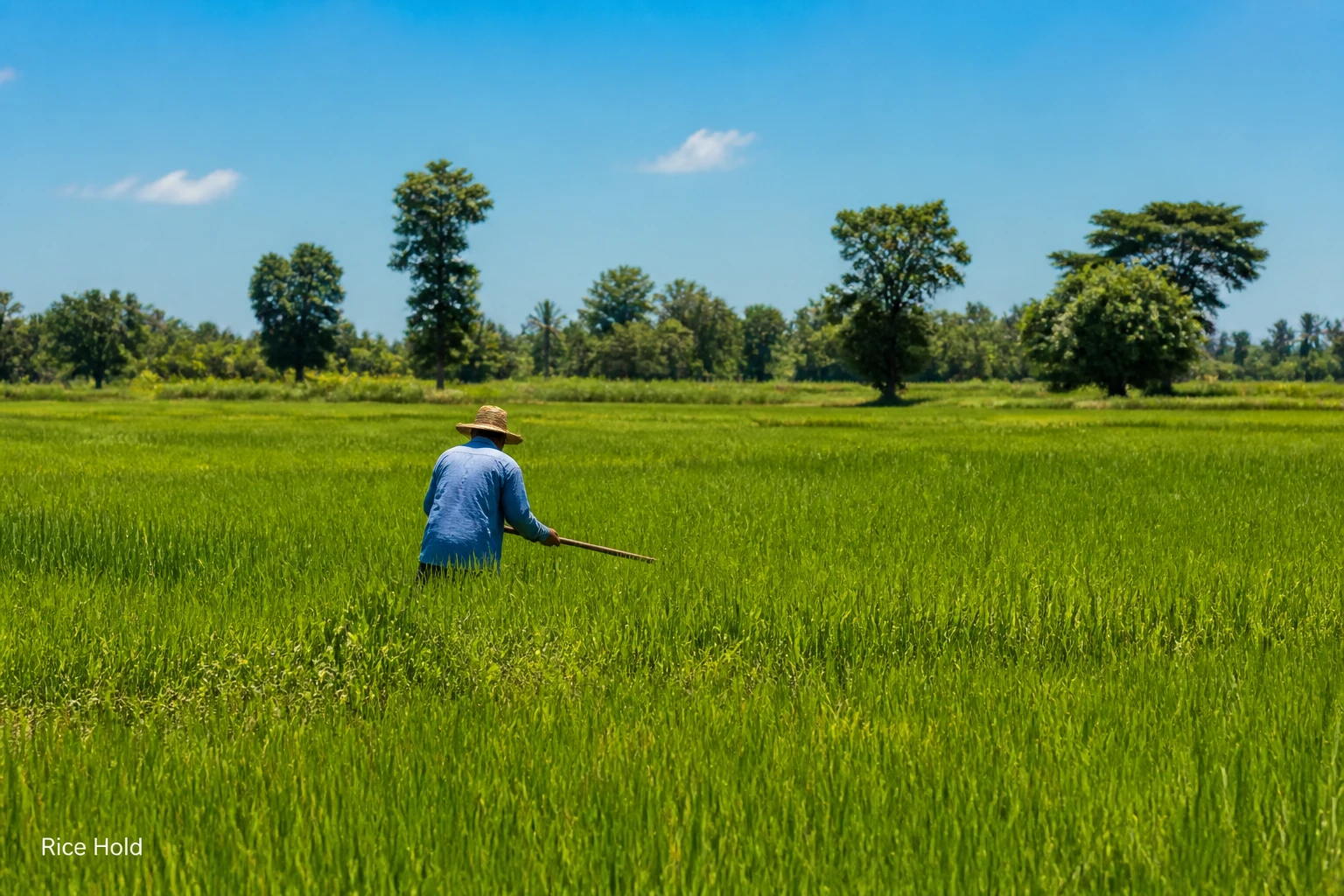
 Why Indonesia Is Holding Rice Prices Steady as the Rupiah Softens · Photo by Afif Ramdhasuma on Pexels
Indonesia’s National Food Agency, Bapanas, has said it is maintaining rice prices under the government’s Food Price and Supply Stability programme, commonly known as SPHP, despite a weaker rupiah. The policy choice is economically unsurprising, but politically meaningful: rice remains the single most sensitive food item in the Indonesian household budget, and any abrupt increase is felt quickly across the income spectrum.
That sensitivity matters because food inflation behaves differently from headline inflation in advanced economies. In Indonesia, rice is not a discretionary purchase. It is a daily necessity, a payroll issue for employers in low-margin sectors, and a confidence marker for households that are already balancing fuel, transport, school fees, and increasingly expensive imported goods.
The exchange rate adds another layer. A weaker rupiah pushes up the local-currency cost of imports, from fertiliser and energy inputs to packaged goods and machinery. Even when rice is domestically produced, the cost chain is not immune to currency moves. If the state wants to preserve price stability, it must absorb part of that pressure through stock releases, logistics, procurement management, or subsidy design.
“Food inflation is rarely just about food. It is a test of whether the state can protect real incomes without distorting the next season’s supply.”
For Lombok, this is not abstract. Domestic consumers are the bedrock of the island’s tourism ecosystem, particularly in the transition between local travel and higher-spending international arrivals. If household budgets are steadier, weekend travel, restaurant spend, and short-stay villa bookings are less vulnerable to sudden demand shocks.
Why It Matters Beyond the Rice Market
The larger story is that Indonesia is trying to preserve stability while multiple cycles move at once. Currency pressure, food affordability, tourism recovery, infrastructure rollout, and regional property development are all interacting. Lombok sits at the point where these trends meet.
The island’s investor case has increasingly rested on a simple thesis: Lombok benefits from Bali overflow while still offering a lower-cost entry point and a more open development frontier. That is not a marketing slogan; it is a structural observation. As Bali becomes more expensive and more crowded, investors and developers continue to look east for space, margin, and a cleaner pipeline of opportunities.
Recent momentum has reinforced that view. Tourism to Lombok has been reported as up 40-50% year on year in some periods, and MotoGP-related arrivals have been estimated at +47% around event windows. Those numbers matter because they are not only about visitor volume. They signal improved flight awareness, stronger international visibility, and a more resilient hospitality narrative.
The airport expansion due in 2025-26 is another important layer. Airport capacity is often the quiet variable behind a property market’s next phase. If access improves, the investable geography widens. Land that once felt peripheral becomes practical. Areas that were “future” become “next”. In Lombok, that shift is especially relevant in the south, where infrastructure, beaches, and planned development corridors are shaping the market’s medium-term map.
A useful way to read the rice policy is as a proxy for the state’s willingness to prioritise stability. That has implications for investor confidence in a broader sense.
| Signal | What it suggests | Investor relevance | |---|---|---| | SPHP rice price control | State is actively smoothing household inflation | Supports domestic demand and consumer confidence | | Weak rupiah | Import cost pressure remains live | Watch construction inputs, operating margins, and travel pricing | | Tourism growth | Demand is broadening beyond niche early adopters | Supports occupancy and resale narratives | | Airport expansion 2025-26 | Capacity constraints may ease | Improves access, liquidity, and area re-rating potential |
There is also a practical reason investors should care about food policy. Inflation that bites into daily necessities can alter how domestic travellers spend. A family that feels financially squeezed may shorten trips, downgrade accommodation, or delay discretionary purchases. A household that feels protected is more likely to keep moving, booking, and spending.
That matters in Lombok because the market still relies on a blend of international buyers, domestic tourism, and a growing base of investors who are not simply buying a holiday home. They are underwriting a cash-flow proposition. If the Indonesian economy keeps food prices under control, that cash-flow model becomes easier to defend.
What the Policy Signal Means for Lombok Asset Selection
The most important investor takeaway is not that rice prices are stable today. It is that the Indonesian policy environment remains highly active in defending real-economy fundamentals. That should shape how investors think about timing, product type, and location.
In a market like Lombok, the strongest opportunities rarely sit in the cheapest land alone. They sit where affordability, access, and demand visibility overlap. South Lombok continues to stand out because the entry range remains accessible relative to more mature resort destinations, while the upside narrative is still intact.
Consider the current operating logic:
- Demand is becoming more resilient because tourism growth is broadening beyond one-off novelty.
- Infrastructure is improving with airport expansion expected in 2025-26.
- Pricing remains attractive in South Lombok compared with more developed Indonesian resort markets.
- Yield expectations are high in marketed segments, though investors should still test assumptions against seasonality and operating costs.
- Macro stability matters because household confidence affects domestic leisure spending, the hidden driver behind a large share of weekend and short-break demand.
The caveat, of course, is that strong headline yields are not the same as reliable net returns. In an environment where the rupiah is softer, investors should be especially careful about what is imported into a project. Imported fittings, foreign labour, shipping costs, financing costs, and currency conversion all deserve scrutiny.
A disciplined investor should ask four questions:
- How much of the build cost is exposed to foreign-currency pricing?
- What portion of projected occupancy depends on international rather than domestic demand?
- How sensitive is the operating model to a slower-than-expected airport rollout?
- Does the exit strategy depend on hype, or on genuine scarcity and utility?
These questions matter because Lombok is still in the phase where narrative can outrun operating reality. That is not a criticism; it is a warning. The island has real momentum, but not every plot, villa, or project will benefit equally.
If the policy state can keep food prices contained, it reduces one source of volatility. That does not eliminate market risk, but it removes a common drag on consumer sentiment. For property investors, especially those targeting hospitality-led assets, that is helpful. Tourism is ultimately a confidence industry, and confidence is easier to maintain when the weekly shop does not become a political problem.
There is also a strategic comparison worth making.
- In mature resort markets, price growth often depends on supply scarcity alone.
- In Lombok, price growth can still be driven by infrastructure, access, and first-mover positioning.
- In markets with severe inflation, the local customer base weakens.
- In markets where staples are stabilised, domestic demand can compound more reliably.
That is why a rice policy story belongs in a Lombok Notebook. It reveals how the state is trying to hold together the spending power beneath the island’s tourism and property upswing.
What This Means for Investors
For European, Australian, and American investors assessing Lombok, the message is not to overread a single administrative decision. It is to recognise that Indonesia’s macro management is still highly interventionist where social stability is at stake, and that this can help preserve the operating environment for tourism-led assets.
The practical implications are clear:
- If you are underwriting a villa or boutique resort, assume domestic demand remains an important stabiliser.
- If you are buying land, prioritise locations that stand to benefit from improving access rather than purely speculative holds.
- If you are modelling returns, separate gross marketing yields from real net operating income.
- If you are comparing regions, remember that Lombok’s advantage is not only price. It is the combination of lower entry points, improving connectivity, and a still-forming market structure.
The wider picture is constructive. A state that works to keep rice affordable is signalling that it understands the social cost of inflation. For Lombok, that supports the demand side of the investment equation at a time when tourism, airport expansion, and Bali-overflow dynamics are already improving the supply-side story.
That does not make every asset a winner. It does, however, strengthen the case for selective, fundamentals-first investment in the island’s better-connected growth areas, particularly where pricing still sits within the €95,000 to €350,000 South Lombok bracket and the market has room to re-rate as infrastructure catches up.
In short, this is not just about rice. It is about whether Indonesia can preserve household stability while keeping its next growth corridors investable. For Lombok, that is one of the most important questions on the board.
Stay informed, subscribe to the free Lombok Briefing for market intelligence like this, published twice a month.
What are the entry prices and yields for property investment in South Lombok?
South Lombok entry points range from €95,000 to €350,000, with yields often marketed in the 12-22% bracket. The investment case rests on Lombok offering a lower-cost entry point than Bali alongside a more open development frontier. The quality of the broader economic backdrop, including inflation stability, matters as much as the asset itself.
How fast is tourism growing in Lombok and what does it mean for villa investors?
Tourism to Lombok has been reported as up 40-50% year on year in some periods, with MotoGP-related arrivals estimated at +47% around event windows. These figures signal improved international flight awareness and stronger global visibility, which supports occupancy narratives and the cash-flow proposition that underpins most villa investment strategies in the region.
When is Lombok's airport expansion due and why does it matter for property buyers?
The airport expansion is due in 2025-26. Increased capacity tends to widen the investable geography: land that once felt peripheral becomes practical, and areas described as future opportunities shift into the near-term pipeline. In South Lombok, where development corridors are already forming, better access could support area re-rating and improve market liquidity for investors.

The Lombok Buyer's Field Guide
Legal structures ranked by risk, the honest ROI math line by line, all six zones ranked, and the 24-point due-diligence checklist. The whole book, free in your inbox.
See what's inside