Indonesia's 1,386 Fishing Village Plan: What It Means for Lombok Coastal Property
Prabowo's ambitious 1,386 Red and White Fishing Villages program signals major coastal infrastructure investment. For Lombok investors, it's a bullish signal for undervalued waterfront and rural devel
Daily Dispatch: Indonesia's Fishing Village Pivot, A Tailwind for Lombok's Coastal Real Estate
President Prabowo Subianto's government has announced an aggressive target: 1,386 Red and White Fishing Villages to be completed by end-2026. While the initiative centres on artisanal fishing communities nationwide, the infrastructure and rural development it implies are reshaping Indonesia's coastal property outlook, and Lombok sits squarely in the path of that transformation.
The Context
Indonesia's "Red and White Fishing Villages" (Desa Nelayan Merah Putih) is a cornerstone of Prabowo's economic agenda, bundling port upgrades, community facilities, cold-chain infrastructure, and connectivity improvements across coastal zones. The program targets 1,386 villages, a staggering scope that will funnel government and private capital into regions previously starved of hard infrastructure.
Lombok, with its 40–50% annual tourism growth and two significant fishing populations along its western and southern coasts, is not explicitly named as a focal zone. But that's precisely the opportunity: markets price in what they see. Lombok's fishing communities in Lombok Utara and South Lombok have been overlooked by tourism-focused investors, creating a vacuum that infrastructure investment is now filling.
Infrastructure as a Property Catalyst
When central governments commit to fishing village upgrades, three things follow:
- Port and logistics upgrades improve connectivity and attract agribusiness, hospitality supply, and light manufacturing
- Road, water, and power grids expand into rural zones, unlocking previously inaccessible land for development
- Community facilities (markets, health, education) raise livability, attract permanent residents, and spike residential demand
Lombok's South Lombok fishing districts (Sambelia, Sekotong, Praya Barat) have seen minimal infrastructure investment relative to their tourism potential. The Prabowo initiative signals that's changing. Early movers acquiring coastal agricultural or mixed-use land at €95K–€180K per hectare, well below Bali's €250K+, are positioning for a 3–5 year revaluation when ports and roads arrive.
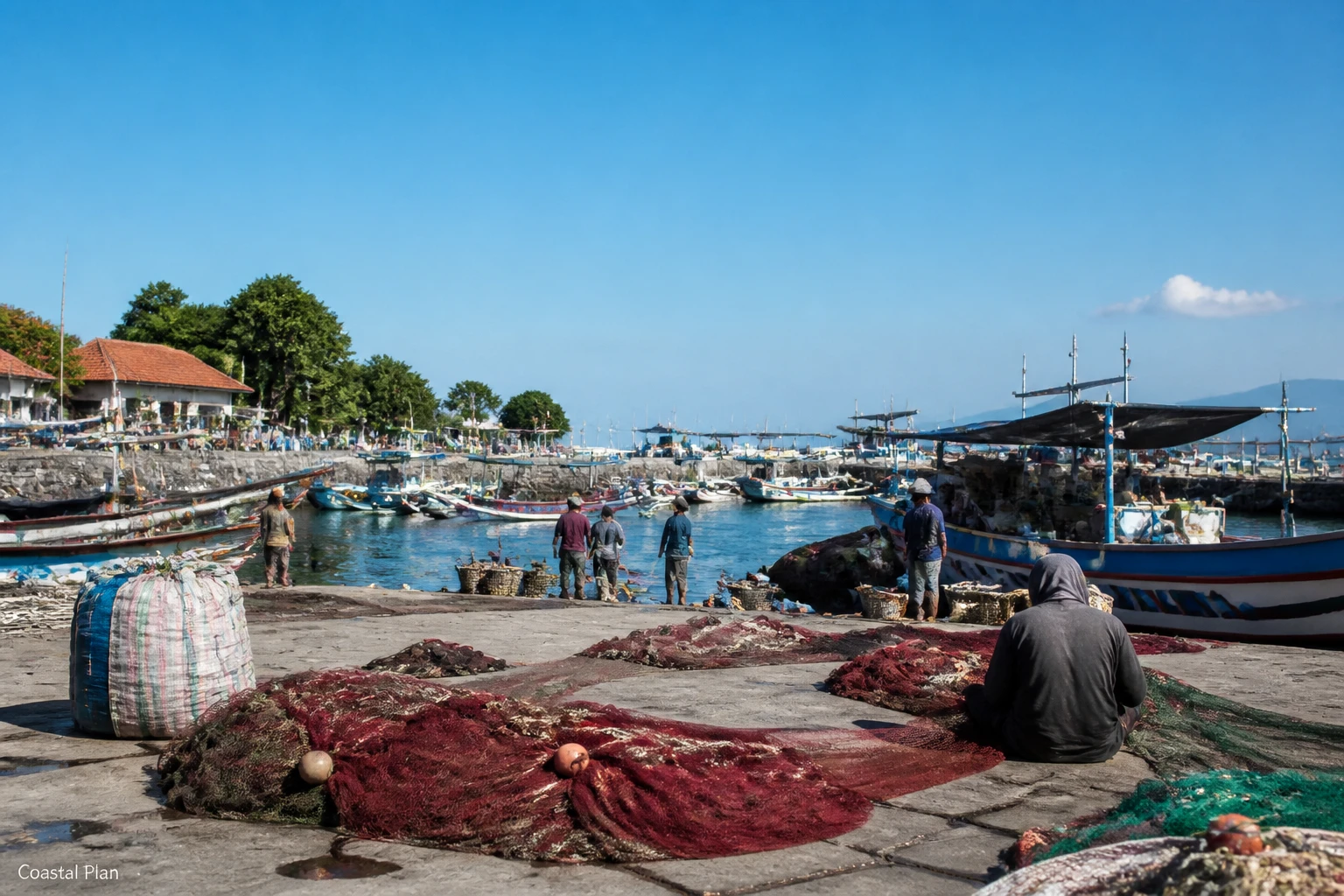
 Indonesia's 1,386 Fishing Village Plan · Photo by Mikhail Nilov on Pexels
Who Benefits Most?
Three investor archetypes are positioned to profit:
| Investor Type | Current Play | Upside Driver | Timeline | |---|---|---|---| | Rural/Coastal Land Holders | 0.5–2 hectare plots, South Lombok | Road/utility connection, value 2–3x | 18–30 months | | Mixed-Use Developers | Small resorts + fishing cooperative spaces | Dual revenue (tourism + supply chain) | 24–42 months | | Hospitality & Agribusiness | Boutique lodges near ports | Supply chain cost reductions, foot traffic | Immediate to 12m |
Lombok's 12–22% gross rental yields on coastal villas remain competitive, but yield compression is inevitable as infrastructure drives cap rates down. The play now is land in transition zones, not yet tourist magnets, but soon-to-be integrated into regional logistics.
What This Means for Investors
Prabowo's fishing village program is a rare macro tailwind for patient capital. Three practical implications:
-
Timing matters. Announce a major port or road project, and prices jump 15–30% overnight. The Prabowo administration has momentum (post-inauguration, high political capital). Investors who acquire before specific village selections are finalized will capture pre-announcement spread.
-
South Lombok is under-owned. While North Lombok (Gili Islands) and Central Lombok (Senggigi, Kuta) trade at premium multiples, South Lombok, with equal fishing infrastructure potential, trades at a 20–25% discount. First-mover advantage in coastal villages like Bangko-Bangko or Ekas is real.
-
Diversify your Lombok thesis. Tourism-only plays (villas, short-term rentals) are saturated. Add a coastal land or mixed-use position ahead of infrastructure announcements. The MotoGP 2025–2026 arrival will draw tourism capital; the fishing village program will draw productive capital. Both move real estate, but sequentially.
"Infrastructure investment in rural coastal zones typically precedes tourism. We're entering phase one of Lombok's dual-engine growth, tourism overlay plus productive infrastructure. That's a rare combination in Southeast Asia right now.", Observed pattern in comparable markets (Lombok analyst notes).
The airport expansion (2025–26), the +47% MotoGP-driven tourism bump, and now explicit government capital in coastal villages: the Lombok macro is converging. Smart investors are already repositioning from pure-play tourism to infrastructure-adjacent mixed-use. This announcement just confirmed that thesis.
Stay informed, subscribe to the free Lombok Briefing for market intelligence like this, published twice a month.
What is Indonesia's Red and White Fishing Villages program and when will it be completed?
President Prabowo Subianto's government is targeting 1,386 Red and White Fishing Villages (Desa Nelayan Merah Putih) completed by end-2026. The program bundles port upgrades, cold-chain infrastructure, road and utility connections, and community facilities across Indonesia's coastal zones, channelling government and private capital into coastal regions that have historically received minimal infrastructure investment.
How does South Lombok coastal land compare in price to Bali for property investors?
South Lombok coastal agricultural and mixed-use land is priced at €95,000 to €180,000 per hectare, well below Bali's €250,000-plus per hectare. South Lombok also trades at a 20 to 25 percent discount relative to North and Central Lombok. Investors acquiring before government infrastructure selections are finalised are positioned to capture pre-announcement price appreciation.
What rental yields do Lombok coastal villas currently offer, and will they last?
Lombok coastal villas currently deliver 12 to 22 percent gross rental yields. Yield compression is expected over time as the fishing village program drives port upgrades, road connections, and utility grids into coastal districts, lowering capitalisation rates. Historically, major port or road announcements have pushed local property prices up 15 to 30 percent overnight, narrowing the entry window.
The Lombok Buyer's Field Guide
Legal structures ranked by risk, the honest ROI math line by line, all six zones ranked, and the 24-point due-diligence checklist. The whole book, free in your inbox.
See what's inside