
Indonesia's BRICS Seat: What a Widening Economic Bloc Means for Frontier Investors
Indonesia used the 18th BRICS Summit in New Delhi to press for a bigger role in a bloc now covering 40% of global GDP. Here's the macro backdrop for investors watching Indonesia's frontier regions.
President Prabowo Subianto returned to the BRICS table in mid-September 2026, this time determined to convert Indonesia's year-old seat into real leverage rather than a ceremonial one. The moment matters less for its diplomacy than for what it signals about where Indonesia sees its economic future heading.
A bloc that has outgrown its founders
BRICS began as an informal grouping of five economies, Brazil, Russia, India, China and South Africa. It now counts 11 members, including Indonesia, which secured its permanent seat in 2025 and attended its first summit in Rio de Janeiro that year. By the time the 18th BRICS Summit convened in New Delhi in mid-September 2026, the bloc represented nearly half the world's population, accounted for 40% of global GDP, and covered 26% of world trade.
Those are not marginal numbers. A grouping of that size, spanning both established and rising economies, is no longer a side conversation to the G7, it is a competing centre of gravity in global trade and finance, and Indonesia has chosen to sit inside it.
Prabowo's pitch: resilience, not attendance
Indonesia's president used the summit to push back against the idea that BRICS membership is symbolic. According to Antara's reporting, Prabowo urged fellow member states to move beyond statements and documents and instead align their respective strengths, a message that dovetailed with India's 2026 presidency theme, "Building for Resilience, Innovation, Cooperation, and Sustainability."
For Indonesia specifically, that translates into three declared priorities, all raised by Prabowo at the summit:
- Resilience, reducing exposure to disrupted supply chains, energy insecurity and food-security shocks, with food and energy self-sufficiency framed as national goals.
- Innovation, reducing reliance on natural resources and the domestic market alone, with an explicit push toward industrialisation, downstreaming, digital technology and human-resource development.
- Sustainability, balancing growth with climate commitments, an area where India's presidency highlighted its own progress in solar energy, robotics and electric vehicles.
Why India's presidency shapes the agenda
Under India's chairmanship, BRICS has pivoted toward deeper cooperation across supply chains, health, innovation, energy, agriculture, technology and startup development. New Delhi used the summit itself as a showcase, presenting technological advances across health, solar energy, robotics and electric vehicles to the assembled member states.
That agenda gives Indonesia a template rather than a blank page. Jakarta's own priorities, food and energy self-sufficiency, industrial downstreaming, digital infrastructure, map closely onto what India is already promoting bloc-wide, which is presumably why Prabowo framed India's experience as directly relevant to Indonesia's goals.
The trade and currency angle
One detail carries longer-term weight for anyone tracking capital flows into emerging and frontier markets: BRICS is actively promoting the use of local currencies in international trade among member states. For a bloc covering over a quarter of world trade, even incremental moves away from dollar-denominated settlement are the kind of structural shift that plays out over years, not news cycles, but they are worth watching precisely because Indonesia is now a participant in shaping the terms, not a bystander.
Membership also opens, in principle, wider access to markets, investment, supply-chain partnerships and development financing schemes across the bloc, benefits Prabowo referenced directly in his remarks on why the seat matters to Indonesia's national interest.
What this means for investors
None of this is a Lombok-specific catalyst, and it would be dishonest to pretend otherwise, this is macro positioning at the level of national trade policy, not a signal about tourism arrivals, land prices or villa yields in any single region. What it does offer is context: Indonesia is actively working to diversify its trade and investment relationships beyond traditional Western-aligned channels, and to position itself as a manufacturing and resource-processing hub rather than a pure commodity exporter.
For investors already watching Indonesia's regional growth stories, including the tourism-led expansion underway in South Lombok, the relevant takeaway is simply that the national government is treating economic diversification and self-sufficiency as strategic priorities, backed by participation in a bloc that now represents a meaningful share of global trade. Whether that translates into tangible regional benefits, infrastructure spending, foreign direct investment incentives, or trade financing reaching provincial economies, is not yet established by anything in this story, and we won't speculate beyond what Jakarta has said.
Stay informed, subscribe to the free Lombok Briefing for analysis like this, published twice a month.
Indonesia's BRICS trajectory is still being written. What's clear from New Delhi is that Jakarta intends to be a participant in setting the bloc's direction, not merely a name on the member list, and that ambition is worth tracking for anyone with a long-term stake in the country's economic trajectory.
What is BRICS and why did Indonesia join?
BRICS started as Brazil, Russia, India, China and South Africa and has expanded to 11 members, including Indonesia, which secured a permanent seat in 2025. The bloc now represents nearly half the world's population, 40% of global GDP and 26% of world trade, giving members a larger platform to shape trade and investment terms.
Does Indonesia's BRICS membership directly affect Lombok property investment?
Not directly. This is national-level trade and diplomatic positioning, not a regional tourism or real estate catalyst. It signals Jakarta's push toward economic diversification and self-sufficiency, which is useful macro context, but no specific benefit to South Lombok has been confirmed.
What did Indonesia's president ask BRICS members to do at the New Delhi summit?
Prabowo Subianto urged member states to move beyond statements and align their respective strengths into concrete cooperation, focusing on resilience, innovation and sustainability, themes matching India's 2026 BRICS presidency agenda.
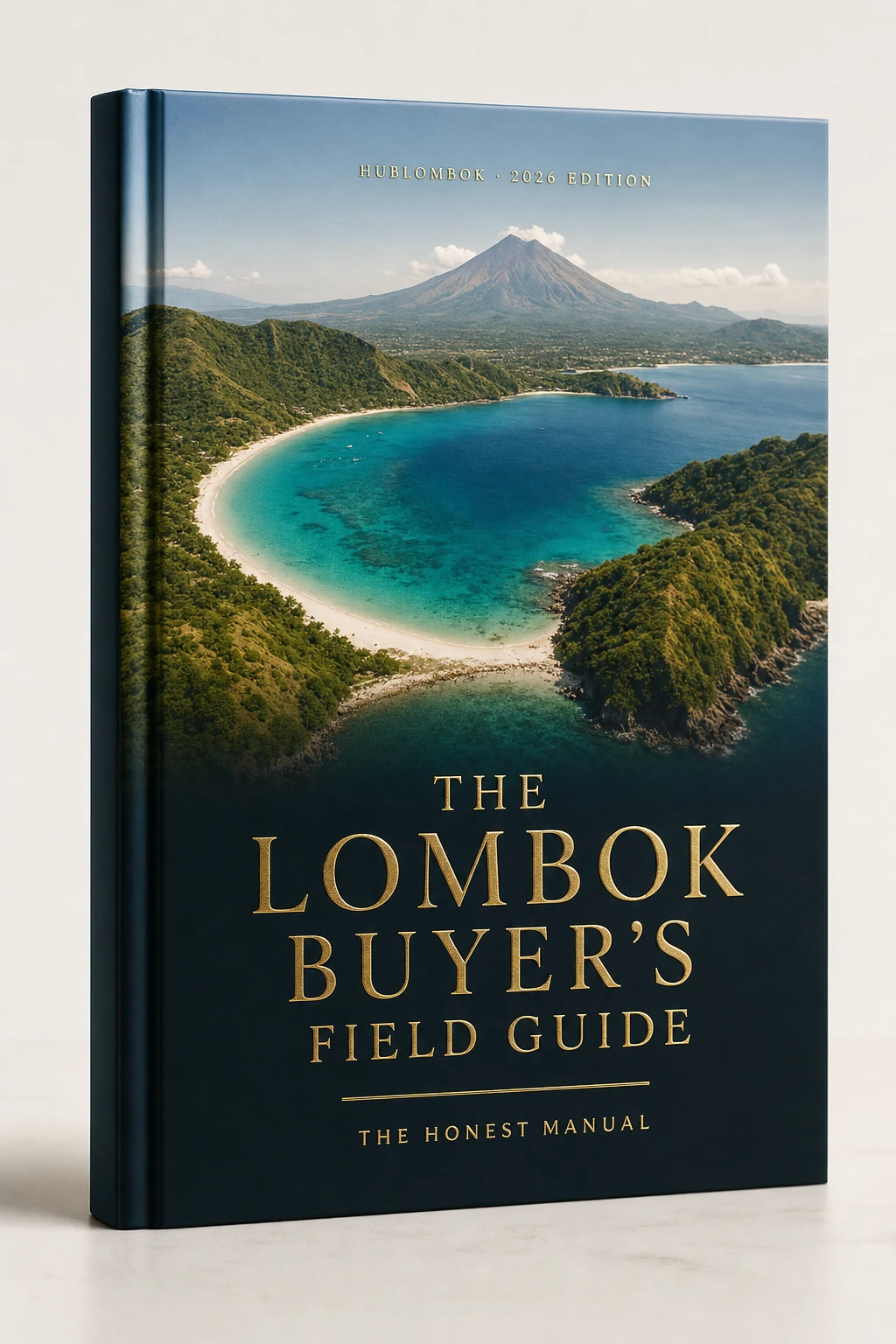
The Lombok Buyer's Field Guide
Legal structures ranked by risk, the honest ROI math line by line, all six zones ranked, and the 24-point due-diligence checklist. The whole book, free in your inbox.
See what's inside