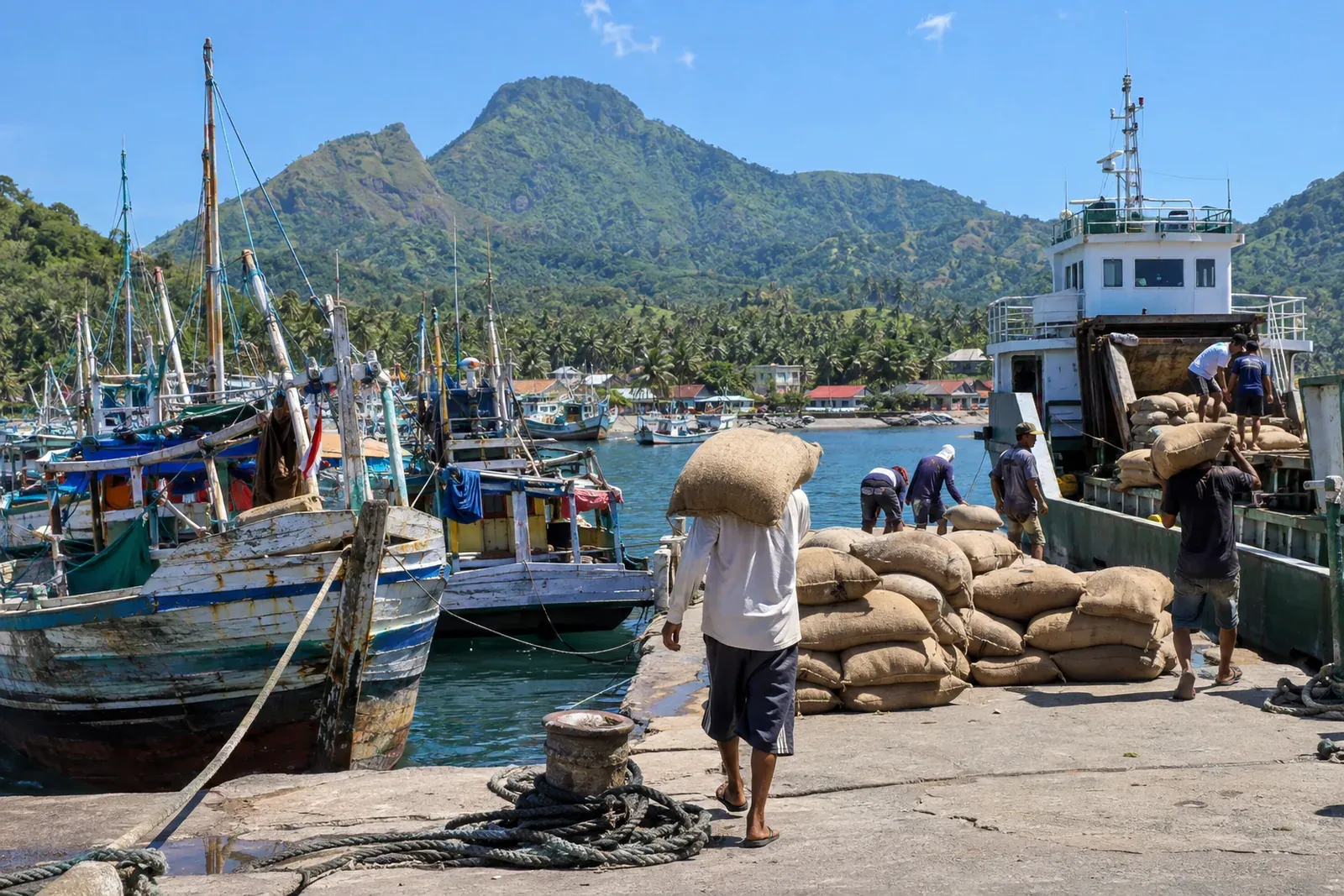
Indonesia Presses BRICS on Industrialisation and Supply Chains
President Prabowo urged BRICS nations to jointly pursue industrialization at the New Delhi summit, framing shared resources and supply chains as tools for resilience and growth.
Indonesia's president used the world stage in New Delhi to make a direct pitch: stop competing on raw resources and start building supply chains together. For investors tracking Indonesia's long-term trajectory, the message is as much about positioning as policy.
Prabowo's pitch at the BRICS summit
Speaking at the 18th BRICS Summit in New Delhi on Sunday, President Prabowo Subianto called for stronger cooperation among BRICS members on industrialization and global supply chains. "Allow me to propose something concrete. Let us jointly pursue industrialization and optimize our resources and capacities," he told the gathering, according to Antara. His proposal centred on pooling the bloc's collective resources, production capacity, technology and markets rather than each member pursuing parallel, siloed development paths.
Prabowo framed the appeal around a broader claim: that BRICS nations already possess the makings of an integrated supply chain. "BRICS essentially already has a supply chain in place. Our task is to connect and optimize to utilize our strengths for greater value," he said. It is a statement of intent rather than a specific programme, but it signals where Jakarta wants to be positioned within the bloc's economic architecture.
Climate resilience and geography as a development lens
Prabowo tied Indonesia's industrial ambitions to its physical exposure as an archipelagic nation on the Pacific Ring of Fire. He pointed to vulnerabilities including rising sea levels, extreme weather and volcanic activity, while also highlighting the country's natural endowments: critical minerals, rare earth metals, renewable energy sources and forests that contribute to global ecosystem services. "We must acknowledge the link between climate resilience and national development," he said, arguing that BRICS members and the wider Global South face interconnected challenges that require collective handling rather than unilateral responses.
This pairing of vulnerability and resource potential is consistent with how Indonesian officials have positioned the country in recent multilateral forums: as a nation with genuine climate exposure but also genuine leverage, given its critical mineral base and renewable energy capacity.
A summit built around four pillars
The 18th BRICS Summit organised its discussions around four themes, resilience, innovation, cooperation and sustainability, as members sought common ground amid what organisers described as rising geopolitical tensions. Other leaders echoed the interconnectedness theme. Indian Prime Minister Narendra Modi cited the pandemic, climate disasters and supply chain disruptions as crises that cut across borders. Chinese President Xi Jinping used his remarks to urge BRICS to help safeguard the stability of global industrial and supply chains, specifically referencing shipping disruptions in the Strait of Hormuz linked to the US-Iran conflict.
Taken together, the summit's tone suggests BRICS members are increasingly framing supply chain resilience as a shared strategic priority, not just an economic efficiency question, a framing that gives Indonesia's pitch for industrial cooperation more political room to land.
What this means for investors
None of this changes anything on the ground in South Lombok or elsewhere in the near term, this was a diplomatic address, not a policy announcement with implementation dates or funding figures. But for investors building a long-horizon view of Indonesia, three things are worth noting:
Indonesia is actively lobbying for a larger role in BRICS industrial and supply chain integration, built around its position as a resource-rich, climate-exposed archipelagic economy.
- Positioning matters for sentiment. A government publicly courting industrialization partnerships and framing its mineral and renewable resources as strategic assets tends to reinforce a narrative of long-term economic ambition, even without immediate deliverables.
- No new hard commitments were made. Prabowo's remarks were a call to action, not a signed agreement or funded initiative. Investors should treat this as a signal of intent from Jakarta rather than a catalyst for near-term market moves.
- Climate and resource framing is consistent. Indonesia's repeated emphasis on climate vulnerability alongside resource potential reflects a government narrative that has held steady across recent multilateral appearances, which is useful context for anyone tracking policy continuity rather than one-off statements.
For readers of HubLombok specifically, the relevance is indirect: broader macro and diplomatic positioning of this kind shapes the investment climate perception of Indonesia as a whole, even though it says nothing directly about South Lombok's property market, tourism flows or land values.
Looking ahead
Whether Prabowo's call for BRICS industrial cooperation translates into concrete agreements will depend on follow-through at future summits and bilateral negotiations, none of which had been announced at the time of the New Delhi address.
Stay informed, subscribe to the free Lombok Briefing for analysis like this, published twice a month.
What exactly did President Prabowo propose at the BRICS summit?
He called on BRICS members to jointly pursue industrialization by pooling resources, production capacity, technology and markets, arguing the bloc already has the elements of an integrated supply chain that need better coordination rather than separate development.
Did the BRICS summit produce any binding agreements affecting Indonesia?
No specific agreements, funding commitments or implementation timelines were reported. Prabowo's remarks were a diplomatic call to action at the 18th BRICS Summit in New Delhi, not a signed policy or investment deal.
Does this BRICS announcement affect Lombok property investment directly?
Not directly. It reflects Indonesia's broader diplomatic and industrial positioning rather than a policy targeting real estate, tourism or South Lombok specifically. Investors should treat it as macro context, not a market-moving event.
The Lombok Buyer's Field Guide
Legal structures ranked by risk, the honest ROI math line by line, all six zones ranked, and the 24-point due-diligence checklist. The whole book, free in your inbox.
See what's inside