Danantara's export company: why Jakarta's industrial strategy matters for Lombok
Prabowo's review of Danantara's new resource export company signals a more interventionist industrial state. For Lombok investors, the implications run from infrastructure to sentiment.
Indonesia’s policy direction often reveals itself first in the capital, then in the regions that depend on investment, logistics and confidence. President Prabowo Subianto’s review of the formation of Danantara’s resource export company is therefore more than a procedural meeting: it is a signal that Jakarta is still willing to shape strategic sectors directly, with consequences that will be felt far beyond the Jakarta–Surabaya corridor.
For Lombok, this matters because property demand does not move in isolation. It is fed by infrastructure, tourism flows, commodity-linked income and the broader mood of domestic and foreign capital. A more organised export architecture may not change a villa yield in South Lombok overnight, but it can influence the macro backdrop in which those yields are priced.
The Context
Danantara is emerging as one of the key institutional instruments through which the government can direct strategic assets and resource flows. The latest review suggests that the administration wants the new export company to move beyond concept and into practical structure, with ministers and senior officials involved at the highest level. That tells investors two things at once: the state wants coordination, and it wants speed.
The timing is important. Indonesia is trying to balance several priorities simultaneously:
- keeping export revenues resilient in a more volatile global trade environment;
- maintaining investor confidence while increasing state influence in strategic sectors;
- using industrial policy to support growth beyond Java’s core urban centres.
For a market like Lombok, which sits in the shadow of Bali but increasingly benefits from the same spillover logic, these decisions shape the environment in which capital allocates. Property in the island’s southern corridor is often marketed on a private micro-case: beaches, access, scarcity, and lifestyle demand. Yet the macro case remains crucial. International buyers do not merely purchase a villa; they buy into a jurisdiction, a tourism trajectory and a policy framework.
That is why the market continues to watch the wider Indonesian growth story so closely. Lombok’s investment thesis has already been helped by a simple but powerful idea: Bali overflow. As Bali becomes more crowded, more regulated and, in some segments, more expensive, neighbouring Lombok can absorb demand that still wants tropical lifestyle, lower entry prices and a developmental runway.
In that context, the island’s current investment envelope remains compelling. South Lombok entry points are still typically discussed in the €95,000 to €350,000 range for many villa and land-led opportunities, with premium assets moving higher depending on location, build quality and management model. Rental performance in well-positioned projects is often presented in the 12% to 22% yield range, though investors should always treat headline projections as case-specific, not guaranteed.
Prabowo’s review of Danantara’s export company suggests a state that wants to manage strategic growth, not merely observe it.
At the same time, Indonesian tourism demand continues to support the island story. Recent market narratives have pointed to tourism growth of 40% to 50% year on year in parts of the broader Lombok market, while MotoGP-related arrivals have been cited at +47% in the right periods. Those numbers are not all directly comparable, but they point in the same direction: the market is still deepening, not merely holding steady.
Why the Export Story Matters Beyond Resources
It would be easy to assume that a resource export company has little to do with resort property. In practice, the connection is more subtle and more important. Export policy affects foreign exchange generation, state revenue expectations, industrial planning and confidence in the government’s ability to execute. Each of those factors influences the broader investment climate in which tourism real estate sits.
A useful way to think about the chain reaction is this:
| Policy layer | Likely effect | Investor relevance | |---|---:|---| | Resource export coordination | More centralised execution | Signals policy seriousness | | Foreign exchange and fiscal management | Greater macro resilience | Supports confidence in the rupiah environment | | Infrastructure and logistics investment | Better connectivity over time | Helps emerging tourism zones | | Regional growth spillovers | More domestic capital circulation | Supports second-home and rental demand |
The table is intentionally broad, because the point is not that an export company directly funds a villa project in South Lombok. The point is that a state capable of coordinating strategic sectors usually has more room to support the physical and economic infrastructure that makes peripheral markets investable.
That matters as Lombok moves through its own transition. The island has long been discussed in terms of latent potential: world-class coastline, a still-relatively-low density of resort stock, and a price base that remains lower than Bali’s mature southern belt. But latent potential becomes investable only when the supporting ecosystem matures. Roads, airport access, services, hospitality labour and planning certainty all matter.
Here, the airport expansion window of 2025-26 remains one of the most closely watched local catalysts. Improved connectivity does not by itself create demand, but it reduces friction. For investors assessing whether Lombok is a speculative story or a structural one, reduced friction is the difference between narrative and market.
This is also why policy signals in Jakarta matter for regional assets. Investors often treat Indonesian property as a purely local trade, but the real drivers are layered:
- national policy credibility;
- tourism inflows;
- transport infrastructure;
- the relative attractiveness of alternative destinations;
- yield spread versus other Asian leisure markets.
Danantara’s resource export company belongs in that list because it speaks to policy credibility. A government that can assemble institutional vehicles around strategic assets may be more capable of aligning infrastructure, investment and regional development over time. For Lombok, that does not remove risk, but it does strengthen the possibility that the island remains on the right side of the capital allocation map.
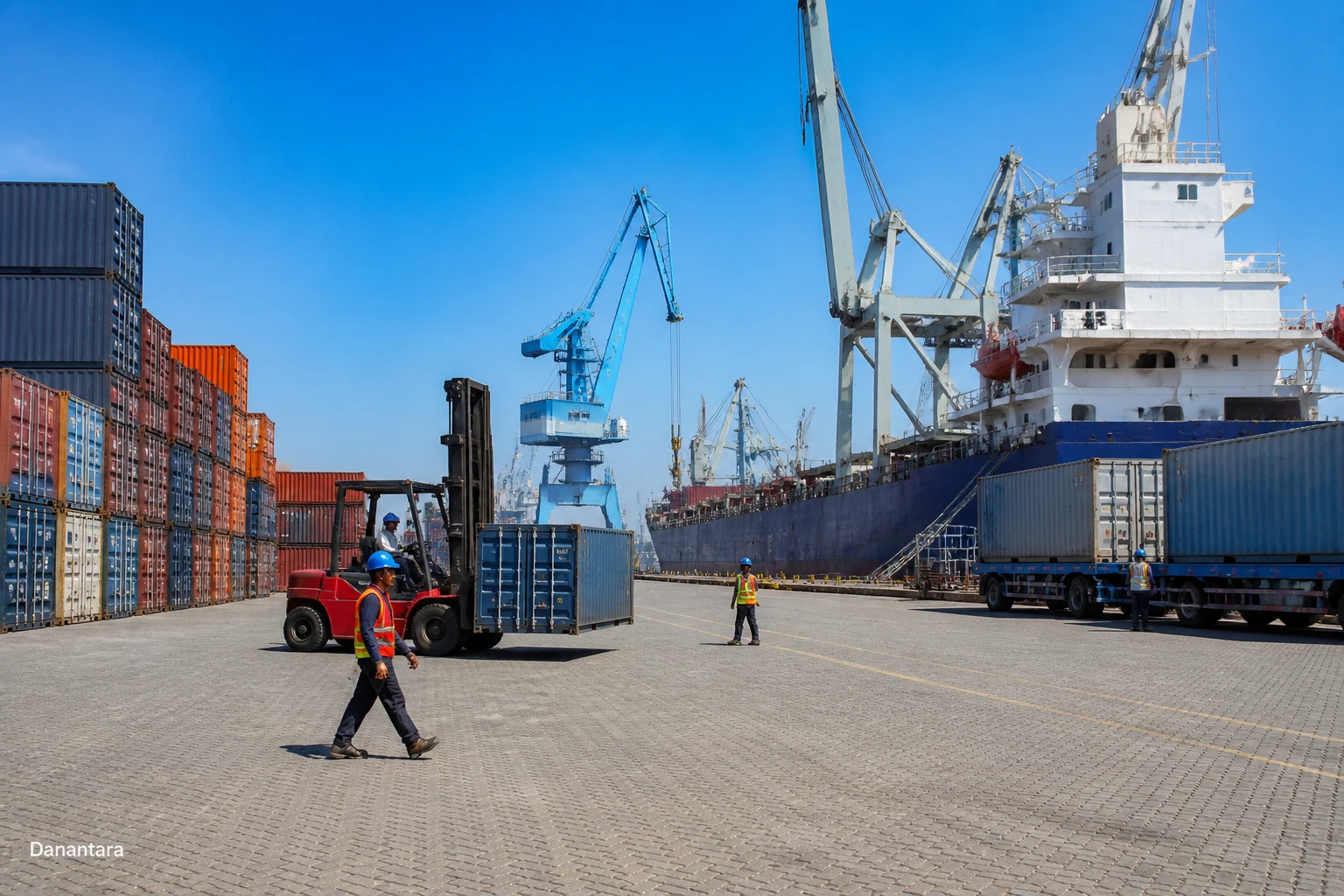
 Danantara's export company · Photo by Luqman Hakim on Pexels
The Lombok Investment Angle
The most useful way to read this news is not as a commodity story, but as a confidence story. Lombok’s market is still early enough that confidence has an outsized effect on pricing, land absorption and project velocity. When investors sense that Indonesia’s central authorities are tightening their grip on strategic execution, they often become more willing to underwrite second-tier markets that rely on long-term growth rather than immediate liquidity.
That said, investors should avoid over-extrapolating. A stronger national policy stance does not eliminate the practical questions that matter most on the island:
- Is the asset in a location with genuine access, not just scenic appeal?
- Is rental demand supported by repeatable tourism behaviour rather than one-off speculation?
- Is the price aligned with comparable assets and future infrastructure, or simply with marketing ambition?
- Is the management model credible enough to convert occupancy into actual net yield?
The current Lombok proposition is attractive precisely because it offers a blend of affordability and optionality. A South Lombok asset in the €95,000 to €350,000 range may still sit below the cost of entry for equivalent beachfront exposure in better-known Asian leisure destinations. For many European, Australian and American buyers, that creates room for portfolio diversification rather than concentration.
The upside case is clear:
- tourism growth continues to compound;
- airport connectivity improves;
- Bali overflow demand keeps migrating east;
- branded or professionally managed inventory captures a premium;
- yields remain materially above mature resort markets.
The caution case is equally clear:
- supply can become overconfident too quickly;
- headline yields can ignore management costs and vacancy;
- infrastructure upgrades can take longer than marketed;
- policy-led optimism can outrun local absorption.
For investors, the correct response is not to ignore Jakarta’s strategic moves, nor to overstate them. It is to treat them as part of the probability framework. If the state is serious about export coordination, industrial structure and macro discipline, then regional asset markets that depend on connectivity and confidence should, over time, become more investable. Lombok is one such market.
In a market still defined by early-stage growth, the difference between a good location and a great investment often lies in the policy backdrop as much as the view.
The practical implication is straightforward. If you already view Lombok as a Bali-overflow market with a tourism-led demand base, then a more interventionist but potentially more orderly national economic strategy should be read as a moderate positive. It does not change due diligence. It does, however, reinforce the case for watching the island through a medium-term lens rather than a short-term trading one.
What This Means for Investors
The immediate takeaway is that Indonesia’s macro direction remains active, strategic and state-led. That is not a guarantee of smooth execution, but it is a sign that the government is still willing to shape the investment landscape rather than leaving it entirely to market forces. For Lombok investors, that is relevant because regional real estate prices are ultimately a reflection of both local fundamentals and national confidence.
The island’s core proposition remains intact:
- a lower entry base than Bali in many submarkets;
- a tourism narrative with clear room to grow;
- premium yield potential in the right assets;
- infrastructure catalysts that are still unfolding rather than fully priced.
The new export-company review should therefore be read as part of a wider Indonesia story: a state attempting to make growth more organised, more strategic and more durable. If that story continues, Lombok stands to benefit not because it is central, but because it is still partially undervalued.
For investors, the discipline is to remain selective. Focus on land tenure clarity, management quality, access, and realistic occupancy assumptions. If those pieces line up, Lombok continues to offer one of the more interesting risk-adjusted leisure property propositions in the region.
Stay informed, subscribe to the free Lombok Briefing for market intelligence like this, published twice a month.
How does Indonesia's national industrial policy affect Lombok property investment?
Indonesia's export and industrial policy shapes the macro environment in which regional property markets operate. Coordinated resource policy can improve foreign exchange generation, fiscal stability and infrastructure investment, all of which support tourism real estate. For Lombok, policy credibility in Jakarta influences the broader investment climate that determines whether emerging markets in the island's southern corridor attract sustained domestic and foreign capital.
What are typical entry prices and rental yields for South Lombok villas?
South Lombok entry points are typically discussed in the 95,000 to 350,000 euro range for villa and land-led opportunities, with premium assets moving higher depending on location, build quality and management model. Rental performance in well-positioned projects is often presented in the 12% to 22% yield range, though investors should treat headline projections as case-specific and not guaranteed.
What are the key infrastructure catalysts investors should watch in Lombok?
The airport expansion window of 2025-26 is one of the most closely watched local catalysts for Lombok. Improved connectivity reduces friction for tourists and buyers without by itself creating demand. Roads, services, hospitality labour and planning certainty all matter as the island transitions from latent potential to an investable market. Tourism growth of 40% to 50% year on year has been cited in parts of the broader Lombok market.

The Lombok Buyer's Field Guide
Legal structures ranked by risk, the honest ROI math line by line, all six zones ranked, and the 24-point due-diligence checklist. The whole book, free in your inbox.
See what's inside