Bali's Tourism FX Dominance Signals Wider Investment Spillovers
Bali accounted for 55% of Indonesia's tourism foreign exchange in 2025, sharpening the case for Lombok as the next spillover market.
Bali's grip on Indonesia's tourism economy has tightened again, and the numbers matter well beyond the island itself. Governor Wayan Koster said Bali generated 55% of Indonesia's tourism foreign exchange earnings in 2025, a reminder that the archipelago's most mature leisure market still sets the pace for regional capital flows.
For investors watching Lombok, this is not merely a Bali headline. It is a live signal that the Bali-overflow thesis remains intact: when one destination absorbs so much spend, bed demand, transport demand and villa demand inevitably begin to spill into adjacent markets with lower entry pricing and room for yield compression over time.
The Context
Bali's contribution to national tourism foreign exchange is significant for one reason above all: it demonstrates scale. When a single destination generates more than half of the country's tourism FX, it acts as both engine and benchmark, shaping airline routes, hotel pipelines, retail positioning and investor psychology across the wider region.
The immediate takeaway is not that Bali is weak. It is that Bali is still powerful enough to create opportunity elsewhere.
A market that dominates national tourism receipts tends to do three things:
- Attract capital until pricing becomes less accessible for new entrants.
- Push overflow demand into nearby locations with easier land acquisition and lower operating costs.
- Anchor a regional narrative that lifts confidence in the broader destination cluster.
That is where Lombok enters the frame. South Lombok in particular continues to sit in the sweet spot for investors seeking earlier-cycle pricing relative to Bali, with entry points often cited around €95,000-€350,000 depending on land, build quality and proximity to beaches or infrastructure.
The wider market backdrop is also constructive. Lombok has benefited from the long-running shift of travellers and second-home buyers looking for a calmer, more spacious alternative to Bali. That thesis is not speculative; it is observable in the flow of enquiries, the growth of boutique hospitality concepts and the continuing appetite for yield-led assets in emerging resort corridors.
Bali contributed 55% of Indonesia's tourism foreign exchange in 2025, underscoring its outsized role in the national travel economy.
The policy and infrastructure lens matters too. Investors should continue to watch the airport and transport agenda, including the 2025-26 airport expansion window often discussed in market circles, because accessibility is the difference between a promising leisure location and a scalable investment destination.
Why This Matters Now
This dispatch lands at an important moment for regional property and hospitality capital. Bali's continued dominance reinforces three investment truths that are especially relevant to Lombok.
First, tourism concentration creates opportunity at the edge of the core market. A destination that already commands the lion's share of international tourism FX tends to price its best assets at a premium. That premium is healthy for owners, but it also makes adjacent markets more attractive on a risk-adjusted basis.
Second, the quality of demand is improving, not just the quantity. Lombok is no longer being discussed only as a low-cost alternative. It is increasingly framed as a differentiated destination: quieter beaches, larger land parcels, stronger privacy, and a luxury proposition that can still be built with disciplined capital.
Third, infrastructure and visitor momentum remain central to the bullish case. Recent market commentary has highlighted strong tourism growth, including claims of 40-50% year-on-year gains in some segments, alongside a 47% increase in MotoGP arrivals tied to event-driven visibility and broader destination awareness. These figures should be treated carefully as market indicators rather than universal truths, but they point in the same direction: demand is broadening.
A useful comparison is set out below.
| Market signal | Bali | Lombok | |---|---:|---:| | Tourism FX role | 55% of Indonesia's tourism FX | Spillover beneficiary | | Entry pricing | Mature, premium-led | Often €95,000-€350,000 in South Lombok | | Visitor narrative | Established global brand | Emerging luxury and lifestyle play | | Investment logic | Yield stabilisation | Yield capture and capital growth potential |
The investor question is whether Bali's dominance is a sign of saturation or durability. The answer is both. Mature destinations remain durable precisely because they have already proven demand. But durability also creates a second-order opportunity: the search for value shifts to the periphery, where land is cheaper, development is less crowded and a more intentional product can outperform.
For South Lombok, that means the case is not dependent on a single catalyst. Instead, it rests on a combination of structural drivers:
- Persistent Bali overflow from buyers and guests priced out of prime areas.
- A luxury positioning that can be built at a lower land basis.
- A supply profile that is still relatively thin compared with Bali's established resort corridors.
- A route to income from short stays, extended stays and branded villa operations.
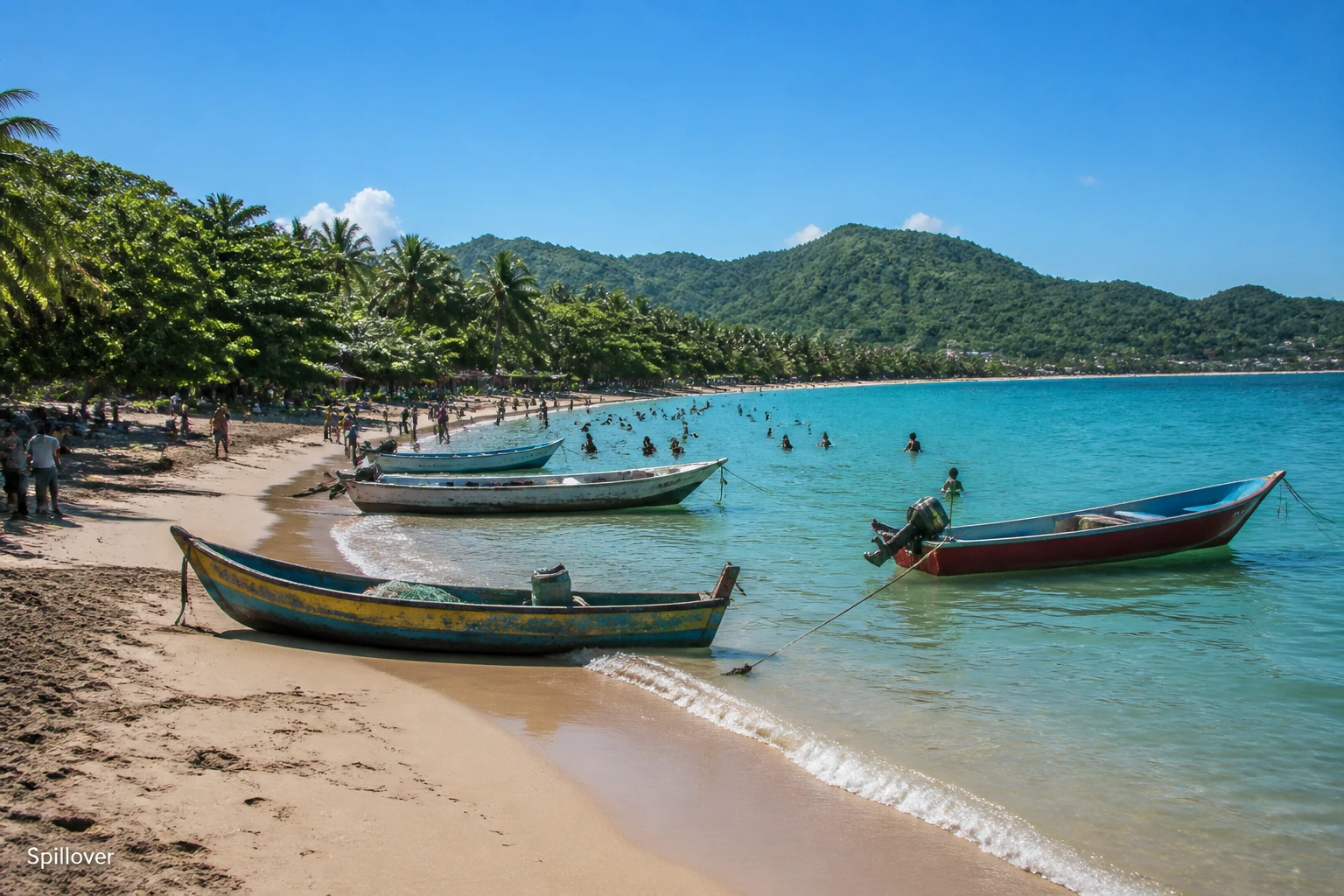
 Bali's Tourism FX Dominance Signals Wider Investment Spillovers · Photo by Quang Nguyen Vinh on Pexels
The Investment Angle for Lombok
The practical implication for capital allocators is that Lombok is increasingly best viewed as a frontier yield market rather than a speculative lifestyle bet. That distinction matters. Frontier yield markets reward those who buy with a business plan, not just a dream.
For example, if Bali continues to generate more than half of Indonesia's tourism foreign exchange, then the adjacent islands benefit from the same macro tailwind without inheriting the same price inflation. That can improve the entry-to-income ratio for investors who are willing to underwrite operational discipline.
Three investor themes stand out:
- Land scarcity versus demand growth: as the best positions near beaches and infrastructure tighten, well-selected plots can gain pricing power.
- Operational yield potential: professionally managed villas and boutique hospitality assets remain attractive where occupancy can be stabilised across leisure and shoulder seasons.
- Exit optionality: as markets mature, the best assets tend to broaden their buyer pool, from lifestyle purchasers to regional capital and, eventually, institutional interest.
The market does not need Lombok to become Bali to justify investment. In fact, the strongest returns may come from preserving its differentiation.
The more Bali concentrates high-value tourism, the more the surrounding region is forced to compete on space, privacy and pricing efficiency.
That is why the most credible South Lombok opportunity set remains selective. Investors should prioritise:
- Beach-adjacent sites with clear access.
- Water, road and utilities that support guest experience.
- Product that can command both leisure and long-stay demand.
- Exit pricing that leaves room for a real margin of safety.
The broader macro backdrop also supports a patient approach. A tourism ecosystem that can continue to outperform nationally, while airports, roads and destination marketing improve, creates a long runway for demand-linked assets. For investors coming from Europe, Australia and the United States, the attraction is not just price. It is the combination of tropical scarcity, yield potential and the possibility of entering before the market fully re-rates.
What This Means for Investors
The latest Bali foreign exchange figure is important because it confirms the structural strength of the region's tourism economy. But for Lombok investors, the more useful interpretation is this: concentration in Bali is not a reason to avoid the market; it is a reason to position one step outside it.
That positioning works best when paired with discipline. The best returns in emerging resort markets typically come from buying the right micro-location, controlling build quality, and pricing assets against realistic occupancy rather than optimistic brochure economics. In other words, the opportunity is real, but it is not passive.
For investors scanning South Lombok, the current setup is favourable because several forces are aligned:
- Bali remains a global benchmark and demand magnet.
- Nearby markets can still offer materially lower entry costs.
- Tourism growth is supporting confidence in the wider Indonesian leisure economy.
- Infrastructure improvements may further narrow the gap between established and emerging destinations.
The result is a market where premium stock can be sourced before it fully reprices. That window does not stay open indefinitely.
If Bali's dominance in tourism FX tells us anything, it is that the Indonesian leisure economy is still concentrated enough to generate spillover, yet large enough to sustain multiple winners. Lombok's task is not to compete head-on with Bali. It is to absorb the overflow intelligently, build a distinct luxury proposition, and convert regional tourism strength into investable returns.
Stay informed, subscribe to the free Lombok Briefing for market intelligence like this, published twice a month.
How much foreign exchange does Bali generate from tourism?
Bali generated 55% of Indonesia's tourism foreign exchange earnings in 2025, according to Governor Wayan Koster. This demonstrates the island's outsized role in the national travel economy and its dominance in shaping airline routes, hotel pipelines and investor sentiment across the broader archipelago.
What price range should I expect for property in South Lombok?
Entry points in South Lombok typically range from €95,000 to €350,000 depending on land, build quality and proximity to beaches or infrastructure. These prices position South Lombok as an earlier-cycle market relative to Bali, with lower entry barriers for investors seeking disciplined capital deployment.
Why is Lombok an attractive investment if Bali dominates tourism?
Bali's dominance creates spillover opportunity in adjacent markets. Investors increasingly view Lombok as a differentiated luxury destination offering larger land parcels, quieter beaches, stronger privacy and lower operating costs. The market has shifted from Lombok being a low-cost alternative to a compelling yield-capture play with capital growth potential.
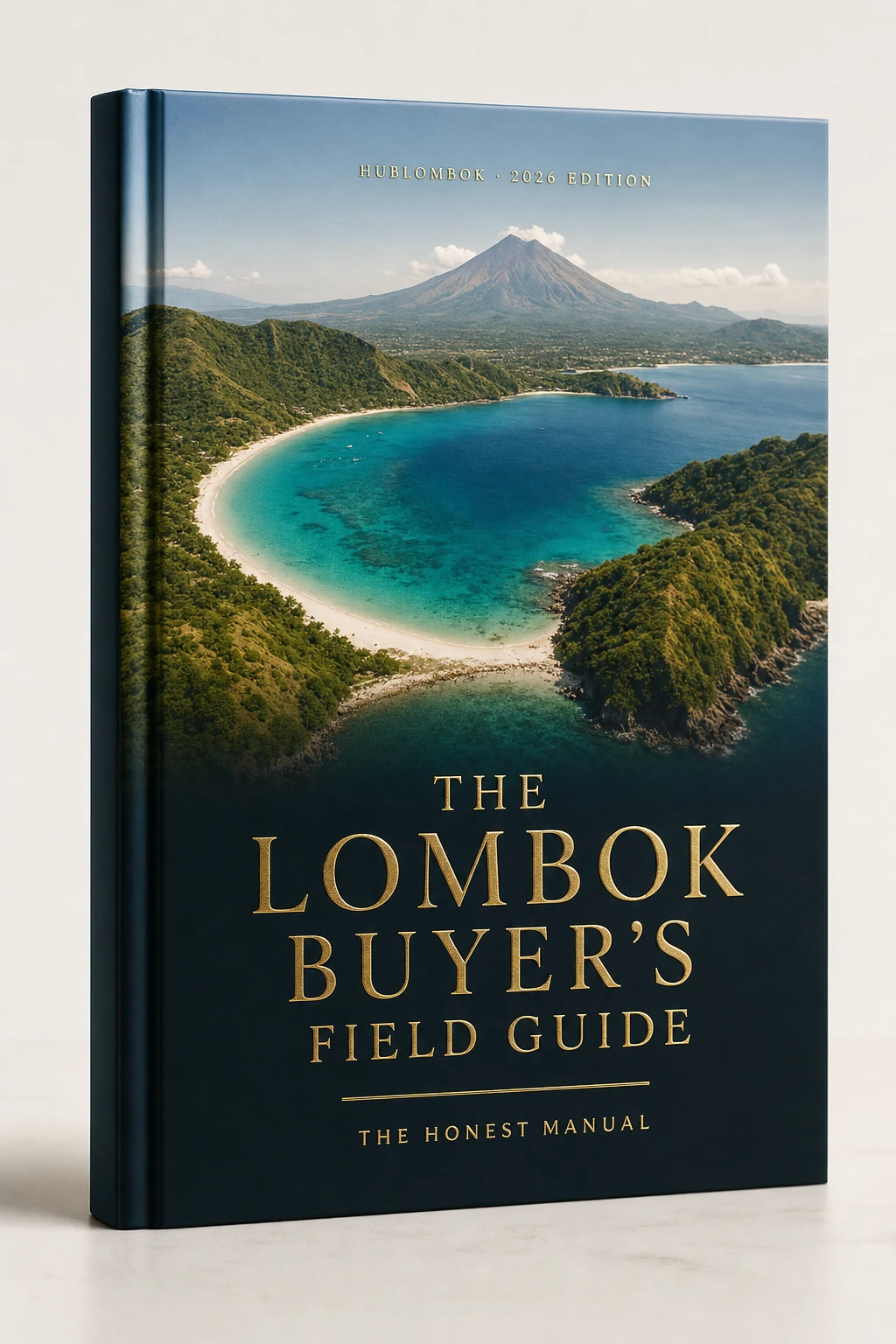
The Lombok Buyer's Field Guide
Legal structures ranked by risk, the honest ROI math line by line, all six zones ranked, and the 24-point due-diligence checklist. The whole book, free in your inbox.
See what's inside